











Each season a handful of new varieties make the cut and gain permanent residence here on the farm. Making “the list” requires meeting a pretty strict set of criteria. First, the item must grow somewhat easily and vigorously in my climate. This means no heroic measures, toxic chemicals or complicated procedures are required to produce a healthy plant. Second, it must have a good vase life. I spend a great deal of effort growing and testing numerous potential candidates until I find one that is not only beautiful but lasts well too. Third, it must have some unique characteristic, something that sets it apart, an added selling point of some kind. This may be a pleasing fragrance, an unusual shape, a muted or vibrant color, the variety is an heirloom, it looks old fashioned and romantic….anything different that will help me tell its story to customers and help it stand out in some way. Lastly it must be beautiful! While all flowers are beautiful, I seek out varieties that take beauty to a new level. I want them to embody words like gorgeous, amazing, incredible, exquisite and stunning! All of the items listed here have met these criteria and now join the wonderful cast of characters that make up our wild and abundant garden.
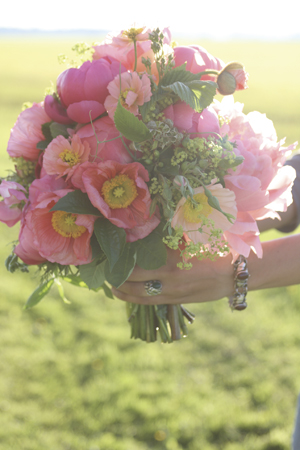
Papaver nudicale/Icelandic Poppies Temptress
: After years of hearing rave reviews about these brilliant flowers I finally had the opportunity to add them to our spring lineup. As a trial I grew them alongside another Icelandic variety called San Remo. The Temptress series is notorious for having poor seed germination so I wanted to find a suitable substitute in case I fell in love and they became unavailable in the future. After a bit of digging, my Gloeckner rep suggested that the San Remo would make a suitable stand-in variety. Plants for both went in six weeks later than I had hoped, late March, but grew rapidly once in the ground. We spaced them 9 x 9”with four rows to a bed. Unfortunately, slugs adore their tender lush foliage and were quite a problem for us early in the season. In the future I will place my poppy beds down the center of the hoop rather than next to the walls where slugs can sneak under more easily. I’ll also apply slug bait while plants are small and more susceptible to damage.
Seed for the Temptress mix is expensive and with such poor germination (10-30%) buying in plugs is probably the best way to go. Headstart Nursery is carrying 6 individual colors plus a mix this spring. Since these poppies are slow from seed you’ll want to get an order booked as soon as possible to ensure desired colors, quantities and ship dates. Both the San Remo and Temptress mixes began blooming just six weeks after planting and did so with great abandon for the following two months. I’m sure they would have gone longer but in order to make room for summer crops I had to pull them out early. Mixes were both heavy on yellow and orange which made up about 90% of the color range. The remaining 10% was a blend of peach, salmon and a few creams. The romantic pastels were greedily snapped up by wedding designers so this coming season I am focusing solely on these softer shades since they sold so well. I was very impressed with the stem length on both mixes, which ranged from 15-24” but usually hovered between 18 and 20”. When picked at the proper stage, just as the fuzzy buds were cracking open and seared for 5-7 seconds in boiling water, blooms persisted for a minimum of 6-8 days and often much longer. I successfully held blooms in the cooler for a week+ with no decrease in flower quality or vase life afterwards. Both varieties are wonderfully fragrant, a detail that was greatly appreciated by our customers! After closely working with both varieties I feel that the Temptress poppies are superior to the San Remos in a couple of ways. First their stems are thicker, straighter and therefore much stronger. Their flowers are larger and often a bit more vibrantly colored. Lastly they seemed to have a bit longer of a vase life by a day or two. When I have the choice, Temptress will be my first but as a back up the San Remo definitely make the cut.
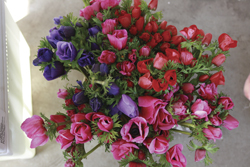
Anemones: After accidentally killing a thousand corms a few years back when I forgot them for 5 days in a bucket of water, I have shied away from this crop in shame. But this spring I put my ego aside and gave them another go. With so many great qualities this crop quickly made it onto my favorites list. I grew five of the Galilee varieties (shown above) from Gloeckner and had very good success with all. Each plant produced a minimum of ten stems, with an average length of 16-22 inches. Beginning in early March and continuing for 10 weeks, these little workhorses churned out buckets of blooms all spring long. Bordo, a deep maroon, was the hottest color with designers. Red came in second followed by blue, then pink and lastly albino, a pretty white variety with a green eye. Due to a massive crop failure on both Carmel and Galilees I will be trying the Jerusalem and Meron groups this spring. When cut in brightly colored bud, flowers persisted for about a week and a half or more.
Lupine cruickshankii, Sunrise: This beauty recently got bumped to the favorites list after a small patch in the hoop cranked out bunches of blooms for weeks. In years past I’ve always grown it in the field but after getting more than twice the production, increased stem length and better flower quality, I plan on only growing them in the hoop from here on out. Generally I plant plugs on 9 x 9” spacing with five rows to a bed, but next spring I am going to experiment with direct seeding and pinching half the bed at 12 inches. Each beautiful blue and white spire emits the sweetest scent that makes it impossible not to love. I cut when the bottom few flowers are just open and get a good week of vase life. This variety is an annual.
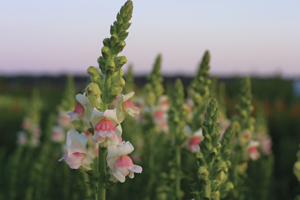
Snapdragons have become one of our most profitable early summer crops. This last season we grew around 6,000 plants and sold every useable stem in the patch! To have the longest bloom window possible I select varieties from each of the four flowering groups. Here where summers are cool and often rainy until July, the Potomac and Maryland varieties had to be scratched early on due to higher disease susceptibility. Interestingly, all of the varieties that I have selected are listed as greenhouse forcing crops. I have had multiple seed reps discourage me from growing these varieties outdoors, stating that they wouldn’t perform well, but so far this hasn’t been my experience. Here we are plagued by the western flower thrip and since our farm is managed organically there isn’t a real solution to the issue. After a few seasons of fretting about the millions of tiny dark specks crawling all over the blooms (they love snaps) I just stopped growing white, yellow and soft pinks. The thrips don’t damage the snapdragon flowers like they do with Roses or Lisianthus but on the light-colored blooms they really stand out and attract attention. By sticking with the deeper, bolder tones the thrips are nearly invisible even up close. All snaps when harvested with just the bottom 2-3 flowers open persist for an amazing amount of time. I generally expect a week but often get nearly two. Our plants are spaced
9 x 9” with five rows per beds. They are grown in pre-burned landscape fabric and get one layer of support netting.
Chantilly (group 1-2): This gorgeous group of ruffled butterfly type blooms is one of our most requested and loved crops of the summer! Our buyers actually jump up and down clapping when the first bunches are delivered. I have grown all nine of the colors but over time have whittled my selection down to the best selling four: pink (it’s actually coral), light pink, bronze and light salmon. Creamy yellow, yellow and white are all stunning but show thrips a bit too much. Deep orange, a pretty tomato-soup colored flower, consistently underperforms the other varieties by half, has much shorter stems and is an off color that early in the season. I often combine stems from the four top sellers into one bunch and they look like bundles of sherbet. This combo sells out quick!
Animation (group 2): The first traditional snaps to flower in the patch, this group exhibits tall, strong stems and always produces an abundant crop. My two favorite colors are deep orange and rose. I have also grown royal purple and red but the colors are a bit too strong that early in the summer. White is excellent as well but shows thrips too easily.
Overture (group 2) I just adore this collection! Each plant produces masses of thick-stemmed, richly colored blooms. While all are beautiful, I consistently grow light bronze and rose since they are the top selling colors and go great in our mixed bouquets.
Opus (group 3-4) Almost identical to the overture series, these productive beauties offer a later bloom and masses of large, brilliant flowers. I adore: early bronze, rose, bright red and red. If thrips aren’t an issue apple blossom and plum blossom are both seriously worth considering. Their bicolor blooms are gorgeous and very unique!
Cynoglossum amabile, Blue Showers/Chinese Forget Me Not: I have longed to grow this crop for years but after a few failed attempts at germinating seed I threw in the towel. This spring, after rereading the Arnoskys’ glowing review in their book Local Color (available from Growing for Market), I decided to give it one more shot. Luckily, this time it worked out and I ended up with a nice patch of plants to experiment with. Not only are these guys super cute, they are wildly productive, very unique and have a great vase life! Designers were thrilled to get their hands on them and we got lots and lots of killer feedback. After the first flush, stem length increased to 18-22” and I was able to use many of them in our mixed grocery bouquets. During those weeks our bouquets sold out and buyers reported that customers went nuts over the tiny blue treasures paired with the hot colors of high summer! Note, seed must be extremely fresh and the germination is still somewhat poor. There are two blue varieties available, Blue Showers is the tallest. There is also a pink sister called Mystic Pink that is said to have better seed germ and taller stems. I’ve got in on my trial list for next season! Seed is available from Ivy Garth.
German Chamomile: This simple herb was a delightful surprise this season! Florists loved it, brides loved it and it worked great in mixed bouquets. I direct seeded every few weeks and had an abundant supply all summer long. Vase life was fantastic and foliage was beautifully scented.
Sunflower Pro Cut Gold: Every year our sunflower numbers increase dramatically. After trying dozens of varieties I always retreat back to my all time favorite Pro Cut Yellow Lite. When I got word that it had been replace this spring with Pro Cut Gold I was pretty nervous. Yellow Lite is my go-to Sun all season long but thankfully Pro Cut Gold is nearly identical in every way. Strong stems, clear yellow petals with a glowing gold/green center and beautiful healthy foliage. I cut when flowers are just opening and regularly get a solid week to ten days from blooms but often hear reports of two weeks-plus.
Sunflower Panache: Teddy bear varieties sell very well for us in late summer and autumn. I’ve grown Sungold Tall, Goldburst and Double Quick with good success but my absolute favorite full flowered variety is Panache. While it is described as being a branching type I’ve had the best results growing it as a single stem variety. Direct sown with 4 or 5 rows per bed, flowers come out the perfect size for bundles and bouquets. A bit different than the standard teddy bear which is fully ruffled all the way across, Panache has a unique deep greenish center and slightly shaggier petals. Additionally, they require only 55 days to bloom and are disease-free in a wet season, unlike Goldburst and Sungold Tall. Customer response has been great and our buyers now prefer this variety to the standard types.
Erin Benzakein runs Floret, a small organic flower farm in Washington’s Skagit Valley. www.floretflowers.com
Copyright Growing For Market Magazine.
All rights reserved. No portion of this article may be copied
in any manner for use other than by the subscriber without
permission from the publisher.