











By Ellen Polishuk
Another day, another clear as a bell, perfect cloudless sky. It’s 10 AM on a Thursday in October, and it’s a cool crisp 60 degrees with a light breeze as I turn off the famed State Route 1 coastal highway, onto one of the few roads leading East away from the Pacific Ocean. One mile from the coast, an inviting farm sign signals my arrival at Blue House Farm.
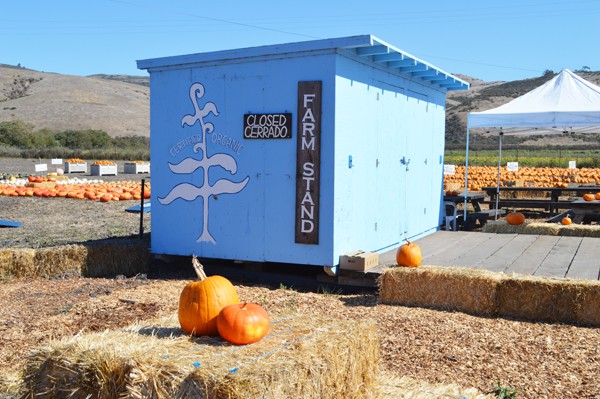
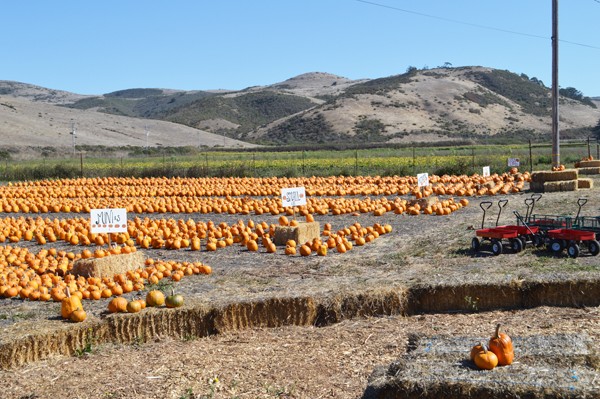
There’s no hiding what’s going on here, every part of the farm is visible from the road. The land is perfectly flat, at the base of dry brown hills, with only two buildings on it – a metal sided shed, and a lovely little blue “house” for retail sales. What’s happening here is a tidy farm business, inviting folks to come on in and get their hands on a pumpkin and other farm produce.
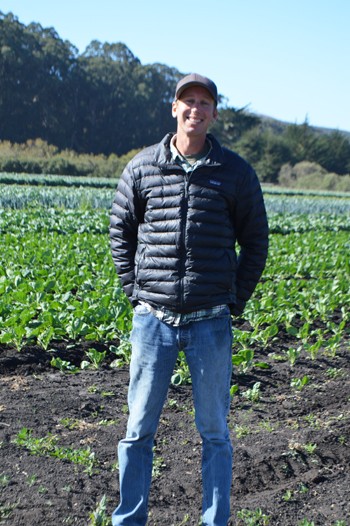
Ryan Casey greets me with a ready smile and a firm handshake. He’s tall and lanky and looks more like a Midwestern corn and soybean farmer than an accomplished California certified organic grower. There is only one person working on the farm this morning, and Ryan is here just to meet with me. We settle onto a picnic table to chat.
Blue House Farm is a two-location operation with both farms being leased, one from a family trust, and the other from a land trust. The “home” farm is 15 minutes away in Pescadero, which is where Ryan lives, and where the farms’ wash/pack facility stands, and where the market trucks leave from on any given day. It’s warmer there and much less foggy, and Ryan leases a little apple and pear orchard adjacent to the property.
This farm, in San Gregorio, is cooler and foggier. And this site is ripe for developing Ryan’s new roadside stand and PYO concepts. He’s been here for only two years, and things are coming along nicely. At this point, he’s only open here on the weekends. That is to take advantage of the cars full of Bay Area folks that head out of the city for fun and entertainment in the “country.”
Having two locations comes with the headaches you’d expect – with people, equipment and product having to move back and forth, sometimes things are in the wrong place at the wrong time. Ryan is becoming an expert at “materials handling,” learning to palletize products to facilitate ease of movement. He’s also amassed quite an array of equipment, so there is some duplication between the farms.
With the addition of this 84 acres, Ryan can stretch his wings agriculturally speaking. He’s got the space now to play around with rotations. He’s working with a neighbor, whose 200 meat sheep are grazing on a large section of the farm. He’s anticipating increasing his use of cover crops so that he can decrease dependence on purchased inputs.
This is an exciting time for Ryan, who is now in his twelfth year of full-time farming. He grew up in San Diego, took some ag classes in college, and worked on a bunch of small farms. He got the farming bug pretty bad and struck out on his own back in 2005 on 2 acres. His first farm used the intern model for labor, and after two years he learned that wasn’t going to work for him.
He craved more stability and wanted to grow his business so he could be more competitive in the marketplace. So, he took on more acres, and started hiring full-time professional farm workers. At this point, Blue House has a four-person management staff, a crew leader, and a crew of 15-20 Spanish-speaking workers. Ryan quietly relates that working with his crew has been one of the great privileges of his life. He’s still gaining experience at becoming a better team leader, and isn’t afraid to ask other growers for tips and advice.
The new California labor laws coming into effect worry Ryan. Wages will rise and overtime will now happen after 8 hours a day, and 40 hours per week. If the cost of labor increases more rapidly than consumers’ willingness to pay more for their food, it will put considerable strain on producers.
Labor has already been super tight this year in agriculture due to a few factors: direct deportation, agricultural workers leaving for jobs in higher paying industries such as construction, and the increasing high cost of living locally. Affordable housing is in extremely short supply partially due to the tech boom in the Bay Area. The limited amount of affordable housing has become quite a bit more expensive, as local renters are now in direct competition with those commuting to high paying Bay Area tech jobs.
As Ryan sees it, the only way forward is to build his own worker housing. The San Gregorio farm has an option to purchase, and so that’s where Blue House will begin to invest in permanent improvements. There is no definite timeline yet, but this land will eventually house workers, become the farm center, and play up its role as the public farm. Ryan has already abandoned some especially labor intensive crops like raspberries, and lessened his plantings of green beans and peas, to cope with the labor shortage.
Markets
The majority (55%) of crops are sold through the seven farmers markets that Blue House attends year-round. Ryan makes sure to have one farm staff member at each market and supplements with local folks. His sales are up over time, and he is optimistic that they will stay strong. Ryan attributes his success to having very high quality standards, consistent variety, beautiful displays and friendly staff.
CSA comprises 25% of farm sales. He currently services between 3-400 CSA members, with sales slowly declining over time. Ryan thinks that increased competition from online box makers is the reason. He finds himself in the uncomfortable position of selling to some of those aggregators on a wholesale level – supplying his direct competition. Ryan is not interested in getting into doorstep delivery, and hopes to hang on to his shareholders by continuing to supply a great diversity of delicious Blue House grown produce.
Direct to wholesale takes the next share of gross sales, at around 20%. And the new farm stand and PYO sales are just beginning to enter into the equation.
Production details
Ryan currently grows only 50% of his own transplants, contracting out the other half to other growers. He has found that between the two farm locations he can supply plenty of diversity of crops without having to use high tunnels. And that suits him just fine!
He’s had to install deer fencing to protect his crops, but also considers it an improvement in his march towards high level food safety systems. In spite of having a lot of mechanical implements, Ryan looks forward to adding a few more pieces of cultivation equipment to the farm. The payoff will be seen in decreased labor costs for production and in harvest – cleaner fields make for faster picking.
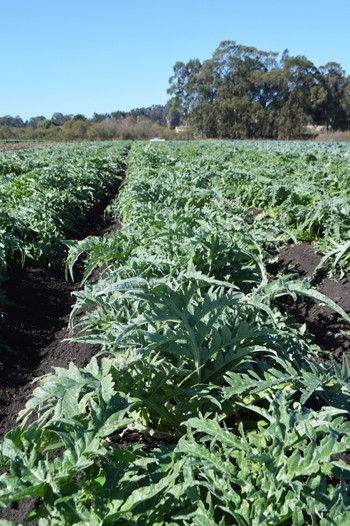
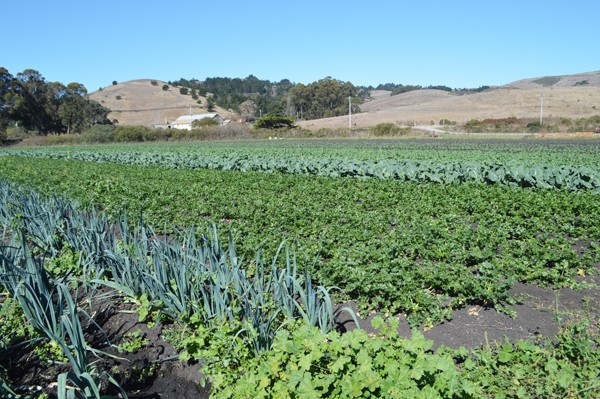
My tour of the fields shows amazing black soil growing gorgeous healthy crops. Artichokes! Monster Brussels sprouts! Rows and rows of dry beans coming to fruition. Piles and piles of pumpkins, ready for retail. Bulk bins of glowing red onions. Weed free celeriac – not on plastic! Acres of healthy brassicas of every age. Shallots the size of your hand! Absolutely beautiful.
Ryan would tell his younger self not to be scared of scaling up. He has really enjoyed the process, loves the increased stability of the farm, and it has pushed him to become a great delegator. Ryan also lamented that in his formative years he only worked on very small farms. He would have benefitted greatly from seeing how larger farms manage crops and labor.
Ryan is soft spoken, and very humble, but it’s clear to me that he’s becoming a master farmer. He’s grown his business exponentially while remaining happy and healthy. He’s got great folks working for him, and is poised to change his business as needed to remain competitive in an area of the country with lots of good growers. Blue House Farm has a lot to look forward to as it matures into a business with secure land resources and its own housing. May the weekend warriors from San Francisco come in droves to get their hands on those gorgeous vegetables and flowers!
For more photos from this visit, go to tinyurl.com/y8kmx5b9.
Ellen Polishuk just retired from growing 25 acres of ecoganic vegetables and other crops at Potomac Vegetable Farms in northern Virginia. She is now a full-time farm consultant, writer and teacher. For more information go to planttoprofit.com.
Copyright Growing For Market Magazine.
All rights reserved. No portion of this article may be copied
in any manner for use other than by the subscriber without
permission from the publisher.