







By Ellen Polishuk
When my speaking spot at the Oregon Small Farms conference was confirmed, I asked a farmer buddy, “If I can visit only one farm while in Western Oregon, where should I go?” Without hesitation, he told me to go see Laura Masterson’s farm. Luckily for me, Laura agreed to my timing, and told me to meet her at the Grand Island location of 47th Avenue Farm.
On the appointed day, I drove my rental car down the state road from Portland, south towards Salem, OR. I was in the Willamette Valley, which is renowned for its agricultural production. The valley is skinny enough that you can see the Coast Range on one side and the Cascades on the other. Crops grown in the valley include: hazelnuts, grapes, tree fruit, blueberries and hops, all interspersed with the traditional crop of grass seed (annual ryegrass and other lawn grasses). There are at least 50 wineries as I wind my way down the 40 miles to my destination.
Without even noticing, after one left turn over an unremarkable little bridge, I’m on Grand Island, a 4000-acre island in the Willamette River. A couple miles hence, I see some land with small patches of different colors and textures and I know that’s where I’m headed – a market farm. The farm is unmarked, and not grand in appearance. There is no house, just barns and sheds. Through the metal gate into the farmyard I go, and there is Laura; ball cap, rosy cheeks and a huge smile to greet me.
I listened to Laura’s Farmer to Farmer podcast while driving, so I’ve got the background of her journey: first generation farmer, came to ag through landscaping, began in her backyard, caught the farm bug super bad and expanded gradually from there. Laura rented various and assorted pieces of ground all around Portland, eventually securing a long term lease from the city of Lake Oswego for the city farm, before taking the plunge to buy her own 38 acres of farmland here in Grand Island in 2008.
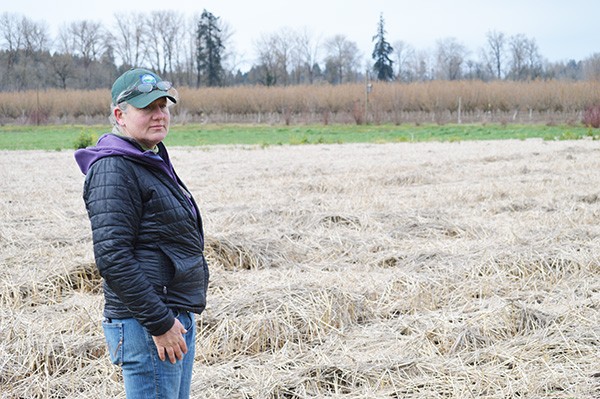
She explains to me that her circuitous process to land ownership let her understand how differently each soil type performed, so that when she was ready to buy, she really knew what good land was, and how much she would value it. This square property is surrounded by other farmland, but then within a couple of miles or so, I can see natural forest and riparian areas. Laura thinks there is better habitat for songbirds and beneficial insects here than in many other parts of the Willamette.
Laura lives mostly in Portland but rents a little house next door so she can stay a night or two during the busy summer season. Laura’s husband Eric, a stone mason, loves coming out to Grand Island to take care of the hedgerow and has worked himself into the position of Head Irrigator. The Willamette valley weather is similar to the Central Valley of California, where it doesn’t rain between July 1 and mid-October. So irrigation is crucial.
47th Avenue uses mostly 3” movable metal irrigation pipes for overhead watering to get crops established and then usually transitions to drip irrigation after that. Oregon is a state with a complicated set of water rights laws that I don’t pretend to understand. Let’s just say that when folks buy farm land, having good water rights included is important. This land has a tremendous well, and Laura did the expensive work of burying main lines and valves throughout the property so that each ¾ acre patch has easy access to good clean water.
The farm is powered by horses and tractors. Having the horses means that all crops are grown in single rows, like the Nordells at Beech Grove Farm (see profile in the March 2019 GFM). Her city farm is farmed more intensively without horses, using electric tractors and a BCS walk-behind. Laura has a precious team of two horses, and uses them to perform primary tillage, some weed cultivation, and cover crop/green manure seeding work.
Since the more tender, intensive crops are grown elsewhere, this farm is for larger acreage crops, which works well with the horse spacing. I have to say I was taken aback to see garlic grown in single rows! How does she manage to keep it so weed-free? Flaming right over the row every few weeks until it’s dry enough to cultivate properly. The garlic is tough enough to withstand a quick pass of the flame and remain unharmed.
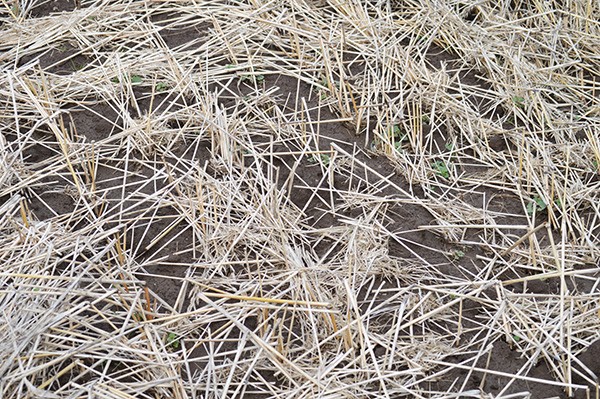
Speaking of the Nordells, Laura has been inspired by their weed fighting rotation, just as I have. She uses winter cover crops religiously, some bare fallow periods in summer, and various cultivation techniques to keep weeds in check. She is cash cropping only half to three-quarters of the land at any one time – the rest is in the soil building part of the rotation. Laura remarks on what a wonderful difference this rotation has made in how much time is spent on weed control: once a month versus once a week!
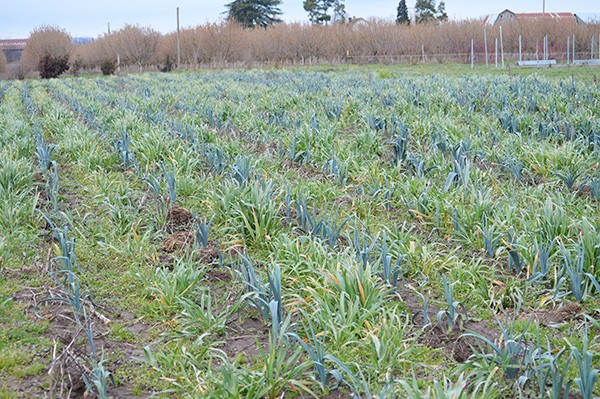
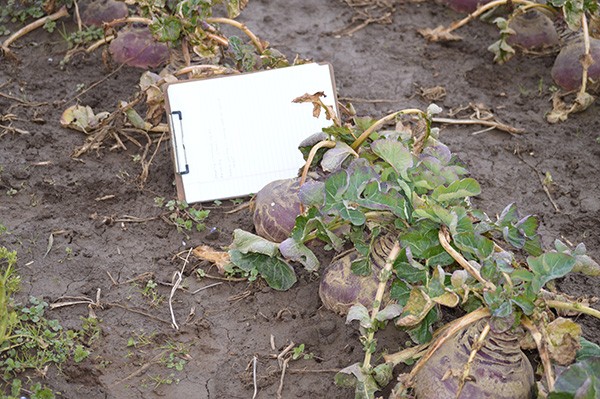
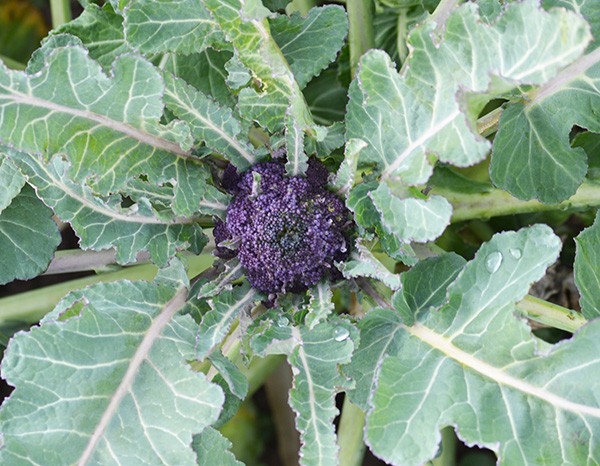
Since my visit happened in the depths of winter, I saw mostly brassicas in the field. They were lush and vigorous. Laura is a highly respected grower in this region and is sought out to collaborate by researchers and seed breeders. We paid special attention to her favorite crop, purple sprouting broccoli. I’ve never seen such big beautiful plants of this crop!
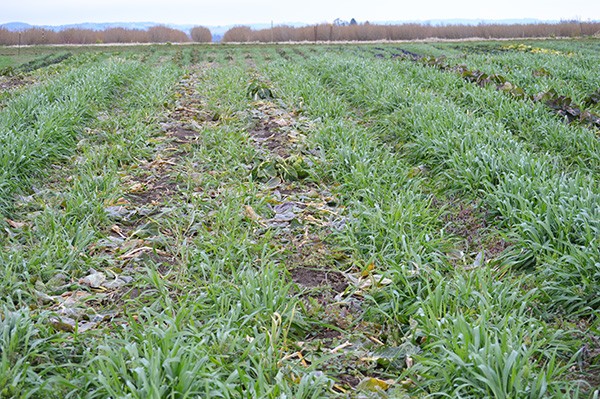
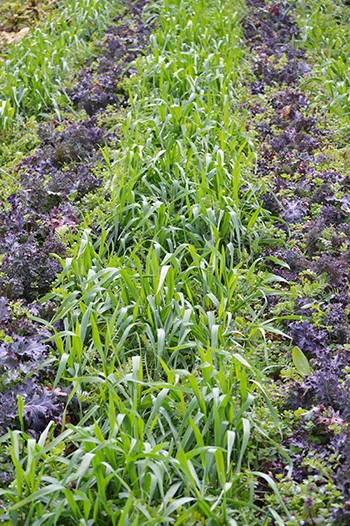
The gorgeous winter cover crops I saw in neat rows in the paths between the brassicas are the result of working with Ed Peachy from Oregon State University (OSU). He has been doing research with a high clearance InterSeeder brand cover crop drill that can seed right over top of flourishing cash crops. Laura’s preferred mix is triticale and common vetch which is seeded right after final cultivation. They used this technique between most of the fall planted brassica rows to good effect. I’m excited to see this kind of research, and can’t wait for these drills to become commonplace.
We wandered by the NRCS funded hedgerows, comprised of native small trees and bushes. Laura enjoys how they offer a beautiful visual break between her land and her neighbor’s corn field. And they do offer additional sanctuary to beneficials. Planting the hedgerow a mower’s distance from the fence line has proved wise, making it easy to maintain.
Time to head to the greenhouse to warm up and continue the chat. Laura has achieved a fine balance between working in her business with having time to work on her business. She is actively engaged with partners at OSU and Oregon Tilth in studying the profitability of her crops using a program called Know What You Grow so record keeping is a normal part of the work culture at 47th Avenue Farm. What crops have surprised her so far using this system that assesses gross profit, before allocating any overhead costs to the crops? Radishes come out in the red, and winter squash is in the top ten best crops!
This is the first year using the new data so she has not made any dramatic decisions to drop or increase crops, but the data will inform all the little decisions being made during the season. It is extremely helpful to have a clear understanding of the relative profitability of the different crops. When it gets busy in the middle of the summer, knowing the gross profit of all the crops can help her make better decisions about what to weed or harvest with limited time.
I ask Laura to report on how her employee situation continues to unfold. In the podcast she and Chris Blanchard talk a lot about how to keep good folks for longer. She’s had some success, but the struggle continues. Her farm manager at the Portland farm has been part of the team for three years and is continuing this season as well. But the farm manager at Grand Island is headed back to the Midwest to farm with friends and be closer to family. That will put more of the day to day management at Grand Island back in Laura’s hands, at least temporarily, and open the opportunity for a new employee to learn more about farm management.
Having a year-round CSA has been a plus by offering consistent work to her best folks so they can stay longer. Having a larger farm also means that there are opportunities for employees to move up through the ranks and take on more responsibility. Laura offers paid sick leave, one week of vacation during the summer and three weeks off during the winter. She is also careful to keep most work weeks to 40 hours per employee. So far, she has managed to keep some of her best folks for multiple seasons, but they continue to move on for all kinds of reasons: some she can try to address for future hires, and others that are out of her hands.
I am impressed with Laura’s thoughtfulness around increasing her skills as a people manager. She reads, studies and thinks a lot about how to create a positive work environment. Laura recommends an article, “The Neuroscience of Trust,” at tinyurl.com/z9toem3, as it has some good tips on how to keep your team working well. She’s had some success using the Enneagram personality test with her team (similar to the Myers-Briggs personality test). The point is not so much to “peg” someone’s exact personality, but to give the space and the language to discussions around how different people are from one another.
Laura and I had only two hours together, but we could have talked for hours and hours. We are similarly aged, and have in common our experience of being powerful women in a male-dominated business. I asked her what advice she gives to young women growers in particular: “Start working on your record keeping skills and systems from the beginning. You don’t need to capture every bit of data your first year, but the best time to start is now! Then you can add more with every passing year.”
Laura has found quite some success as a masterful grower, great marketer, and superior leader. Her commitment to participating in the larger conversations about land use and sustainability is inspiring. With good land, good people, and a strong marketplace, 47th Avenue Farm is poised to achieve even more success in the future.
Ellen Polishuk just retired from growing 25 acres of ecoganic vegetables and other crops at Potomac Vegetable Farms in northern Virginia. She is now a full-time farm consultant, writer and teacher. For more info go to planttoprofit.com.
Copyright Growing For Market Magazine.
All rights reserved. No portion of this article may be copied
in any manner for use other than by the subscriber without
permission from the publisher.