











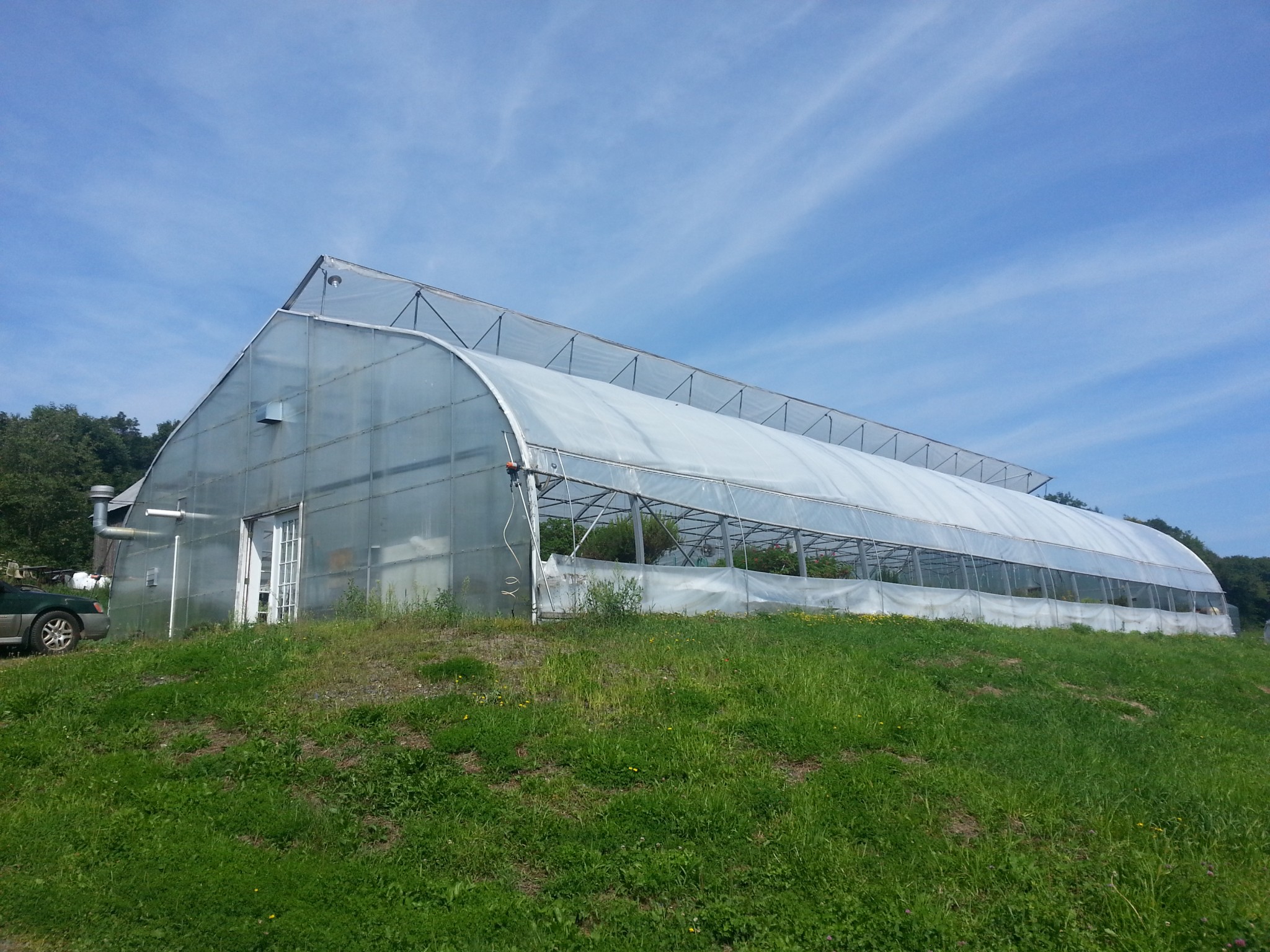
Increased heat and an extended season are the most common reasons growers are drawn to growing in a greenhouse. But if you’re sitting on the fence, not sure if greenhouse growing is for you, there are many other good reasons, some of which are not obvious unless you’ve grown under cover before.
Most of the time when growers reach out to my consulting group, Greenhouse Vegetable Consultants, to help them decide whether to grow in a greenhouse, it has to do with looking at the costs and the return on investment (ROI). The inputs and the capital expenses are high, so you have to know the market to determine if it is worth your while.
Ahh the climate and light
It’s hard to beat working in the cozy, warm, humid air, full of light and green plants in the middle of winter. I know from experience working in greenhouses in Michigan. I felt so lucky to see green plants in February and work in a T-shirt. Conversely, working in a greenhouse cooled by evaporative cooling pads in the summer in Arizona made it possible to “be outside,” when otherwise I’m just dashing to my car to avoid the blistering hot weather.
Efficiency of water and fertility
Pound for pound, tomatoes grown under cover use 85% less water than field-grown, furrow-irrigated tomatoes. Crops such as tomatoes and peppers are irrigated right next to the roots, so there is no water on areas that don’t need to be watered. The plants get just what they need and evaporation is minimal. Because greenhouses grow tall, long plants for up to 11 months, the harvest is much higher than in the field. This means they can yield 10-20 times more than an acre of field tomatoes.
Waste not, want not
While attending the Annual Tomato Disease Workshop in Hendersonville, NC, last year, I was surprised to learn that about 30% of field tomatoes are not harvested and sold, but left in the field. The reasons fruit is left in the field range from being diseased and unsalable, to the cost of labor being too high to harvest, to the quality not being good enough, etc. The issue of food waste is big enough that it made the cover of the March 2016 issue of National Geographic, in an article entitled “How ‘Ugly’ Fruits and Vegetables Can Help Solve World Hunger.” As someone from the greenhouse industry, I was shocked to hear this. Greenhouse growers typically lose no more than 5% of fruit due to poor quality.
Energy conservation
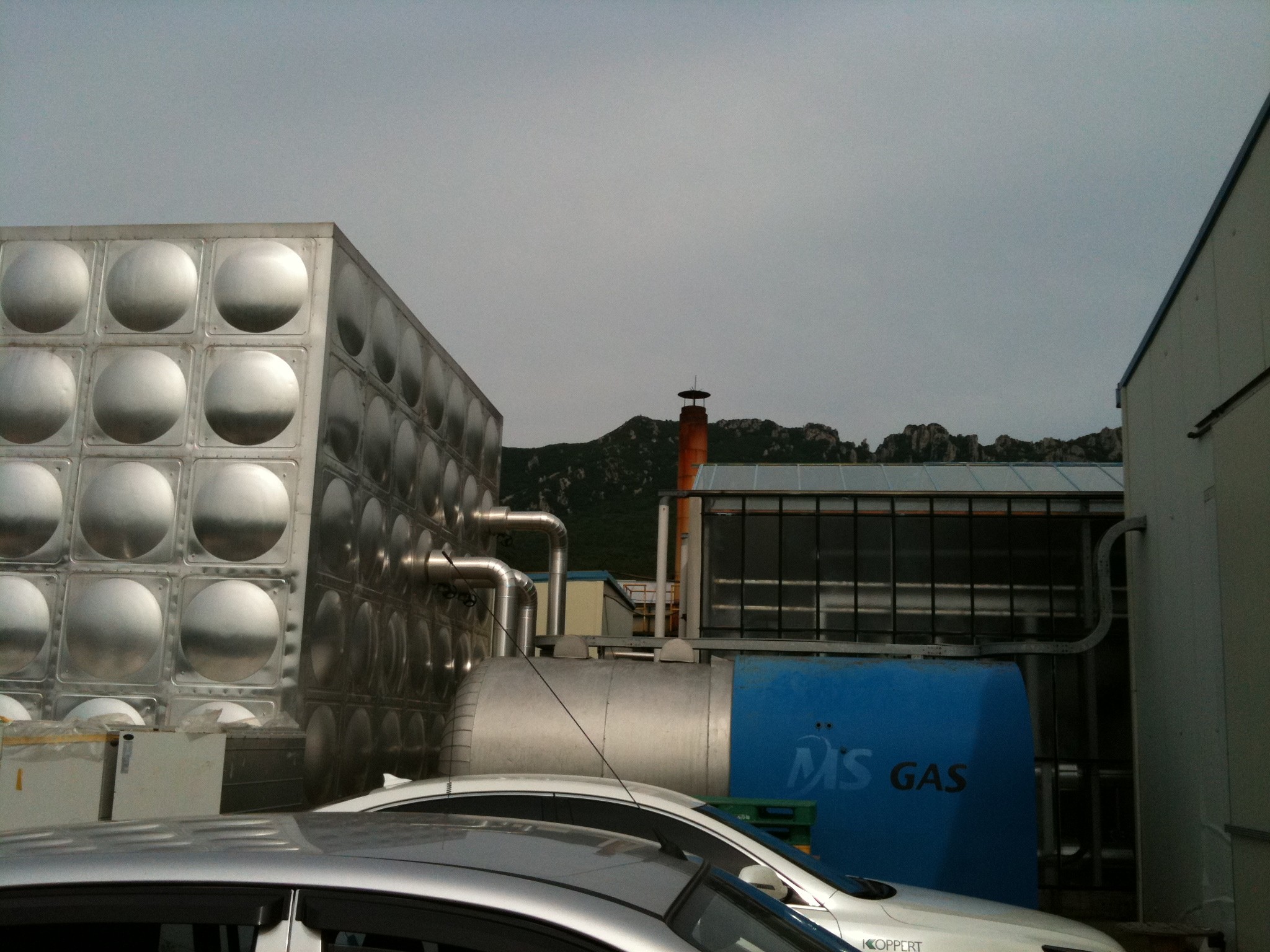
In larger, “high-tech” greenhouses, boilers heat water with natural gas during the day. The hot water is used predominantly in the night to heat the greenhouse, but the CO2 by-product from combustion is piped into the greenhouse to feed the plants. This turns the CO2 that is otherwise a byproduct of heating into fertilizer applied through the air.
Once when working for a large tomato company we brought over the state lawmakers to see our facility and what we were doing. We were being charged extra fees due to our “excessive use” of natural gas, because there was concern we were emitting too much CO2 into the atmosphere. When they saw and understood how we were capturing and reusing the CO2, they said “you should get an award for environmental conservation.”
Other examples of efficient growing include greenhouses that work in partnership with power companies to harvest excess heat, geothermally heated greenhouses, and “enclosed and semi-enclosed” greenhouses that store heat from the summer months in groundwater and use it in the winter. Much of the energy going into new greenhouse technology is devoted to making things even more efficient.
Reduced pesticides
Greenhouse crops tend to need fewer pesticides than field crops. Specifically, if you were to look at tomatoes, diseases are fewer in the greenhouse because of the environmental controls. For example, bacterial spot (Xanthomonas campestris), bacterial speck (Pseudomonas syringae) early blight (Alternaria solani) and late blight (Phytophthora infestans) are almost unheard of because we don’t have much in the way of rain, fog and dripping condensation in the greenhouse. Because diseases need to have the right environment for expression and spread, and we can manage the climate in a greenhouse, we can eliminate much disease before any fungicide is even applied. This is not to say greenhouse tomatoes do not get diseases, they certainly do, but much can be managed by the correct climate.
Editor’s note: In my opinion, not having rain on the leaves is one of the most under-appreciated advantages of protected growing. Greenhouse growers may take this for granted, but until you’ve grown under cover you have no idea how many of your foliar disease problems can be alleviated by keeping the rain off. Many foliar diseases in multiple different crops are alleviated simply by keeping the leaves dry. Being able to control the amount of moisture that gets to the crop is especially useful for tomatoes, where even thin-skinned fruit (think Sungold) can be grown without splitting with even watering.
Insecticide use is also reduced. The use of natural enemies or biological control agents (BCAs) is commonplace in greenhouse vegetable production. This is because we have to use bumble bees for pollination. The first line of defense tends to be the proactive release of natural enemies. Village Farms, a large producer of tomatoes with greenhouses in Texas and British Columbia estimates $5,300 is spent per acre on beneficial insects, with half of that cost on bumble bee pollinators. With such a high investment in our good guys, we are very careful about the pesticides used. Insecticides and fungicides are used in the greenhouse, but are typically applied in targeted areas as determined by scouting, and the pesticides used are much more specific to the pests or the phase of development (insect growth regulators, or IGRs).
Below is the boiler (blue) and water storage tank (shiny metal) outside of a greenhouse in South Korea. The ability to burn natural gas, release the carbon dioxide into the greenhouse during the day and store the heat until needed at night means there is very little waste of heat or carbon dioxide, which is usually released into the environment as a byproduct of combustion. Image courtesy of Karin Tifft.
Grow wherever, whenever
I grew up in Western NY, and although I lived in the suburbs, I spent weekends visiting with my grandpa at his home in the country. The countryside was beautiful, filled with dairy farms with neighboring land growing corn or alfalfa for the cows, and small truck farms. You could easily see why people would want to live there.
Much of the land is now built up with large homes and yards, and much of that good arable land is no longer available. I do not begrudge others for discovering my little Eden, but it makes me wonder where the food will be grown with the disappearance of available farmland? Years later I learned about greenhouse growing from Dr. Merle Jensen at the University of Arizona. I saw how food crops could be grown in Abu Dhabi, the South Pole, and potentially even in outer space! Add urban farming and rooftop greenhouses into the mix and we are now able to produce a lot of food in areas that were previously unsuitable.
In a related thought, growing in greenhouses allows us in the industry flexibility to consider growing in other areas. Greenhouse growing takes a lot of skill, but those skills transfer across borders and climates. Growers I worked with in southern Arizona came from England and the Netherlands, Belgium, Canada and Arizona, and have since moved on to work in British Columbia, New Zealand, Mexico, California and Maine.
Market trends
Today a majority of fresh tomatoes in grocery stores are from greenhouses. In the US there are approximately 113,000 acres of tomatoes, though only 1,500 of those acres are greenhouse tomatoes. I also see this is the trend in Europe where it is now difficult to find a field-grown tomato at the store in Holland or England.
I think it is likely that as people become more aware of these other reasons to grow in a greenhouse, the market will continue to increase for greenhouse-grown produce. As the end consumer becomes more aware of the water-efficiency, reduced pesticides and even of the nice climate and correlated good conditions for those working in greenhouses, there will be more demand for such product. So yes, there is a significant upfront cost to building a greenhouse, but there are many reasons to grow in them, and for me personally, those other reasons are why I love to work in greenhouses. Call me a “greenhouse evangelist” if you’d like, but sit next to me on an airplane, and I’ll have you too convinced that greenhouse growing is the way to grow.
Karin Tifft, MS Entomology and BS in Horticulture, has been working in greenhouses for close to 20 years. In her experience, she has learned that you can’t have plants without having insect and disease challenges. Karin can be found at www.greenhousevegetableconsultants.com and is available to provide personalized consulting for your specific crop, location and market.
Copyright Growing For Market Magazine.
All rights reserved. No portion of this article may be copied
in any manner for use other than by the subscriber without
permission from the publisher.