











“So whose idea was this, anyway?”
This was the recurring question back in late June. We had agreed to grow 50,000 stems of ‘Superior Sunset’ sunflowers for a statewide advertised 4th of July special for our grocery stores. It looked like such a good deal. “Sure, we can pull this off. This is easy!”
Then the rains stopped. And the temperatures hit 105 degrees and the wind started blowing 30 mph, every day. The sunflowers stopped growing. Three weeks before the special, it looked like they wouldn’t be ready. We were in a panic. Frank couldn’t sleep. This was going out in the newspaper ad! Cripes. We pleaded, we cried, we prayed to everything from the tooth fairy to the Virgin of Guadalupe. And it worked. For a week straight, we cut sunflowers. We packed hundreds of buckets and dry-pack boxes. We shipped on pallets in tractor-trailers that came to the farm. We made midnight deliveries to Dallas to beat the heat and traffic. And then it was over. Thank heavens.
So we got right into the field, plowed down all the debris, and had the whole field replanted in a week. Here’s how we did it:
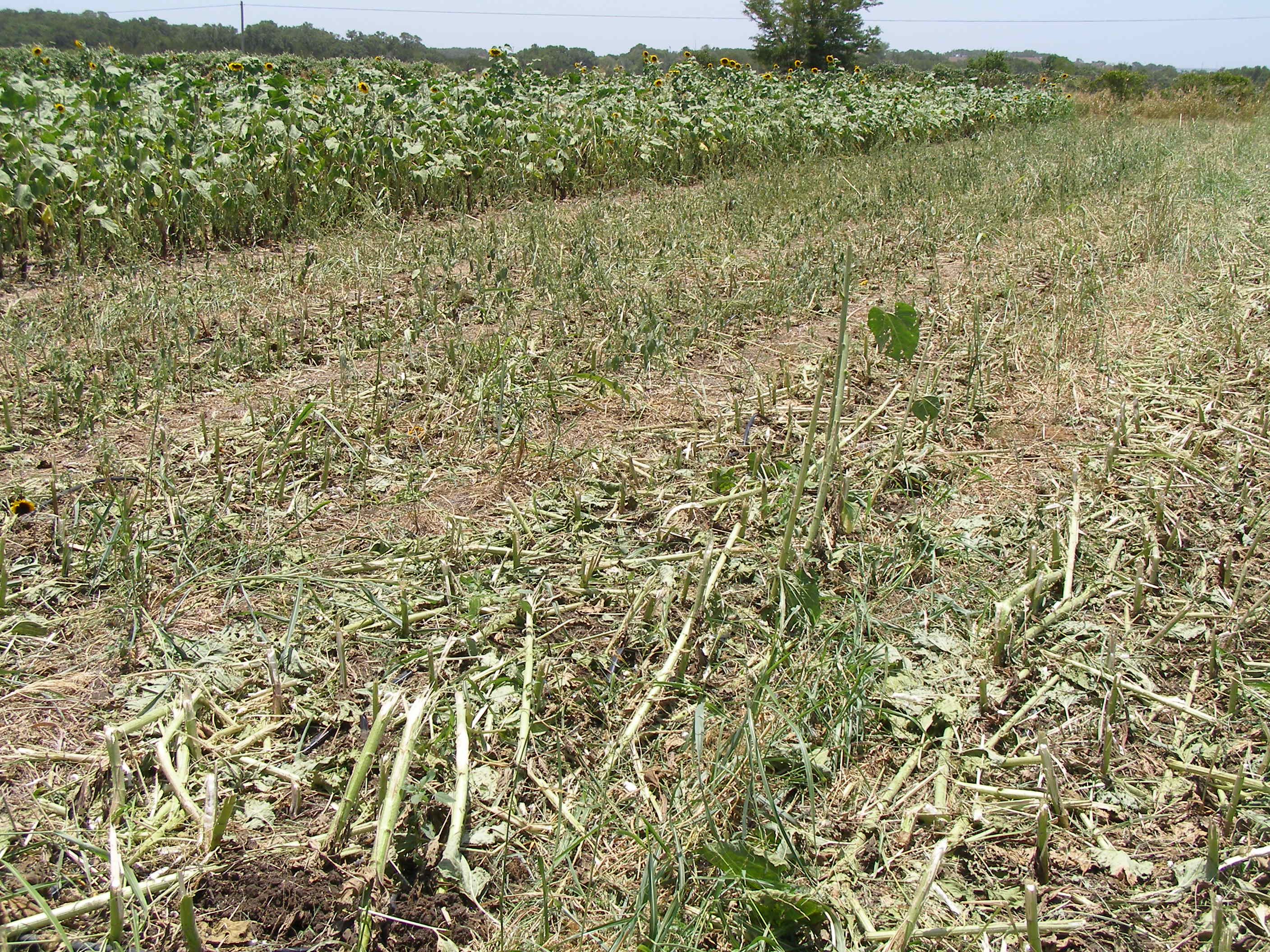
1. The first thing we do is mow everything down with a shredder. This leaves a lot of rough plant material, but we want all that organic matter back in the bed. Our beds are permanent, and we mow just the beds and not the whole field.
2. After mowing, we have to remove the drip tape. We can re-use this tape for a couple of seasons. When we pull the tape we look for rodent damage, and any breaks or holes are tied together in a knot so we see them when we pull the tape back in the bed. Holes are repaired using a 3 inch piece of 1/2 inch cpvc tubing and concrete tie wire.
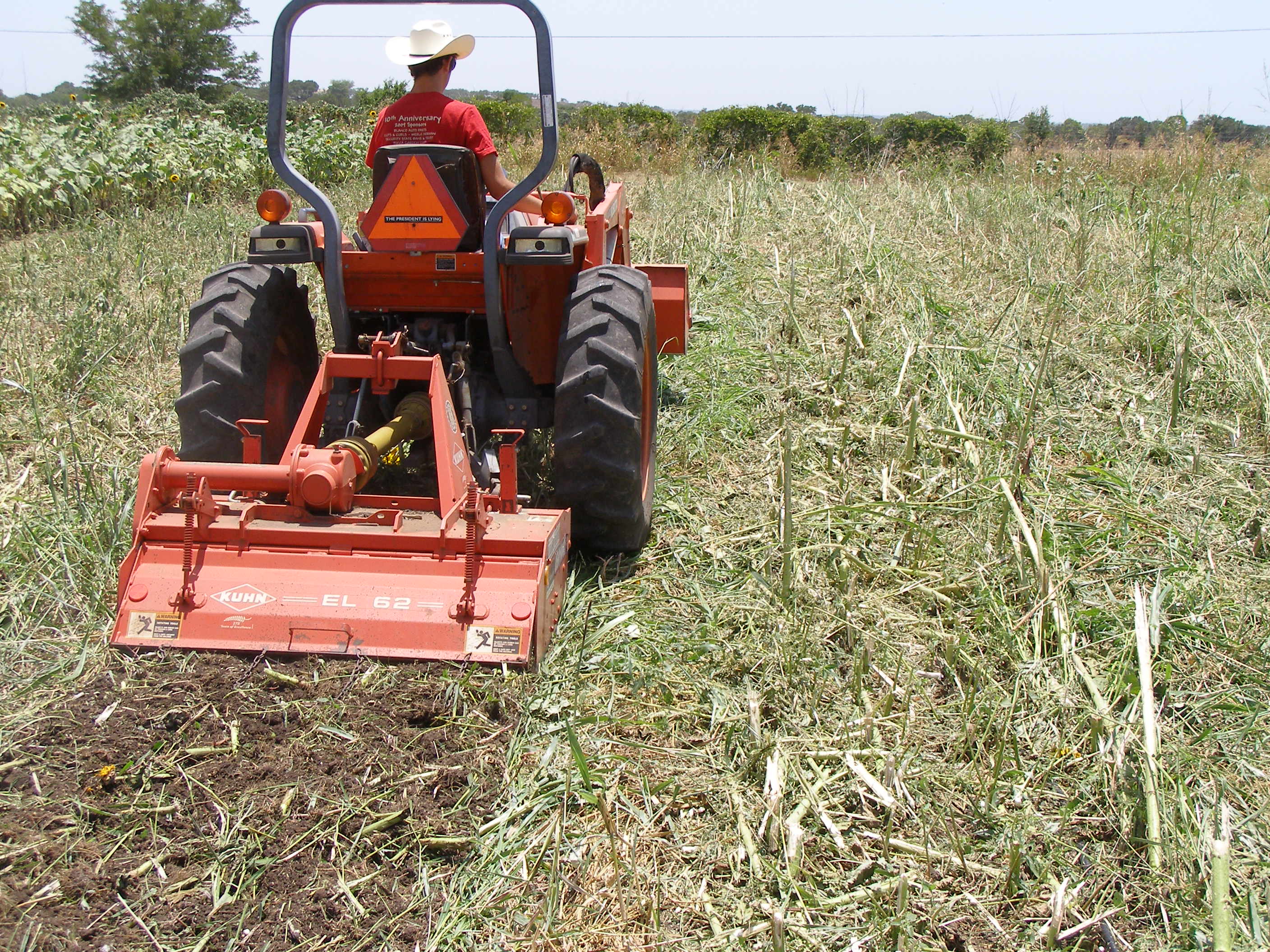
3. We use a Kuhn tiller to make the first pass through the bed. This is a 48 inch wide, gear-driven tiller. Chain drive tillers break too easily here in our rocky soil. This tiller can really chop up that sunflower stubble.
4. We use a little drop spreader to put out cottonseed meal at the rate of 50 lbs. to a 200 foot long, 4 foot wide bed. This spreader was made for pelleted lawn fertilizer, so we had to drill out all the holes to make them large enough to let the cottonseed meal pass through. We also attached a piece of pvc pipe to the handle so the tractor driver could open and close it from the seat. You can see the cottonseed meal on the surface of the bed, and the large root balls of the sunflowers that have to be worked in.
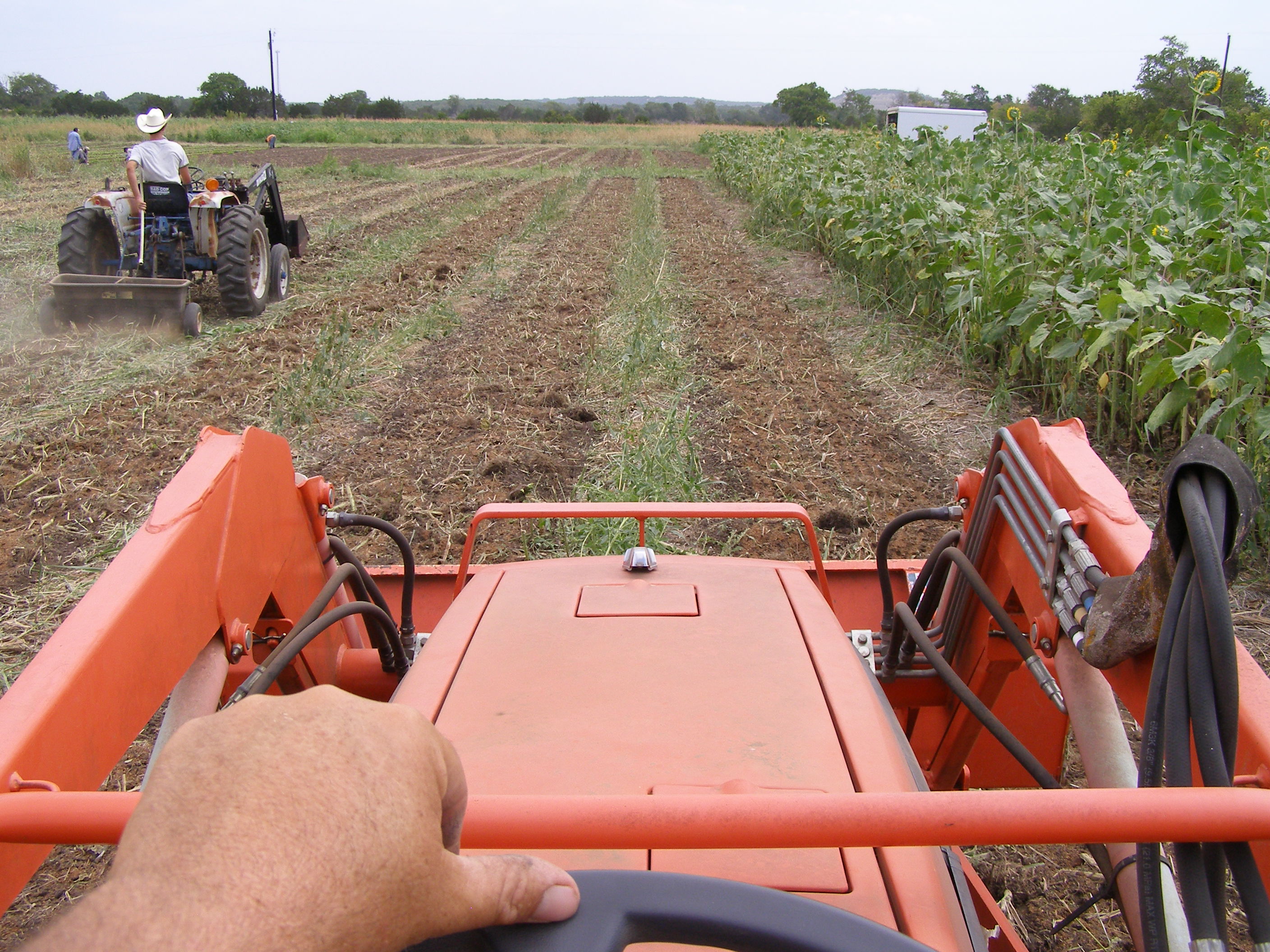
5. If the aisles are weedy, we will make one pass directly over the aisles, with the tractor tires in the beds and the tiller set just low enough to scrape the surface of the aisle clean. These beds have already been fertilized with cottonseed. You can see Janos working ahead putting out cottonseed.
6. After the aisles are cleaned, there will be a ridge in the centers of the beds where you can still see the cottonseed meal. We use this ridge to sight down the center of the bed for the final tilling. The rough areas here are where the aisles have been tilled.
7. The second pass with the tiller is the final pass. There is still a lot of sunflower trash, but the beds are smooth enough to be planted. These beds were harvested, mowed, tilled, fertilized, tilled again, and replanted all within a 2 day period!
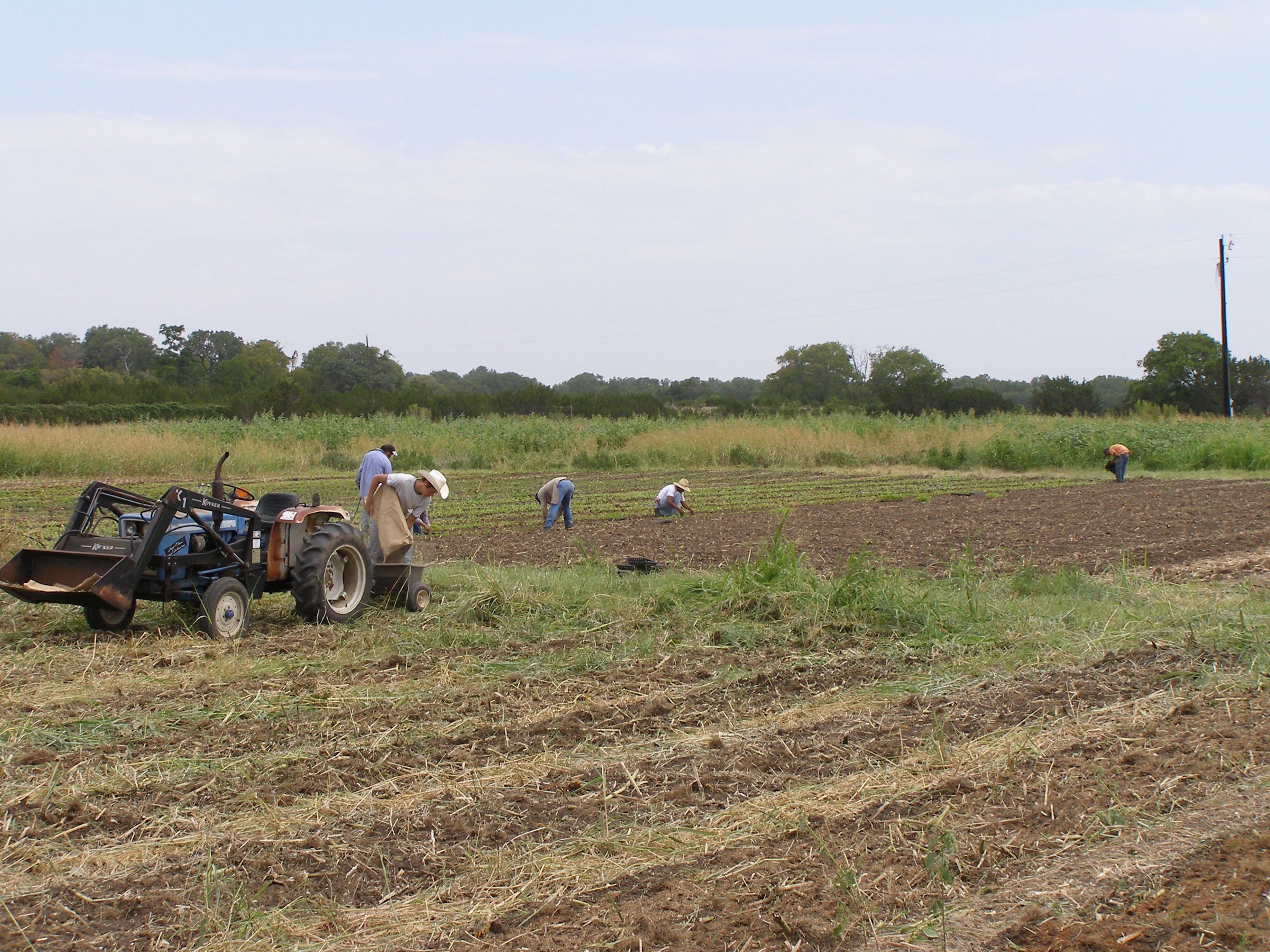
8. Here the crew is planting beds that have just been finished while Janos puts out cottonseed meal in another block of beds. These guys plant so fast that it is hard to stay ahead of them sometimes! We are putting in Pampas Plume celosia after the sunflower crop.
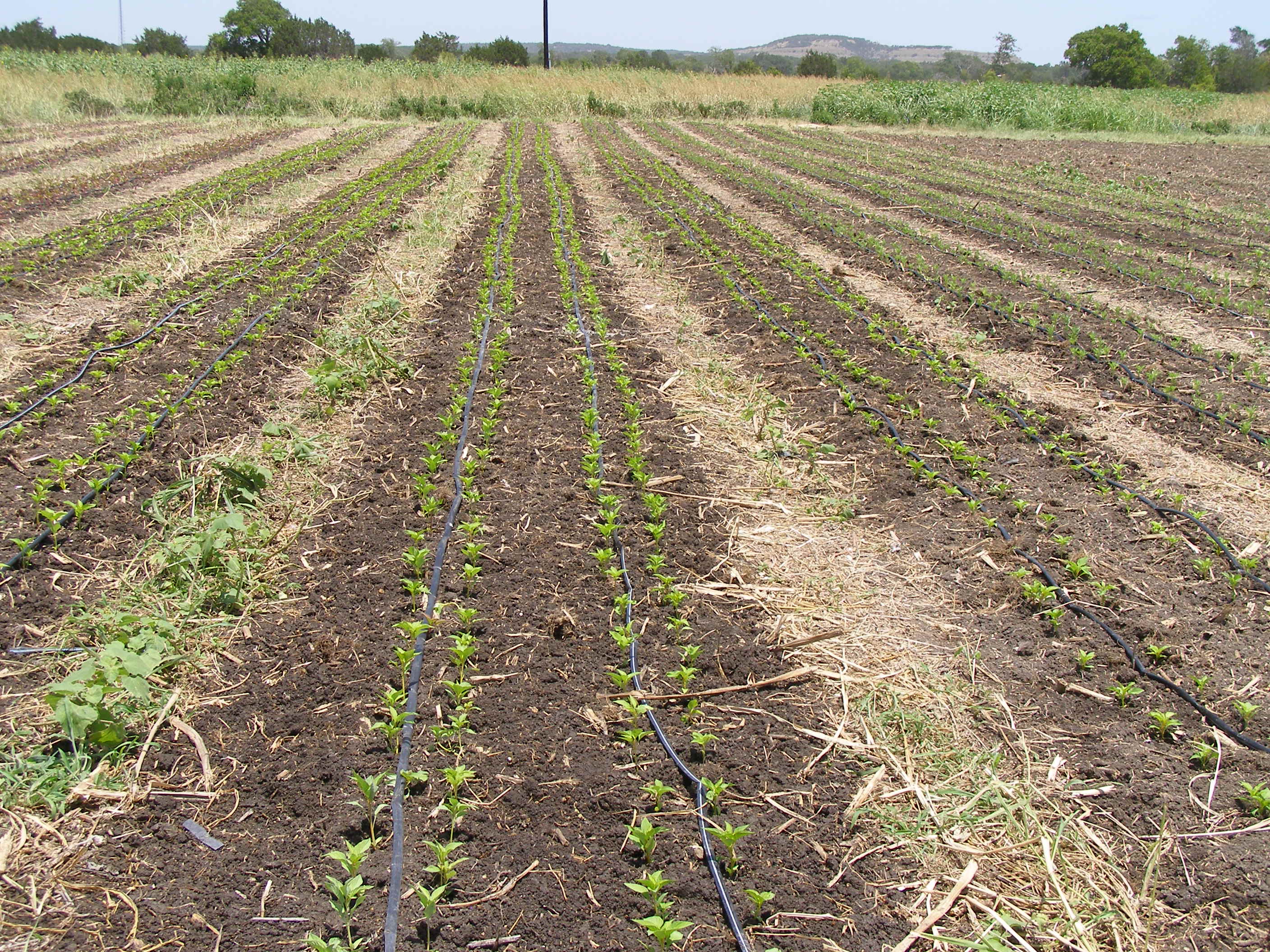
9. The beds have been replanted with celosia, and the drip tape has been returned to the bed. (These aisles were not tilled.) We try to rotate crops, but some of these beds will be replanted in sunflowers. We need the space. Somehow, we promised to do another big advertised sunflower special for Labor Day. Whose idea was that, anyway?
Pamela and Frank Arnosky are the owners of Texas Specialty Cut Flowers in Blanco, Texas. They grow flowers, plants, and vegetables for sale at their own farm market and to florists and supermarkets. To learn more, visit www.texascolor.com.
Copyright Growing For Market Magazine.
All rights reserved. No portion of this article may be copied
in any manner for use other than by the subscriber without
permission from the publisher.