










Spring has always been my favorite season, so loaded with promise and possibility. By March the phone has begun to ring and my inbox is filled with eager questions and requests from customers. The most common: “When will you have flowers again?” After a long winter, everyone is hungry for a little bit of spring.
In past years, I’ve had to turn most of these excited customers away with promises of flowers by late April or early May. In my garden, this is when the biennials and shrubs finally begin to bloom in earnest. But it’s brutal to turn away business when there are so many spring expenses to cover. So I have been building up my spring offering list, adding hoophouses and finally getting up the courage to order in a lot of bulbs.

While not taking the plunge until recently, I have been carefully observing my friend Jan Roozen and his bulb farm for the past few seasons. Once crowned the King of Eremurus, Jan is a sixth-generation Dutch bulb farmer and a wellspring of information. His operation specializes in growing relatively trouble-free bulb crops that have a long vase life and can be grown profitably. He sells cut flowers at Seattle area farmers markets and ships blooms all over the country. In fall, he also sells bulbs; growers can email or call him (contact information at the end of the article) for his price list and availability.
Walking into Jan’s coolers during spring will take your breath away! The textures, smells, colors! When other local growers are holed up in their propagation houses transplanting tiny seedlings or mulching bare perennial beds in the rain, Jan is already swimming in flowers. He grows the most beautiful and unique blooms you can find anywhere, many of which I had never even heard of before meeting him. I always end up spending a small fortune at his place because it is impossible to leave empty handed. I have to try at least one of everything — I consider the weekly spring visits an education and my purchases tuition.
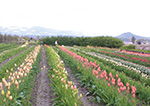
When it come to growing these treasures, Jan is able to do it all outside without any protection in his Washington Zone 6a climate. Generally, field planting begins in October and is completed by early December. Jan’s fields are very tidy and orderly. All flowers are planted in long, straight rows spaced roughly 3 feet apart. This allows just enough space to run the walk-behind tiller between and keep spring weeds in check.
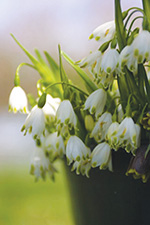
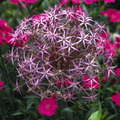
At my farm, we tuck the more fragile crops (anemones, ranunculus and early tulips) into our hoophouses and the rest get planted in the field. This year we’re adding 14 varieties of fragrant daffodils; Scilla hispanica; Dutch iris; French, parrot and fringe tulips; Leucojum ‘Gravetye Giant’; ‘La Belle’ ranunculus; ‘Galilee’ anemones and drumstick allium. Someday I hope to offer the incredible selection Jan offers, but for now this is about all I can manage.
For hoophouse crops we plant corms and bulbs in late October after the last fall flowers have been harvested. Generous amounts of compost, rock phosphate and lime are added to each bed before planting. Ranunculus (5/7 cm) get a 9” x 9” spacing with 5 rows per bed. Anemones (4/5 cm) are planted a bit tighter with 4-6” spacing with roughly 8-10 rows per bed. Our tulips are planted in the ground like eggs in a carton.
Now is the time to get your bulbs in the ground. Most suppliers recommend placing orders by early July for the best selection but I put a call into Ednie Bulb Company, and they assured me there are still plenty of bulbs in stock. By tucking in even a small plot of bulbs, you’re bound to have a brighter, more abundant spring!
Erin Benzakein runs Floret, a small organic flower farm in Washington state.
Copyright Growing For Market Magazine.
All rights reserved. No portion of this article may be copied
in any manner for use other than by the subscriber without
permission from the publisher.