











It is so easy to get caught up in the hustle and bustle of high summer and forget to think any further into the future than the next order deadline. I know the last thing I want to do right now is look ahead to next spring, UGH! But in truth, now is the time to start planning next season’s bounty. In past years, this one included, I’ve slacked heavily on my early spring plans only to kick myself later when everyone is begging for more flowers and my early spring garden is bare. With the addition of two new hoophouses, thanks to the NRCS High Tunnel Grant, we will surely have more bulk early on but after the hoops have peaked and the field perennials are nowhere near ready, what will fill the gap? How will I even come close to satisfying customer demand for Mother’s Day, spring weddings etc? The answer…biennials!
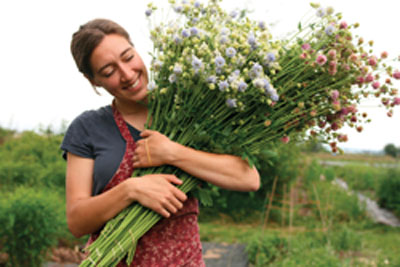
Biennials are a unique group of plants that flower about a year from initial sowing then set seed and die. Generally seed is started in late May to July and plants are set out in late August to early September. Ideally, plants are given 4-6 weeks to establish before the first fall frost. I have had luck with sowing as late as August since these plants tend to grow vigorously and my climate is somewhat mild (zone 6b). Once planted, each variety will produce a large tuft of foliage before cold weather sets in and then sit dormant through the fall and winter, reawakening to bloom in April and May. Seed and plugs for all of the varieties listed are inexpensive, easy to grow and generally hardy down to zone 4. If starting seed this late in the game feels too daunting, plugs can always be purchased from nurseries like Headstart in CA. For most biennials the lead time on plugs is relatively short, 5 to 6 weeks. If you want to give it a try, get on the phone today with one of the brokers listed at the end of the article and place your order.
Varieties I grow and love
Anchusa: One of the few true blue flowers, this stately plant produces buckets and buckets of brilliant royal blue blooms in early spring. It technically isn’t a biennial but does best when replanted every other year since plants tend to die out over time. It can be propagated by seed or root cutting. As a cut flower it has a tendency to wilt directly after picking but will revive after a few hours in a cool place. To combat this issue you can either cut into hydrator, pulse stem ends in Quick Dip, or sear them in boiling water for 10 seconds before storing. It has a good vase life and long, strong stems. Plants are huge so you’ll want to give them adequate room (18×18”) minimum and two layers of netting to support their massive 3- to 4-foot stems.
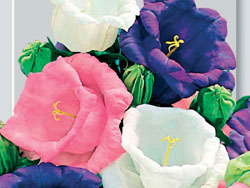
Campanula medium (Canterbury Bell): With the release of the annual Champion series it is easy to overlook this old cottage garden favorite. Both the single and double varieties (flore plena) produce huge stems loaded with balloon-shaped blooms that are long lasting and unique. I love having them for bouquet work in the spring! Plants are quite bulky so netting is a must to keep them upright in heavy spring rains. Colors include white, pink and purple. I like to follow the spring crop with a round of Champions for an extended harvest. Pick when the top bud is colored but not open for the longest vase life. It is not unheard of to have them last two weeks once cut!
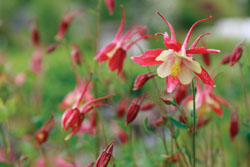
Aquilegia (Columbine): I have found that treating these as a biennial, replanting fresh stock each season, gives us amassive, abundant harvest each spring. Otherwise, older plants seem to succumb to disease after a year or two and their self-sown babies aren’t in enough quantity for a proper crop. There are many, many varieties to choose from and almost all make suitable cuts. The McKana series sports large, brightly colored blooms that sell very well at the farmers markets, grabbing the attention of passing customers. Over the years, I have grown more and more fond of the doubles. The Barlow series is a lovely group of tall, double-flowered plants which often produce 7-10 stems each if grown in rich soil. There are seven different colors to choose from but for us the most popular is certainly the Black. Aquilegia vulgaris plena ‘Ruby Port’ looks very similar to the Barlow’s and has the most exquisite ruby-colored double blooms. Designers actually fight over it in the truck! Last year I discovered a phenomenal series called Tower. (Seed is available from Geo Seed.) It has massive 3.5- to 4-foot stems topped with dozens of large, fully double blooms which resemble upturned petticoats. They are truly a sight to behold and impossible not to sell out of! A few new varieties I am sowing for next spring are vulgaris William Guinness, Pink Petticoat and the Double Mix from Geo. Cut the flowers early in development (before any begin to shatter) for the longest vase life. While the bloom window is short (two weeks tops for all but the McKana’s) these beauties are definitely worth the effort!
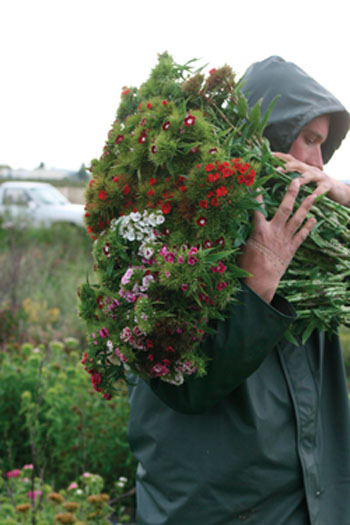
Dianthus (Sweet William): Of all the biennials we grow, these sturdy plants are certainly the workhorse of our spring garden. It is always so comforting to slog out to a soaked field in full rain gear, hunting for ANYTHING to fill orders and find a perky, lush patch of Sweet Williams begging to be cut. While they aren’t a huge show-stopper when it comes to looks, they do add color and fragrance to mixed bouquets, have an extremely long vase life, are easy to grow, hardy and usually quite healthy even with minimal care. We grow Super Duplex, Tall Double Mix, Electron and Scarlet Beauty for a nice pop of color in bouquets. I’ve found that most florists pass by these common flowers or are only willing to pay a few dollars per bunch. But two outstanding varieties, Sooty and Oeschberg (seed from Jelitto) are a completely different story. Both varieties are very unique with dark foliage and flowers. Sooty, as the name suggests, has deep chocolate blooms while Oeschberg is closer to a dark magenta-purple. It is impossible to ever have enough of either! For an extended harvest we plant patches both in and out of the greenhouse giving us a month or more of bloom. Generally plants are spaced 9×9 with 4 rows to a bed. I like to harvest when 1-2 flowers are open on a head. This prevents rain damage and allows a two-week vase life for the consumer.
Digitalis (Foxglove): What’s not to love about this beautiful and graceful flower! When I was a little girl we had it scattered throughout our garden and I loved watching hungry spring bees crawl inside the freckled blooms to gather pollen. As a grower I’ve found that once the blooms are pollinated they drop from the stems so be sure to harvest early (colored bud) for the best stem quality. Also, stems should be kept very vertical while in storage since they often get crooked from tipping even just a little sideways in the bucket. While there are many varieties to choose from I typically keep the majority of my planting simple and stick with the purpurea Excelsior mix, Alba and Apricot. There is a fantastic, slightly hard to find variety Digitalis lutea (available from Diane’s Seeds), that is a must grow. With thick waxy leaves and sturdy stems covered in lovely cream blossoms this baby should be planted en mass! Designers love them, they make bouquets sparkle and have a super long vase life too.
Hesperis (Sweet or Dame’s Rocket): Much more common in the UK, this cottage garden favorite makes a wonderful cut flower. Blossoms come in white, violet or a mix which occasionally includes mauve pink. Easy to grow, it is one of the first true flowers in the garden. Blooms are highly scented and look fantastic in bouquets. Be sure to note that stems do lengthen a bit after harvest so if you’re incorporating these into bouquets, snug them down a little lower than seems right in the beginning to account for elongation. The more you cut, the more they flower! I pinch my plants at 6” which results in a bumper crop of tall, useable stems. After they’ve flowered, the stems are loaded with pretty seed pods resembling thin, shiny green beans. I like to mix them into bouquets as well!
Lunaria (Honesty or Money Plant): Grown mainly for its beautiful seed pods, this spring treasure thrives in less than ideal conditions (sun, shade, poor soil). Flowers can be harvested in early spring but the window of bloom is so short it isn’t a very reliable flower crop. I love to use the seed pods when green and as they age a little, taking on a purple cast. Each plant produces 20-30 long stems that are loaded with brilliant green seed cases. Great in bouquets, designers like them for an unusual filler and we use them a lot in wedding work, especially for bouts and corsages. Give plants lots of room to spread out — 18×18 minimum.
While finding the time and energy to weave these plants into the mix can be difficult, a little effort now will go a long way in the spring when demand is high and the garden is often bare.
Sources
Plugs can be ordered from:
Germania, 800-380-4721; www.germaniaseed.com
Harris, 800-544-7938; www.harrisseeds.com
Gloeckner, 800-345-3787; www.fredgloeckner.com
Seeds can be purchased from:
Jelitto, 502 / 895 0807; www.jelitto.com
Geo Seed, 888-645-2323; www.geoseed.com
Diane’s Flower Seeds, no phone number; www.dianeseeds.com
Erin Benzakein runs Floret, a small organic flower farm in Washington State www.floretflowers.com
Copyright Growing For Market Magazine.
All rights reserved. No portion of this article may be copied
in any manner for use other than by the subscriber without
permission from the publisher.