











We’ve been growing 8-10 acres of vegetables for farmers markets and CSA since 2000, and added in a flock of egg-laying chickens in 2004. We think chickens can work well on a vegetable farm with the right management. On our farm we make a small profit and get a lot of side benefits from our 200 birds.
Getting started
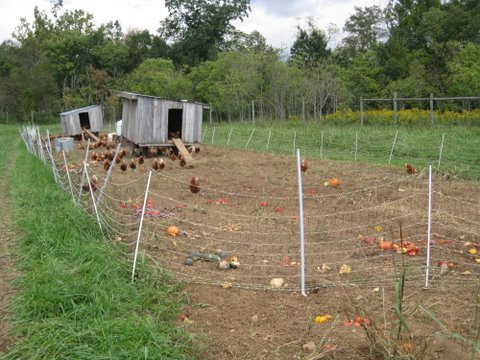
We used the same method for getting started in chickens that we use all the time—find someone who’s doing it well and blatantly copy them. Our friend Forrest Pritchard at Smith Meadows in Berryville, VA, does a good job raising many more animals than we do, and our system is based on what he was doing when we started. He has since moved on to other models but we remain happy with our system. We built an 8’ x 8’ open-floored coop on a small trailer, built roosts and nesting boxes inside, and made doors on the outside for collecting the eggs without entering the coop. We bought two 164-foot lengths of portable electric fence and a solar battery charger, and some water and feed troughs. We move the chickens around our farm about once a month, mostly into unused edges of our farm, but occasionally into a vegetable field that was done for the year. Our biggest limit was water — we needed to keep the chickens close enough to one of our hydrants to run a hose to their yard — so they stayed pretty close to our house and buildings.
Knowing the chickens would be a marginal economic enterprise, we were more frugal than usual, which mostly meant using scrap lumber for the coop. We spent about $1,000 initially for our set-up, and then another $500 for feed during the year. The chickens themselves were $140, but we sold them in the fall for the same price, so they didn’t actually cost us anything. Building the coop took a lot of time, and beyond that we spent roughly an hour a day taking care of the chickens and washing eggs, so we’ll say about 200 hours of labor for the year.
The first year we had 30 chickens and sold all the eggs off the farm for about $3 per dozen. We kept the chickens for about five months, mid-May to mid-October, and they laid about 2 dozen eggs a day, so when you subtract the eggs we ate ourselves we grossed about $800. That put us out $700 and 200 hours of work for the year.
Besides the economics, though, the eggs were very delicious and popular. We liked having some animals around, we liked feeding them our compost, and we did get them through a few vegetable fields where they ate bugs and dropped a lot of fertilizer. Still, we knew we needed to improve the economic aspect, and could also do better with the whole system of integrating the chickens with the vegetables.
Seven years later
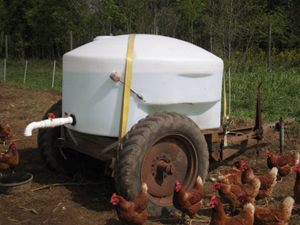
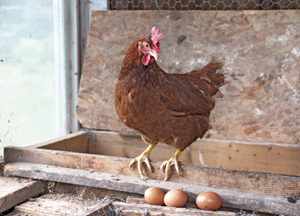
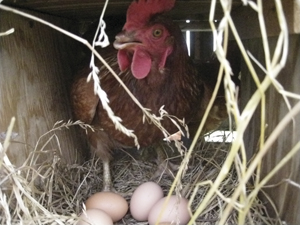
We are still using the same system with a number of improvements. We’ve gradually increased our flock to about 200 chickens, and this number gives us some economies of scale without getting too big for the time we have. We built a second, larger coop (8’ x 14’), giving us a total of 176 square feet of coop space, 66 feet of roosts, and 32 nesting boxes. We keep the two coops together, and after a few days the chickens sort themselves out between the preferred larger coop and the second-rate old coop. We bought two more lengths of fence, for 650 feet total, which we use to either give the flock more space or to help us move the chickens around. We also added a water trailer, which allows us to move the chickens anywhere we want instead of just close to a hydrant. Otherwise we resist any urge to make changes to the infrastructure unless we have to—we don’t make enough money on the eggs to justify putting more time and money into it.
We now sell eggs for $5 per dozen, and bring them to our three farmers markets in addition to selling them off the farm. We collect about 13 dozen eggs a day and keep the birds for about six months, so we sell about 2,000 dozen a year and gross $10,000. We continue to sell the chickens every fall, for about $2 more than we paid for them, so we make a few hundred dollars for keeping them alive and well-taken care of for six months. Our feed costs are about $5,000 per year, and other non-labor costs are about $500 (health department fees, replacement fence or battery supplies, etc.). We now spend about 2 hours a day taking care of chickens, washing their eggs, and moving them around, so we’re ending up with about $4,500 for 360 hours of labor. We consider the coops paid for from previous years’ income, so we think we now generate about $12 an hour.
We are okay with this number, especially because we get all the side effects of having chickens, but it could certainly be improved. Our biggest cost is feed, and we’re using certified organic soy-free feed at $22 for 50 lbs. We like this feed a lot and think it’s the right thing to do, but most people don’t do this and it doesn’t mean we can charge more for our eggs. We could theoretically save $5-$10/bag by getting natural, non-GMO, non-organic feed with soy, which would mean saving maybe $1500 a year and making more like $16 an hour. However, since we look at chickens as a sideline enterprise, we’re happy if it covers its costs and makes a little money, and we really think the organic soy-free feed fits our farm and our goals much better than the alternatives.
Another aspect to consider is the fees and regulations that come with selling eggs. As vegetable farmers, we aren’t used to paying attention to too many rules, but eggs bring about a whole set of issues that vary from state to state and county to county, and it’s our responsibility to make sure we’re doing everything right. Here we pay $285 to be able to sell eggs at one farmers market, $50 at another, and $0 to sell at our third market and off the farm. Some localities have a lot of rules and others not so many, so targeting your egg sales to places with low fees and/or regulations can make a difference in the money and time you spend.
Free-Range Chicken With Assorted Vegetables
This makes a good stir-fry and we think it makes a good farm too. As I said in the beginning, though, proper management is essential. For us, $10,000 in egg sales is nice, but it’s less than 5% of our total sales, and we need to minimize the time we spend and maximize the other benefits.
Like anything else, we work on little systems to make the daily chicken chore take less time, and we expect to have it take one person about an hour to give them feed and water twice a day and collect eggs once. About once a week we need to bring out more feed and replace nesting material, but having coops with no floors means it only takes about an hour once a year to clean them. Washing eggs feels time-consuming, especially when it’s muddy, but also takes about an hour a day.
One way we save effort is by getting new ready-to-lay pullets every May and selling our whole flock every November. This focuses the chicken chores to the time of the year when we need to be here anyway (watering plants and picking vegetables), when we have employees, and when we have an established market. We also avoid dealing with keeping water from freezing, keeping chickens warm enough, lower laying rates, and other hassles of taking care of animals in the winter. We stockpile a few months’ worth of eggs for ourselves and can go on vacation, play in the snow, or just stay inside when it’s cold.
Otherwise, the biggest challenge is moving them around. Our floor-less coops let the chickens do whatever they want without us letting them out in the morning or closing them up in the evening, but they also mean we can’t just close the chickens into the coops and move them all at once in early morning or late evening. So we herd them around during the day, with mixed results. More often than not it’s a short move, the chickens cooperate, and it takes 3-4 people an hour to do the whole thing. But sometimes the rotation means moving longer distances, the chickens can’t see where they’re supposed to go, everything falls apart, and we find ourselves trying to reason with a bunch of bird-brains running through the weeds and plants. This seems to happen most early on, before the chickens (and the seasonal employees) have figured out what to do. If we’re short on time and the chickens need to be moved, we buy some time by leaving the coops in the same place and adjusting the fence to give them access to new ground.
To maximize the benefits of the chickens, we now plan out a chicken rotation along with our field plan for the year. In early spring, we can move the chickens through a few fields before they are planted in vegetables. We move chickens anywhere from once a week to once a month, depending on how busy we are and how wet it is. So we try to put them in a field six weeks before planting, which means we can usually get them out about three weeks before planting. This gives the manure some time to get incorporated and start to break down before we transplant. This works well for late plantings of summer and winter squash, which don’t go out until June or early July, and always means especially robust plants. This year we also put chickens through a field before planting our late tomatoes, which I thought might lead to too much nitrogen and big bushy plants with few fruits. The plants did look more bushy than the adjacent, chicken-free field, but tomato production was about the same.
It’s much more common for us to move chickens through fields that are finished, so after a few quick trips before planting the chickens spend the rest of the year cleaning up old fields. This takes the pressure off moving them by a certain time, and still seems to improve production in the following year. We always mow and usually pull plastic before we put the chickens in, but this year we put them in one field before we pulled the plastic and they were fine. They shredded a little plastic with their feet right below the coop, but otherwise they just ignored it and spent their time in the aisles and edges. They also do fine in fields with bio-mulch, helping to incorporate it like anything else with no problems.
The increased production of vegetables is a big part of our enjoyment of chickens, and it seems to go beyond what we’d get just adding extra nitrogen fertilizer. Somehow, the bugs they eat, the scratching they do, and their manure seem to add up to be what our vegetable plants need.
Stayin’ alive
Of course, the whole thing quickly stops making sense if you can’t keep the chickens alive and laying eggs. We like the portable electric fences a lot, but they need to be properly installed and maintained to work. I am quite persnickety about this, and I personally check the fence every time we move the chickens to make sure there are no gaps a fox could get under. Aside from once early on when the fence was turned off and a fox killed about 15 birds, we only lose about 2 chickens a year to predators or unknown causes. We also have very consistent lay rates, typically 75% to 90%, which we attribute to finding the right breed (Red Stars for us) and making sure they have the space and food they need. Any problems with losing birds to predation or low laying rates can easily erase most or all of your income from eggs, so this is a big issue to address.
In the end we are pleased with how we’ve integrated chickens with our vegetable farm, and think it can make sense for a lot of growers in various situations.
Eric Plaksin owns Waterpenny Farm in Sperryville, VA. He can be reached at waterpenny@verizon.net.
Copyright Growing For Market Magazine.
All rights reserved. No portion of this article may be copied
in any manner for use other than by the subscriber without
permission from the publisher.