











The Organic Seed Grower: A Farmer’s Guide to Vegetable Seed Production by John Navazio
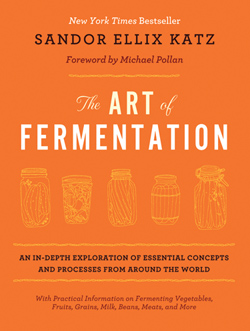
The Art of Fermentation by Sandor Ellix Katz
Although these two books may seem to have little in common, both are about ancient skills: on-farm plant breeding and seed saving; and one of the oldest methods of preserving food. Both of these books are masterpieces, and we are proud to offer them in the Growing for Market bookstore
The Organic Seed Grower is a massive work by vegetable breeder John Navazio., who was featured in the October 2012 issue of GFM. It is, quite simply, everything you need to know to grow seed organically for your own use or for a seed company.
Navazio argues that organic farmers are threatened by a narrowing of the vegetable varieties that are commercially available today. He writes about the golden age of seed breeding, from the 1940s to 1970s, when regional seed companies devoted resources to improving varieties for their conditions. Consolidaton in the seed industry put an end to those regional companies and to the upkeep of those regionally adapted varieties. Most conventional seed is produced with high inputs in ideal climates — hardly the conditions on most organic vegetable farms. Hybrids are replacing open pollinated varieties in many vegetable classes. At the same time, organic farming calls for organic seeds but it’s in short supply. So growing seed and improving varieties for local production is a lost skill that needs to be reclaimed.
The Organic Seed Grower does an exemplary job of teaching that skill. It includes sections on general botany and seed-saving techniques, but the majority of the book is dedicated to specific advice about each of the vegetable crop families. This is the nitty-gritty stuff you need to know to be able to go into the field and start growing seed. For each vegetable, Navazio tells you these details: reproductive biology, climatic and geographic suitability, soil and fertility requirements, growing the crop for seed, how to harvest and thresh the seed, how to maintain the genetics of the variety, and isolation distances.
Navazio’s writing style is clear and minimally technical. You don’t need a degree in plant genetics to understand it, although there is a good section in the back of the book that will be useful to serious plant breeders. The book also contains ample color photographs so you can see what the plants look like when they go to seed, how expereinced growers harvest and handle the seed postharvest, and much more.
As one review put it, “The knowledge of growing and saving seed is too important to leave to the agribusiness ‘experts.’ The Organic Seed Grower reclaims traditional know-how, blends it with the latest scientific research, and places it squarely back into the hands of local seed growers and farmers.”
The Organic Seed Grower is hardcover, 390 pages, $49.95 ($40 for GFM subscribers)
The Art of Fermentation is Sandor Katz’s encyclopedic work about the traditional method of food preservation using nature’s microbes. If you think fermentation is just the trendy kombucha and kimchee, you will be amazed at the numbers of foods that involve fermentation: bread, cheese, wine and beer, yogurt, salami, vinegar, coffee — plus many foods from the around the world that you may not be familiar with such as kvass and shrub.
This is one of the most eye-opening and enjoyable books I’ve read in a long time. Katz, who calls himself a “fermentation revivalist” is contagious in his enthusiasm. He suggests four benefits of fermented foods: flavor, health, energy savings, and preservation. He writes that we live in “a historical bubble of refrigeration,” meaning that it’s only been a few generations since refrigeration became mainstream, and yet we all are convinced it is essential to life. “Given its high energy requirements, it seems uncertain whether refrigeration will always be so widely available and affordable. It behooves us to safeguard the living legacy of traditional food preservation techniques, including fermentation,” he writes.
The Art of Fermentation provides instructions on fermenting just about every kind of food: milk, vegetables, fruits, meat, fish, grains. beans, seeds and nuts, plus non-food applications such as composting. Liberally sprinkled throughout are advice and anecdotes from Katz’s vast network of “fermentos”— people as dedicated to fermenting as he is. He praises the opportunities for fermenting as a farm-based business, and cites several small farms that make fermented products for sale in their local areas. Fermentation, he believes, can be an important part of food localization.
Michael Pollan, the esteemed food writer, wrote the foreward to the book in which he describes being won over by Katz’s fermentation evangelism. “When it’s late at night and quiet in the house,” he writes, “I can hear my ferments gurgling contentedly. It’s become a deeply pleasing sound, because it means my microbes are happy.”
Whether you want to start making your own yogurt, beer, and sauerkraut, as Pollan did, or you just enjoy learning more about food culture, you will appreciate this book.
The Art of Fermentation is hardcover, 498 pages, $39.95 ($32 for GFM subscribers).
Copyright Growing For Market Magazine.
All rights reserved. No portion of this article may be copied
in any manner for use other than by the subscriber without
permission from the publisher.