








I have been following the flower farming adventures of Pamela and Frank Arnosky, owners of Texas Specialty Cut Flowers, from the start. Their wonderful monthly column here in Growing For Market spanned more than 15 years and eventually became two fabulous books, We’re Gonna Be Rich (out of print) and Local Color (still available from GFM). When I got wind that the ASCFG was hosting one of their four conferences at the Arnoskys’ farm this winter, I flipped a gasket. Visiting their famous operation has long been a dream so with a little nudging from Lynn, my husband Chris and I hopped a plane and ventured deep into Texas hill country to learn the secrets of successful flower farming from two of the finest masters in the biz!
The trip was an amazing experience full of equal parts inspiration and practical information. We came home inspired, motivated and full of a million new ideas! While I’d love to share every juicy detail from the journey, instead I thought I’d focus on a few of the top things I learned.
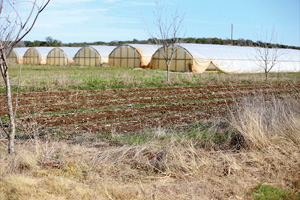
Even in sunny Texas, year-round growing is a challenge. While winter days are warm and bright, fierce “blue northers” can sweep through with 60 mph winds and freezing temperatures. This deadly combination causes plants to literally freeze dry in the fields. Immature, low growing crops can be protected by multiple layers of frost cloth but if one wants to have blooms during the winter months, hoophouse growing is essential. The Arnoskys have constructed a massive fleet of houses and enjoy a wide range of blooms during the winter months including: sweet peas, stock, dianthus, anemones, hyacinths, French tulips, and ranunculus.
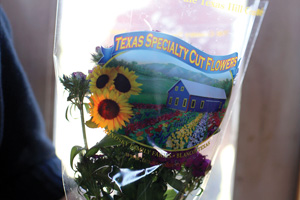
Everything leaving Texas Specialty Cut Flowers is packaged in beautiful, brightly colored sleeves. Having an unforgettable logo and using it effectively has helped them build an incredibly strong brand!
Heated greenhouse space is precious and the Arnoskys don’t waste an inch of theirs. Hanging baskets line the ceilings, seed flats cover the benches and even the little spaces lining the sidewalls are utilized by stacking bulb crates upside down to create a narrow surface for even more trays to be squeezed. We came home inspired by their clever use of space and rearranged our propagation house, which now holds almost 30% more!
Postharvest handling is a major key to success with cut flowers. At Texas Specialty Cuts, everything is harvested into water with Crysal OVB hydrator. Back at the packing shed, flowers are transferred into buckets with Crysal holding solution. Once processed, bunches and bouquets are delivered in water with holding solution and a Crysal CVB time-release chlorine tablet.

Anemones are an important winter and spring crop for the Arnoskys. Hoophouse after hoophouse were overflowing with these cheerful blooms. They mentioned the Jerusalem and Galilee varieties as having the most number of stems per plant even though the flower size was a bit smaller than the newer introductions. Red is their top-selling color.
Many other crops were highlighted during the daylong conference but a few really stood out as worth mentioning:
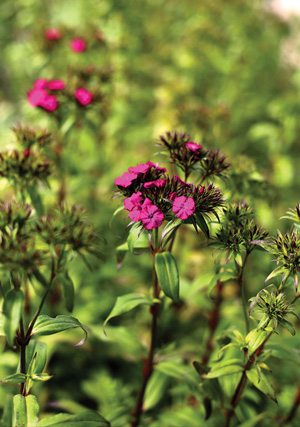
Dianthus Amazon Purple. The tallest of the Amazon series, purple is perfectly programmable and can be grown year-round, with added protection during the winter months.
Basil has long been a key summer bouquet filler at Texas Specialty Cuts. This past year downy mildew began to wreak havoc on their crops. Two resistant varieties were shared as possible solutions. Mrs Burn’s Lemon, available from Johnny’s Selected Seeds, and African Blue, a vegetatively propagated variety which is available through most plug nurseries specializing in herbs.
Salvia leucantha is one of their favorite fall bouquet fillers. Plugs can be found at Takao (www.takaonursery.com) or through your broker.
Celosia is a major summer and fall crop for the Arnoskys. They have found that Kurume red/orange is the most bolt resistant of all varieties they grow.
The giant Gold Coin marigold series was discontinued a few years back. They’ve found that Babuda, Jedi and Narai are all great substitutes. What I thought was really interesting is that they pick their plants straight to the ground rather than harvesting individual stems over a period of time.
Dill (the variety Bouquet) is a major summer bouquet filler. They grow it by the thousands and say it really makes bouquets pop with both fragrance and color. I can’t wait to add it into my mix!
‘Superior Sunset’ is the Arnoskys’ favorite sunflower variety. It grows great in the Texas heat, and is daylength neutral so it can be programmed. It both packs and ships well. They start seed in 128 trays two weeks before planting out and grow them four rows to a bed, 1 foot apart. Bouquet sunflowers are spaced closer at 6” x 6”.

One thing that was very inspiring was hearing how they always have extra flats of seedlings standing by to be tucked in if something goes wrong in the field. The small investment of seed and time provides enormous insurance against wasted bed space and gaps in the harvest cycle.
Listening to the number of obstacles that they face each season, it’s a miracle that they’re so upbeat and still going at it! From giant flower-eating jackrabbits and fence-boring deer to rattlesnakes and black widow bites…these guys have lived through it all!
But what was so impressive was how optimistic and grounded they were. Regrouping quickly and keeping things on a positive note seems to be one of their great assets and ingredients for success.
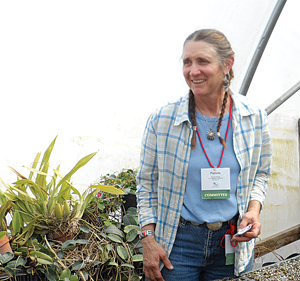
Chris and I came home committed to looking at life and our flower business through new eyes. This season we’re vowing to bring a healthy dose of humor and positivity to the table even when things get tough.
Erin Benzakein runs Floret, a small organic flower farm in Washington’s Skagit valley. www.floretflowers.com/blog
You can see more photos from the Arnoskys’ farm at www.ascfg.org/images/stories/ayearonthefarm1.pdf
Copyright Growing For Market Magazine.
All rights reserved. No portion of this article may be copied
in any manner for use other than by the subscriber without
permission from the publisher.