











In June, shoppers at a Target in Wilsonville, Oregon, reported a massive death of bumblebees in the store’s parking lot. Scientists from the Xerces Society and Oregon Department of Agriculture determined that the bee deaths were related to a pesticide sprayed on flowering linden trees to control aphids, which secrete a sticky honeydew that was dripping onto cars. The product used was dinotefuran (trade name Safari), part of a group of insecticides known as neonicotinoids. This relatively new class of pesticides are systemic, meaning they are absorbed by the plant tissues and expressed in all parts of the plant, including nectar and pollen. The pesticides remain active for a long time, so they can poison bees feeding on flowers of treated plants. Biologists with the Xerces Society estimated that 50,000 bees were killed, likely representing more than 300 wild colonies. “Wild bees are killed all the time in agricultural fields where nobody sees it happen,” said Mace Vaughn of the Xerces Society. “The fact that this happened in an urban area is probably the only reason it came to our attention.”
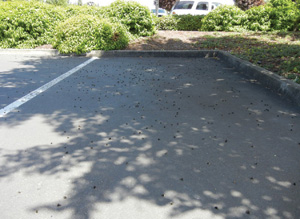
Public officials covered the sprayed trees with nets to prevent bees from feeding on the toxic flowers. However, because of the long-lasting nature of the pesticide, there are fears that bees may be affected next year when the trees flower again.
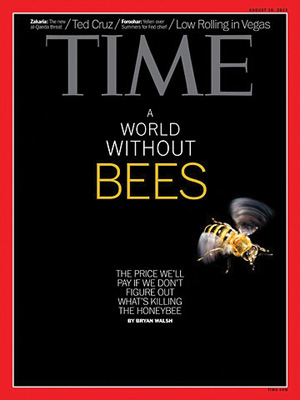
The European Union has adopted a two-year moratorium on the use of neonicotinoids. The EU will restrict the use of neonicotinoids for seed treatment, soil application, and foliar treatment on bee-attractive plants and cereal crops. Two pesticide manufacturers, Syngenta Crop Protection and Bayer CropScience, have taken legal action, but it may take years for the court to reach a decision, so the moratorium will take effect in all 28 E.U. member states beginning Dec. 1.
In the U.S., the Environmental Protection Agency developed new pesticide labels for products containing several neonicotinoids. The new labels have a bee advisory box that makes it clear the pesticide should not be used until all petals have fallen, and highlights the importance of avoiding drift.
The Save America’s Pollinators Act, a bill suspending the registration of neonicotinoids, was introduced in the U.S. House of Representatives in July and was referred to the Agriculture Committee. According to www.GovTrack.us, it has a 0 percent chance of being enacted.
Organics and Bees
Even pesticides approved for use on certified-organic farms can harm pollinators. Bees are poisoned when they absorb toxins through their exoskeleton, drink tainted nectar or water, or when insecticidal dusts become trapped in their pollen-collecting hairs and they take them back to the nest.
By understanding mode of action and persistence, farmers can choose least-toxic products and apply them at a time when they are least likely to cause problems for bees. In general, crop protection products should be applied when bees are not present in the target crop or in adjacent plants (because of the possibility of drift). The best time is when plants are not in bloom; if pesticides must be used when plants are flowering, application should be made late in the evening when bees are not foraging. Pesticides with long residual toxicity should be used only with extreme caution.
The Xerces Society has compiled information about the interaction between bees and organic pesticides in “Organic-Approved Pesticides: Minimizing Risks to Bees” at http://www.xerces.org/wp-content/uploads/2009/12/xerces-organic-approved-pesticides-factsheet.pdf.
Some of the products that are considered highly toxic to bees: Beauveria bassiana; Diatomaceous Earth; Insecticidal Soap and Horticultural Oils (except when applied at night); Pyrethrins; Rotenone; Sabadilla; Spinosad; Copper Sulfate. See the website above for moderately harmful products.
Products considered non-toxic to bees: Bacillus thuringiensis (Bt); Cydia pomonella granulosis; Garlic; Kaolin Clay; Corn Gluten; Gibberellic Acid.
Copyright Growing For Market Magazine.
All rights reserved. No portion of this article may be copied
in any manner for use other than by the subscriber without
permission from the publisher.