











We already have safe food. Even the large, centralized mega-farms and distribution centers in the desert west produce safe food. In 2006, over 50 billion servings of fresh-cut salad greens and spinach were sold in this country – but an E. coli 0157:H7 outbreak that fall killed five people, and spinach sales still haven’t recovered to a pre-2006 level.
Even at that, the Food Safety Modernization Act is not about keeping people safe. If it were, it would regulate all fruits and vegetables, instead of just “covered produce” – those items likely to be consumed raw If I’m the rare weirdo who eats my beets raw and I die from salmonella poisoning, I’m just as dead as I would be if I got it from salad mix. And if it were really about food safety, instead of food safety theatre, it wouldn’t exempt anyone: Small farms aren’t necessarily safer than big farms, they are just more likely to fly under the radar of epidemiological methods. Instead, the FSMA is about maintaining the perception of food safety for the large corporations and the trial lawyers.
The people who die in food safety outbreaks are not, by and large, young and healthy. In the 2011 Cantaloupe-Listeria outbreak, the median age of those who died was 81 years. It was the same in the 2006 spinach outbreak. This is the same as the average age of a California residents who died from influenza and pneumonia between 2000 and 2007. We don’t have a fresh produce food safety crisis in this country, any more than we have an influenza and pneumonia crisis.
But we do have a problem with risk assessment, and that’s the fundamental problem with the Food Safety Modernization Act.
Over four years of teaching and writing about food safety, I’ve examined dozens of research papers, and delved into the proposed regulations and their rationales. And I’ve come to the opinion that these regulations are deeply flawed, based on flawed science and likely to be enforced by flawed regulators.
While the proposed regulations pretend to exempt certain smaller farms that sell most of their produce within 275 miles of the farm, these exemptions don’t stand up under examination. The economic threshold applies to the value of all food sales, not just covered produce, so an operation selling corn and beans or dairy has to count the value of those crops, not just the value of the produce regulated by the FDA.
Exempt farms are subject to withdrawal of their exemption if the FDA decides to question the safety of that farm’s practices, but there are no evidentiary standards for issuing a withdrawal order. And there is no process for getting the qualified exempt status back.
Furthermore, the moment you handle another farm’s produce, you fall under the much more stringent Preventive Controls Rule. So, if you trim the outer leaves from a head of lettuce from another farm on your farm – or even cool a head of lettuce for another farm, or put a head of somebody else’s lettuce in your CSA box – you are engaged in “processing” and thus subject to a whole different level of regulation.
Much of the science behind the food safety regulations seems sound at first glance, but the standards for irrigation water and manure and compost applications fail to take into account the human pathogen-suppressing functions of biologically active soil, and the sterilizing effects of sunlight.
The regulations around the use of irrigation water, in particular, are deeply flawed. The proposed rule requires farmers to test irrigation for generic, non-pathogenic E. coli, an organism that is ubiquitous in the environment and not necessarily a health hazard. Unfortunately, there is little or no correlation between the presence of generic E. coli and pathogens such as E. coli 0157:H7 and listeria. Generic E. coli can be present where pathogens are not, and pathogens can be present where generic E. coli is absent.
Further, the FDA uses the EPA’s standard for recreational swimming water as the standard for irrigation water, and requires growers to test surface waters on a weekly basis. And while the testing itself isn’t all that costly, the effort that goes into sample collection and shipment can be substantial – and the results of a negative test could be devastating. Water that tests too high in generic E. coli couldn’t even be used for germinating seeds or establishing transplants, much less keeping crops alive in a drought.
And to top it off, these rules will be administered by the Food and Drug Administration. We are already hearing reports of FDA inspectors performing surprise visits without a clear sense of purpose for visiting an operation – and without any training or experience to understand what food production, in the soil and the sunlight, actually looks like.
As Bryan Snyder of the Pennsylvania Association for Sustainable Agriculture commented, we’re looking at unfettered enforcement of vague regulations based on outdated science to make it look like we are making our food safer. The comment period for the Proposed Produce Rule and the Preventive Controls Rule closed on November 15, 2013
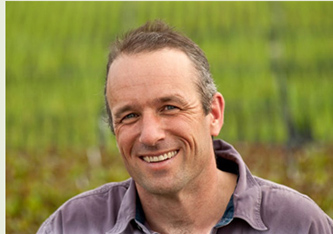
Chris Blanchard is one of the leading experts on food safety for small-scale vegetable farms. He observes Good Agricultural Practices on his own farm in Iowa, and he has written numerous articles for Growing for Market on the subject.
On the next page, Chris concludes his five-part series on produce safety with a discussion of water quality.
Chris can be reached at chris@flyingrutabagaworks.com, or visit his website: www.flyingrutabagaworks.com
Copyright Growing For Market Magazine.
All rights reserved. No portion of this article may be copied
in any manner for use other than by the subscriber without
permission from the publisher.