






Weeds, pests, disease and labor. As farmers, we have come to accept these problems as an uncompromising part of our job. My first seven years as a grower, I worked for a university and farmed by the book. Annual tillage, soil testing, and a cocktail of organic amendments were my seasonal protocols. I strictly adhered to recommendations given by soil and tissue analysis laboratories. Nevertheless, new problems arose each year: lackluster kale, corky beets, blighted tomatoes, a myriad of pests, and so many weeds. Something was missing.
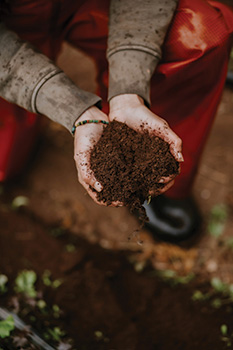 Billions of organisms in just a small handful of soil with millions of species. Photo credit – Jamie Thrower/ Studio XIII Photography.
In 2015, we moved to a five-acre parcel about 45 minutes outside of Portland, Oregon, in hopes of starting a farm of our own. As we relocated to this neglected piece of land, I could not help but feel both a heaviness and an incredible responsibility to act as steward for land that rightfully belongs to the many Tribes that made their home along the Columbia River. We are still learning the Indigenous history of this area and have found these Tribes include: the Chinook Nation, the Confederated Tribes of the Grande Ronde, the Cowlitz, and the Confederated Tribes of Warm Springs. It’s not only the land that was stolen from them, but also their incredible farming and land stewardship methods that form the basis for modern movements such as permaculture and regenerative farming.
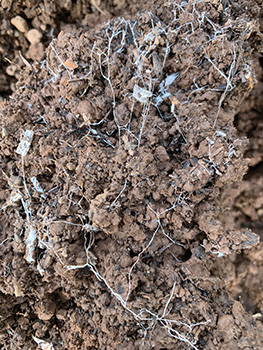
Not all fungi are visible to the naked eye. This mycelium is a great indicator of soil health and visibly shows our dedication to disturbing the soil as little as possible. Fungi is one of the easiest microorganisms to destroy in the soil and is one of the more difficult elements to get back. Fungi are essential for nutrient cycling, help hold soil particles together and also provide a food source for micro-arthropods such as symphylans.
I thought a lot about how I wanted to do things differently after the struggles at my last farm. Having visited many farms over the years, I heard the same struggles from every farmer — weeds, pests, disease and labor. What did these farms all have in common? Annual tillage. I had tinkered with no-till in my final years with the university and noticed how the ground beetle and worm populations exploded as a result. My trials were short, but were enough to persuade me to consider an alternative method of farming.
Inspiration and ideas from Indigenous communities from around the world guided me to observe, listen, and commit to caring for the soil and surrounding land first and foremost. The hope was that healthy crops would follow. I had a lot of support and encouragement from our community, peppered with a few criticisms, claiming these ideas were idealistic and could not be profitable. In hindsight, I’m incredibly thankful for the support and skepticism alike, as it drove me to keep detailed records to help demonstrate that we can put the needs of the land first and still achieve the yields necessary to be successful farmers.
2016: Planning and preparation
When we arrived six years ago, this land had been heavily logged and was riddled with trash and burn piles. Wildlife was scarce and it was eerily quiet. We did not hear any birds for the first couple of months. That first winter, we planted 300 native trees and brought in a flock of chickens to help bring some life back onto this desolate piece of land.
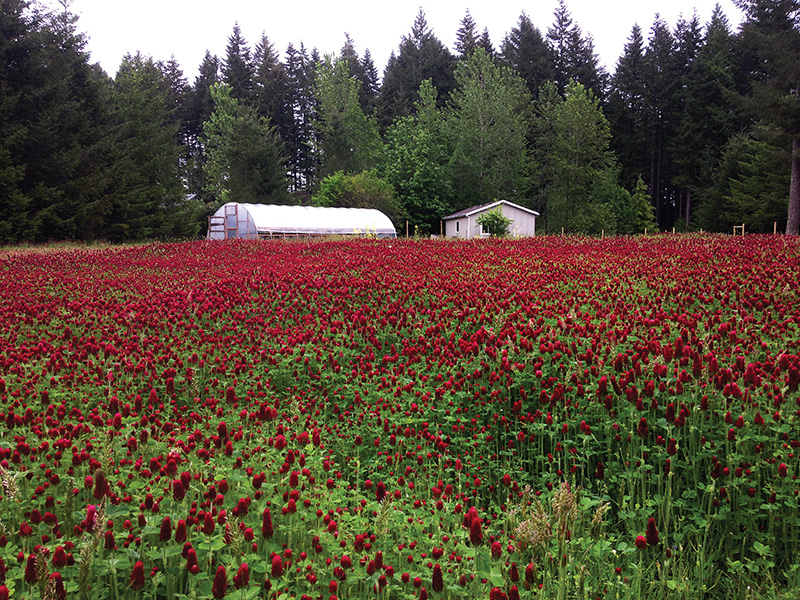 A crimson clover cover crop is a great source of forage for pollinators and also provides a rich carbon source for soil microbes. Images by the author except where noted.
Located at approximately 800 feet in elevation, and receiving about 55 inches of rain annually, I was concerned a potentially shortened growing season might limit ripening of warm season crops. I cleared a small area in one field to trial several crops to see how things would (or would not) grow. I planted various squash, peppers and tomatoes. The squash plants grew okay, but the fruit dropped off while still very small, an indication that we lacked pollinators. I worked with the Natural Resources Conservation Service (NRCS), which helped me purchase about 700 understory trees, flowering shrubs and perennials in hopes of attracting beneficial insects and wildlife.
That fall, I hired our neighbor to plow 1.5 acres for annual vegetable crops and a small orchard. The silty clay loam soil was red and incredibly compacted. It had 5.4 percent organic matter and a pH of 5.3. Our phosphorous levels were some of the lowest the university had seen in this region. That first and only plow allowed us to open up and oxygenate the soil. We used this opportunity to add lime and several tons of composted steer manure. After tilling these amendments in, we seeded 100 pounds of crimson clover.
2017: First full growing season
The flowering clover invited an abundance of beneficial insects to the farm. After allowing them to feed on the bountiful forage, we made one final pass with the tiller. The mature clover stand would help increase soil carbon, providing a food source for microorganisms in the years to come. We then created permanent raised beds and planted deer resistant crops such as garlic, winter squash and potatoes. We worked tirelessly to finish building our deer fence so we could plant additional crops that summer.
I was in my final year employed by the university and needed income starting that fall, so ambitiously planned for a winter CSA. I hoped that first year fertility would reward us with an easy first season. Wishful thinking was met with the harsh realities of farming and within a few weeks of planting, our brassicas were infested with diamondback moth. I have never been a fan of even organic insecticides, but was desperate. I opted to spray with an OMRI approved Bacillus thuringiensis (Bt), a species of bacteria that lives in soil and is toxic to caterpillars when eaten. It wasn’t ideal, but it worked and our crops recovered.
2018: Cautiously optimistic
After a successful winter CSA season, I was full of optimism. Overwintered cauliflower weighed in at over three pounds apiece and the kale was green and lush. However, spring brought many familiar challenges: a barrage of grass, weeds, more pests, and a fungal disease that swept like wildfire through the brassicas. Arugula, broccoli, kale, and kohlrabi were covered in brassica downy mildew and crop loss was significant. Slugs, diamondback moth, imported cabbageworm, cabbage loopers, brown marmorated stink bugs and voles ate holes in all of our crops.
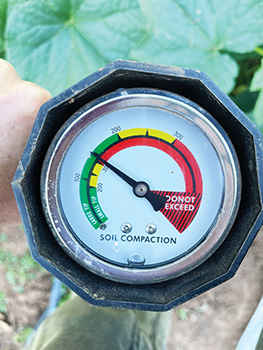 A penetrometer measures soil compaction. This has been a game changer for us- helping to eliminate many unnecessary hours prepping beds. We disturb the soil as little as possible and have the assurance that the crop will grow just fine.
The soil was hard and compacted, but I was determined to stay the course and not till, plow, or disc. It was a challenge, but I was learning a lot as I navigated a no-till system and prioritized our soil’s health first and foremost. We cut our crops at the soil line to keep the rhizosphere (the biologically rich area around the root system) intact for the next crop. We worked the soil with broadforks and hoes and continued to add composted steer manure to feed biology and help increase our phosphorous levels.
Trust, be patient, and stay the course became my mantra. It was a challenging year, but we managed to not mechanically till. With a lot of labor, we pulled off a successful forty-person CSA and about eighty pounds of salad mix per week on a half-acre of land.
2019: A glimmer of hope
The spring of our fourth season almost broke me. We had covered about half of our beds with tarps that fall to protect the soil from the compacting rains of winter. In March, the soil under the tarps was gorgeous and we were able to avoid hoeing and broadforking. Our soil was improving. However, soon after transplanting that spring, thousands of seedlings perished within days of planting. Half of the losses were due to voles. They especially loved the kale and ate the seedlings to the ground. I called my favorite extension agent at Oregon State University who said voles love to burrow and nest under tarps. Unknowingly, I had created a perfect habitat for these voracious rodents and as a result, their population exploded within a few short months.
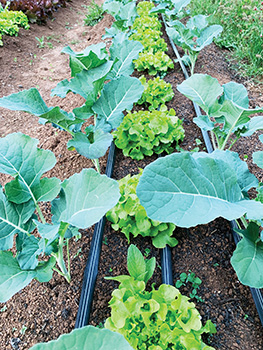 Planting a diversity of crops helps to encourage a diversity of microorganisms in the soil.
Crops that were not eaten by voles withered a few days after transplanting. I had never seen anything like it in my 10 years of growing. I started digging up plants and saw the roots were crawling with tiny white insects. I am hesitant to even utter the name of this pest — symphylans (a pest so dreaded that that I have jokingly referred to them as the Voldemort of farming). Symphylans are a soil microarthropod that can feed on roots, resulting in the death of vulnerable seedlings. I scoured the internet and found most of the university recommendations were to till and decrease organic matter levels.
Determined to stay the course, tillage was off the table. There had to be another solution. I found an obscure article written 20 years ago by world renowned soil biologist, Dr. Elaine Ingham. She hypothesized that symphylans actually prefer to feed on fungi in the soil and only eat plant roots when their preferred food source is unavailable. Desperate for a solution, I went to the local compost yard and picked out the woodiest compost I could find. Most of the debris had gone through the composting process, but there was enough small woody material to perhaps stimulate fungal activity. I hoped this would help increase fungal populations enough to entice the symphylans. We inoculated our beds with this compost at a rate of about one wheelbarrow per 100 feet and gently raked it into the top inch or two of the soil.
Within just a few weeks, our crops started to grow again. This is the defining moment in which I realized that we can work with the soil’s biology rather than masking the underlying issue (a lack of fungi) with the short-term solution of tillage. The symphylans are still in our soil, but they are no longer impacting our crop’s growth as they are happily feeding on their preferred food source.
Despite the challenges we faced in the spring of that fourth season, I could see things were improving. The brassica downy mildew was better. Pest and weed pressure were less daunting, and our labor costs were down substantially from the previous year.
2020: Inching toward eco-balance
Last year was filled with infinite challenges due to the pandemic, but it was an incredible year for the farm. As we planted in the spring, I noticed a network of mycelium running through the soil, a result of our reduction in soil disturbance coupled with the woody compost we added last season. Everywhere we looked, we saw pieces of the ecological puzzle coming together. Plants grew vigorously and were resistant to pest, disease, and drought as a result of caring for our soil’s microorganisms. Below is an overview of our accomplishments:
• Labor costs were down 60 percent from the previous year.
• We spent a total of 12 labor hours weeding the farm in 2020.
• Significant increase in crop yields.
• Spring crops took off without pressure from symphylans.
• Brassicas were not impacted by downy mildew (three years ago we had significant crop loss).
• Brassicas resisted attack from various cabbage moths and aphids.
• Beneficial insect populations were impressive — so much diversity.
• Marmorated stink bug pressure disappeared.
• Fertilizer application rates were down 50 percent. Crops grew beautifully and showed no sign of nutrient deficiency.
• Crops endured heat wave conditions when critical irrigation broke during the summer.
• Organic matter levels are at 9 percent; pH holding at 6.9 (we have not added lime since the first addition in 2016).
Soil microbiology
Here is what farmers need to know about complex soil microbiology. Plants and soil microorganisms have a symbiotic relationship that has existed for millions of years. Plants provide sugars, proteins and carbohydrates for the microorganisms, and in exchange, microorganisms extract a vast diversity of nutrients out of the organic matter, sand, silt, clay, and rock.
When this relationship is broken as a result of tillage, over fertilization, or pesticide use, plants must rely on inputs from the grower. Those inputs, however, provide only the bare minimum for a plant to survive, not enough to thrive and be truly healthy. A diversity of soil microorganisms helps ensure that there is a diversity of nutrients available to the plant beyond what is supplied by a bag of fertilizer.
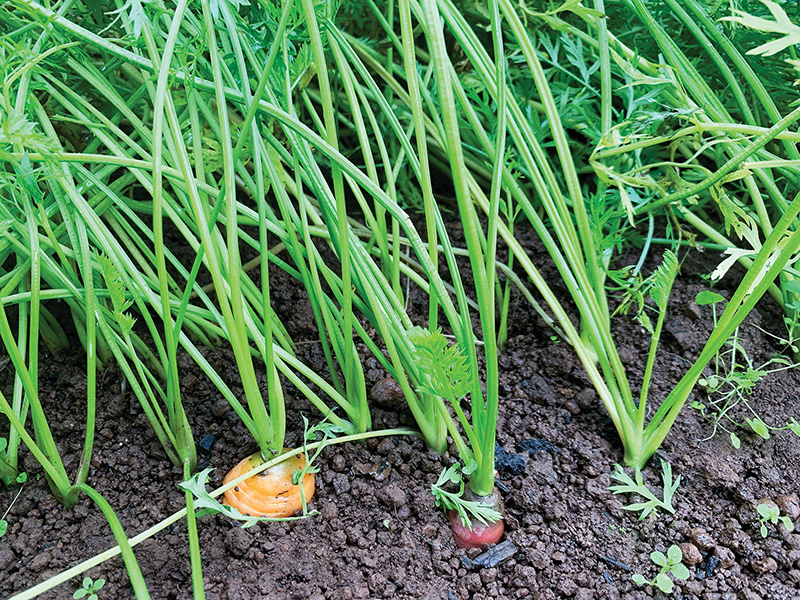 This crop of carrots was never weeded. The lack of weed pressure on the farm is now commonplace.
Soil microbes also cover the plant surfaces, offering a natural defense to pest and disease. We are seeing this firsthand as our crops demonstrate increasing resilience against pest and disease and require less fertilizer than in previous years.
Just how effective are microbes at extracting the nutrients plants need from soil and organic matter? It’s difficult to quantify, and traditional soil tests do not account for the role microbes play in providing plants the nutrients they need. We have been experimenting with applying less fertilizer each year to see how little we can add and still have our crops grow well. We started by applying only two-thirds of the recommendation in 2019, then half in 2020. That’s a significant reduction and plants are still thriving. This year, I submitted a soil sample to be evaluated using the Haney Test for Soil Health. This method of testing considers microbial activity in the soil and uses that information as a starting point for amendment recommendations. Interestingly, the Haney recommendations were much more in line with what I was applying in comparison to what our traditional soil tests suggested. I still have a lot to learn in this realm, but it’s interesting nonetheless.
Tillage and carbon sequestration
“Tilling the soil is the equivalent of an earthquake, hurricane, tornado, and forest fire occurring simultaneously to the world of soil organisms” (NRCS, 2011). Additionally, tillage speeds up the decomposition of soil organic matter, releasing huge quantities of carbon into the atmosphere. Recent studies (like tinyurl.com/p8x5eptu and https://tinyurl.com/2r3sbcuh) demonstrate that by increasing photosynthesis (growing plants year-round) and decreasing tillage, we can capture huge amounts of atmospheric carbon and sink it into the soil.
Soil compaction
Last season, I purchased a penetrometer. The penetrometer is a low-tech, handheld tool that measures soil compaction in pounds per square inch (PSI). Plant roots grow uninhibited to about 150 PSI. Beyond that, plant roots start to struggle and growth is compromised. Plants cannot penetrate soil past 300 PSI.
The penetrometer has been a game changer for us. Its quick assessment has saved us tons of unnecessary labor prepping beds. Surprisingly, even 100 PSI feels quite hard and compacted when poking a finger into the soil. This realization suggests that growers may be working the soil way more than a plant really needs. Plant roots are fine and are crafty enough to find their way through tiny crevices in the soil. The use of the penetrometer has significantly helped us minimize soil disturbance, while simultaneously reducing our labor inputs for bed prep.
Microorganisms need living roots
To be honest, I really struggle with this one on our farm and have had to find creative alternatives. Microorganisms prefer to feed on sugars, carbohydrates and proteins provided by living plant roots, so I understand why this is so important. However, even with overwintering cover and cash crops, our soil gets really compacted over the winter. Additionally, I am unable to plant into those beds in the early spring when the soil is cold and saturated from so much rain. Our solution is to grow winter cover and cash crops on only half of the farm and lay tarps over the remainder of beds, so they will be dry and ready to plant in the spring. Those areas are then alternated each year.
Keep soil covered
Tarping has been super successful for us. We cut our crops off at the soil line with a flail mower or pruners, leaving roots in place as a food source for microorganisms before laying tarps. Decomposing roots may not be the microbe’s favorite food source, but it will suffice. Last fall, I went as far as to put tarps directly over cucumbers and winter squash without cutting and removing crop debris first. When I removed the tarps this spring the only plant evidence was a few skeletonized vines. The microbes had consumed the rest of the organic matter over the winter. The soil was riddled with thick strands of mycelium, and we were able to plant directly into those beds with no additional prep. It was some of the most gorgeous soil I have ever seen.
We had phenomenal success this year with crimping overwintered crimson clover and planting into the thick layer of mulch in the summer. I am excited to continue experimenting with this method of cover cropping without the need for tillage. A huge thank you to Frith Farm for inspiring this method.
Plant diversity
Crop diversity directly supports a diversity of microbial species in the soil, so we interplant our beds wherever possible. Not only does this increase crop production on our farm, it also helps eliminate evapotranspiration and protects our soil from compacting rains. For beds that have only two rows of plants, I almost always plant a row of lettuce down the middle. The lettuce will come out well before the broccoli, cauliflower or peppers. Two rows of scallions down the middle of beds also works really well when intercropping with brassicas and peppers.
There are many paths to improving soil health on the farm. I don’t have all the answers and our farm is far from perfect. However, one thing is for certain, the transition that has occurred on this land in a few short years is incredible. We are currently in the middle of our sixth year and have spent only three hours weeding. We still experience some pests and small signs of disease, but those challenges are manageable and the plants are showing incredible resistance and resilience. Our labor costs are down again this year and our yields are up. It feels good to be nourishing this land, and in return, it has rewarded us with a lot less work and a newfound love for farming.
Jen Aron he has been a farm educator for the past twelve years and currently lives and farms on five acres in Corbett, OR. Jen is passionate about soil health and offers classes, consulting, and full day workshops. You can find her at www.blueravenfarm.org and on Instagram.
Copyright Growing For Market Magazine.
All rights reserved. No portion of this article may be copied
in any manner for use other than by the subscriber without
permission from the publisher.