NOSB engagement by small farms is important
If you market as organic or grow using organic methods, regardless whether you’re certified, the USDA’s organic rule-making process affects you. Customers have an expectation of what organic means, and they likely associate those expectations with you. That’s why learning about organic rules and how they are created can benefit your farm and the movement.
As small-scale organic vegetable farmers selling through farmers markets and a CSA, we don’t need organic certification the way we would if we did more wholesaling. We opted to certify our farm for a few reasons: belief in organic farming, a desire to make sure our farm was counted since we were following all of the practices, and ease of communicating our practices to our customers.
More than anything, it was family-scale farmers who created significance and value behind the word. We wanted to be a part of that.
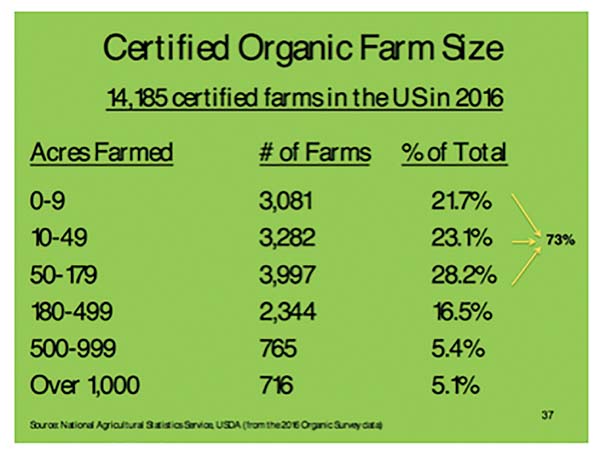 According to the most recent data, 73% of organic farms are less than 179 acres. Image courtesy of the author.
We know many direct-to-consumer growers decide to skip certification. Among the reasons, inspection costs are high in their region, they don’t want to be aligned with the USDA label for philosophical principles, they don’t perceive a need, and many other factors. Even if your farm isn’t certified, if you identify as a farm using organic methods, the word “organic” has meaning for you. That varies by farmer and customer; however, all interpretations are linked in some way to the USDA’s definition of organic.
Since the passing of the Organic Foods Production Act in 1990, the USDA has been charged with developing and enforcing standards for organic production. Much is said on this subject, and a Google search turns up plenty of resources. What is relevant to most small-scale farmers — but something that doesn’t often enter into their day-to-day lives — is the board set up by law to help the USDA set standards.
The National Organic Standards Board (NOSB) makes recommendations to the Secretary of Agriculture about practices and materials used in organic farming and handling. “The NOSB is designed by law to advise the National Organic Program (NOP) on which substances should be allowed or prohibited.” (See Organic 101: Allowed and Prohibited Substances, by Miles McEvoy)
The USDA cannot allow or prohibit a material or production practice without a recommendation from the NOSB. That doesn’t mean the Secretary of Agriculture always acts on every NOSB recommendation, but it means the 15-member volunteer board plays an important role.
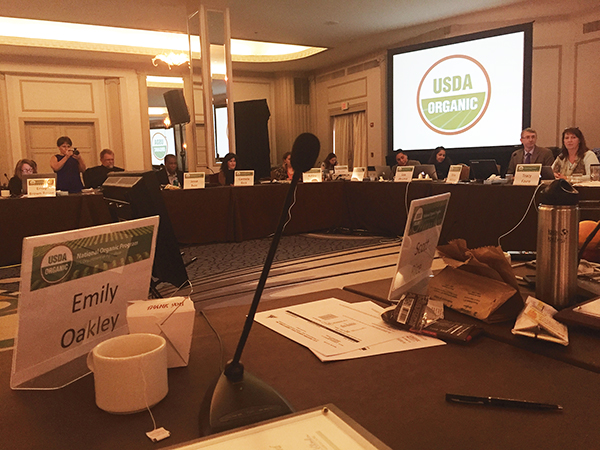
During the first 12 years of our farm, we didn’t give much thought to the NOSB. We knew about it only in a vague way. We were busy farming and weren’t all that interested in organic rule-making, what we thought of as a behind-the-scenes process. We assumed that somewhere people were working on rules and regulations and that organic integrity was more or less protected.
It wasn’t until someone suggested Emily apply as a farmer representative to the NOSB that we started paying attention. Emily served on the NOSB from 2016 until 2021. Before she joined, we only knew what we read in a few organizational newsletters. Serving on the board revealed how the sausage is made.
The NOSB holds two meetings a year to discuss and vote on proposals. The proposals are generally around materials that someone has petitioned for use in organic production or a proposed change to organic practices. At its two annual meetings, the NOSB hears from various stakeholders who voice comments and opinions on the proposals.
The biggest surprise for us was the extent large companies are involved in the NOSB meetings. In organic rule-making and NOSB meetings, the bigger the farm or company, the more time, money, and resources they have for commenting and lobbying on proposals before the board. And lobby they do. Hard.
Are their efforts effective? The NOSB members see and deal with the entities in front of them. So, when businesses have the means to send people to the meetings to speak, attend webinars to give testimony, and write in comments on their behalf, that is who the NOSB, and importantly the USDA, hears.
Although it is understood by some that small- and medium-scale farmers are busy, that they don’t receive industry insider newsletters about topics of importance before the board, and many don’t even realize there is an NOSB, their limited participation (relative to big business) in the rule-making process means there are fewer people to present their points of view, even on topics that have a material effect on their farms.
As one saying goes, silence means consent; some might assume family-scale growers are satisfied if they aren’t vocal. When an overwhelming majority of commenters come from trade organizations, corporations, and hired lobbyists, that’s who gets heard.
Before Emily joined the NOSB, we’d submitted perhaps one public comment (for animal welfare) and certainly never attended a meeting. But after serving, we saw how important it is for small farmers to participate in the process. When farmers comment, the NOSB and USDA do listen — because it’s so rare. The more active small farmers are, the more likely the standards will reflect their values.
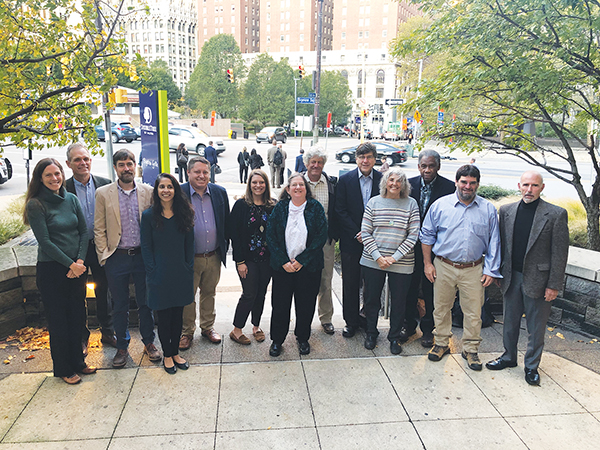
Of the farmers who do submit comments to the NOSB, most are of the founding farmer generation. Younger generations of farmers occasionally weigh in, but usually only on select topics. Yet, there is power in family scale farmers advocating for standards they believe in, such as the use of paper-chain pots. This topic received tremendous feedback before the board from smaller-scale farmers, feedback that helped the board in its decision to allow this material.
The NOSB addresses issues brought before them by stakeholders. Hearing from farmers about their needs can help influence what the board works on. Being engaged doesn’t have to take a lot of time. One easy way to be connected is to sign up for the National Organic Program’s “Organic Insider” e-newsletter.
These emails notify the organic community about “a range of topics related to organic agriculture at USDA, including regulatory updates, requests for public comments, and notices about upcoming activities.” Another simple activity is to visit the NOSB webpage to learn how the board operates, who currently serves, NOSB recommendations, and upcoming meetings.
There are also organizations that monitor the process and share information through newsletters, such as the Organic Farmers Association, the National Organic Coalition, and the Real Organic Project.
If you want to dig in deeper, you can navigate the NOSB webpage to find out about meeting agendas, where the meetings will be held, and how to read proposals that will be discussed and voted on. Most importantly, you can post comments about topics at an upcoming board meeting by going from the NOSB webpage, scrolling down to “NOSB Activities,” and clicking on “NOSB Meetings.”
From there, you can click on the next meeting and see the meeting agenda, read the proposals the board will vote on, and post comments for that meeting at Regulations.gov. If you have time, write a comment, speak on a webinar, or attend a meeting if one comes to your area.
Serving on the NOSB helped Emily see how the organic movement is changing as large-scale organics permeate the marketplace. With conventional agribusiness expanding into the organic sector, there is pressure to make the NOSB and organic production more corporate friendly. That often comes in the form of petitions for materials that got their start in conventional farming or pressure to adopt controversial practices.
Equally, lobbyists are hired to speak against enhancements in the standards that could improve organic integrity. We share a label and the word “organic” with businesses that are profit-driven, not passion-motivated. As we learned first-hand, it’s not enough to assume the standards will always reflect our ideals. The more small farmers get active and become vocal, the more their needs and opinions will be understood, and hopefully, acted upon.
Agribusiness organic is banking on consumers thinking of small-scale farmers and our practices when they buy big-box organic food. We are still the face of organics. Even though agribusiness organics is expanding, family-scale farmers still represent the vast majority of certified organic operations.
No matter where or what you farm, how you sell, or whether you’re organic, everyone is experiencing a changing marketplace. Regardless of a farm’s certification status, we all stand to gain from strong organic integrity and consumer trust in the label. Organic benefits when small farmers make their beliefs known and counted.
Emily and Mike own Three Springs Farm, a diversified, certified-organic vegetable farm in eastern Oklahoma. They cultivate more than 40 different crops and more than 150 individual varieties on three acres of land and sell primarily through their CSA.
Copyright Growing For Market Magazine.
All rights reserved. No portion of this article may be copied
in any manner for use other than by the subscriber without
permission from the publisher.