










How to ensure customers have good experiences on your farm
One sunny fall day, laughter and happy chatter filled the air at our Oregon farm, Oakhill Organics. Bluegrass musicians played on our farmhouse’s covered porch, and my husband Casey took customers on tours through our fields. Between the music and tours, people were invited to taste bites of many different varieties of roasted potatoes and vote for their favorite. Every guest got to pick out a pumpkin to take home and carve.
That 2011 Pumpkin Patch Open House stands out as one our farm’s best attended and most fun on-farm events (with some of the best weather). It was just one of many opportunities we created over the years for our customers to visit our farm and have a positive experience.
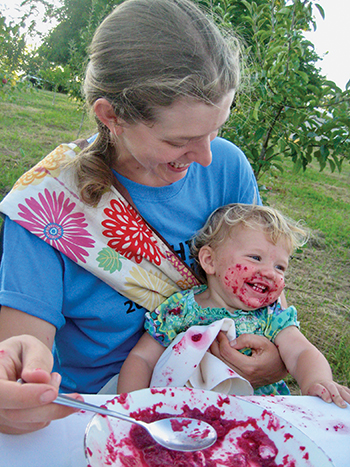 The author and her daughter enjoyed the borscht served as part of a truly magical sit-down meal they hosted in their farm’s orchard. On-farm events can be fun and memorable for the farmers, farm crew, and family too!
In the 15 years that we operated our farm’s CSA program, we aimed to host at least one event every year and considered them a critical component of our CSA offering. We wanted our customers to feel intimately connected to the people and place that grew their food, and nothing does that better than having them walk in the fields and interact with their farmers.
Events are work — but worth it
Our on-farm events were not income-generators in of themselves, as we always offered them free-of-cost. Instead, they were opportunities we offered our customers to enhance their eating experience. Much like a regular newsletter filled with stories and news (which I wrote about in the March 2022 GFM), even a single visit to a farm can increase customer loyalty and help customers better understand the reality of farming, local food, and the seasons. Plus, everyone involved can have a ton of fun.
We primarily hosted our events for our CSA members, but on-farm events can also be offered to a wider audience of customers from many venues, including regular market customers, local chefs, and more. That being said, hosting events — especially during the main growing season — creates extra work on a busy farm. While most of that work occurs the day itself, you do need to plan thoughtfully beforehand, and there are many logistics to consider.
I want to help you plan your own on-farm events by first providing ideas and concepts for types of on-farm events (ranging from the very simple — our favorite way to operate — to more complicated), followed by nitty-gritty logistical recommendations.
Since we’re coming out of a long pandemic period, when in-person gatherings have been limited in general, I also hope that these ideas help you feel creative and excited about hosting an event at a time when many people are eager for such activities.
Open houses
Our annual Pumpkin Patch Open House was our most consistent on-farm event, held annually from 2006 to 2019. Components of the open house varied from year to year, based on our creativity and energy levels, but at the very least we invited CSA members out to pick their pumpkins for carving and gave tours of the fields.
We planned in advance by planting a pumpkin patch relatively easily accessible on the farm, and we aimed to offer every visitor a free pumpkin. We considered the cost of growing the pumpkins part of the overall CSA package. The tours would be strategically planned to show off interesting parts of the farm as well as offer moments for tastings in the fields.
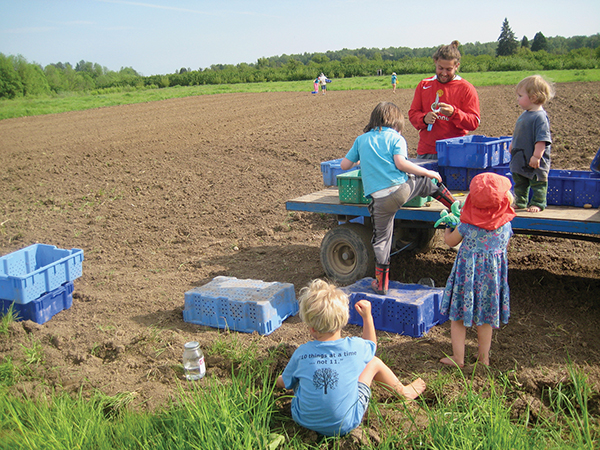 An employee cuts seed potatoes for volunteers to carry into the fields at the author’s farm, Oakhill Organics. Work parties with simple tasks, such as potato planting, can be a great opportunity for farm customers (and maybe even their children) to experience the work of growing their own food. All images courtesy of the author.
Over the years, it was easy to layer on other elements of the open house experience. We’d offer refreshments, such as locally pressed cider. Several years we paid musician friends to play mini concerts, beginning with the bluegrass band I mentioned above.
We also sometimes offered a tasting of different fruit or vegetable varieties. Over the years, we featured potatoes, winter squash, and apples. People would vote for their favorite and were entered in a raffle to win a free farm tote bag. It was also really interesting to tally up the responses to see which variety won the popular vote.
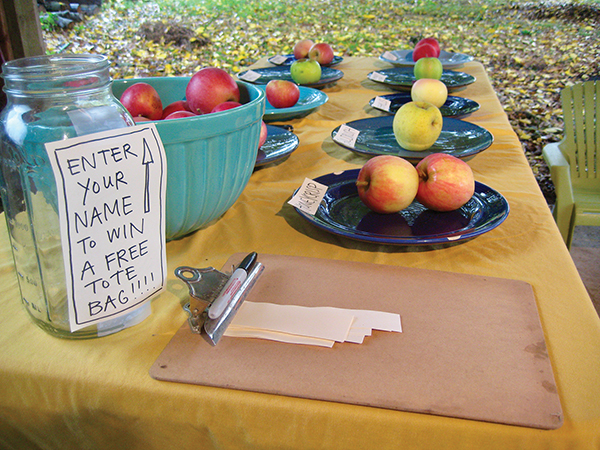 Simple farm-related activities can provide additional fun for on-farm open houses. In this apple tasting activity at the author’s farm, apples were cut into small slices, and guests were invited to taste them all and then vote for their favorite variety.
But many years, the event was just pumpkins, farm tour and cider. People still came.
You can host many variations on the basic open house at any time of year. Seasonal themes are not necessary, but add interest. For example, if you have a large raspberry planting, you could host a “Raspberry Season Open House” and invite people for farm tours, raspberry-based refreshments, and raspberry picking.
Work parties
In addition to hosting our fall open house, we also often hosted a Potato Planting Party in the late spring. We would prep the ground and dig furrows before people arrived, and then delegate tasks. We usually had fewer people for this event, but it was always enough. For people with limited mobility, we’d seat them at tables to cut potatoes that were sent in buckets to the furrows.
What might have taken our crew a whole day or two to accomplish was finished in just a few hours and created a big morale boost for the whole farm team. Volunteers always enjoyed being a part of growing food they’d eat later in the season.
Work parties of this nature could be adapted to any large, less technical task on your farm. Prepare and plan well ahead of time to make good use of your volunteers. Just be conscious of the abilities of your helpers, and be okay with things being less organized than with your farm crew. For example, try as hard as we could to keep them separated in their own rows, our many potato varieties would inevitably get a bit mixed up. It happens.
Farm potlucks
To add to the community feel of our Potato Planting Parties, we’d usually end with a potluck at our outside picnic tables. I’d make a big batch of chili and salad so there’d be plenty of food regardless of what our guests brought to share. We had a lot of great conversations at those tables.
We occasionally hosted potlucks at other occasions, too, not just at work parties. For many years, we hosted a special “Ratatouille Rendezvous” potluck in late summer when all the ratatouille ingredients were mature (eggplant, zucchini, onions, garlic, tomatoes, and peppers). We’d make a giant pot of ratatouille, buy several loaves of bread and cheese, and then invite people to come with side dishes and desserts to share. This was a fun way to celebrate the end of the summer with customers and friends alike.
Sit-down meals
Fancy sit-down meals served on farms are a phenomenon with companies existing just to coordinate such events. There is something incredibly magical about having a fine dining experience, with real plates, flatware and tablecloths, in an outdoor farm setting. I’ve had a few such dining experiences, and once (ONCE!) we planned and hosted our own such event.
I emphasize that we did this only once because it was the one event that exceeded our realistic resources. There is a reason that people make a living coordinating these logistically challenging events. For most farms, if you would like to host a sit-down meal, I highly recommend finding a local event coordinator or caterer to work with. And, I also recommend charging an appropriate fee for it.
However, in August 2013 we hosted a gorgeous, once-in-a-lifetime sit-down meal in our orchard, featuring only foods produced by our farm. This was during the period when our farm was operating our “Full Diet CSA” (which I wrote about in GFM June 2021), so we had vegetables, fruit, meat, dairy, eggs, and grains. Chef friends prepared the food for free, and our employees and their friends helped set-up and serve.
There are other ways to host successful on-farm meals, for example, hiring a local food truck to come to an open house and sell dishes that feature produce from your farm.
Plan ahead and advertise
Once you have an idea of what kind of event you want to host, the next big step is to choose a date. I recommend doing this early in the growing season. We always considered this part of our yearly planning. When we sat down to plan our CSA schedule, we’d also look at the calendar and consider which weekend would make sense to host our fall Pumpkin Patch Open House plus any others we wanted to do that year. We liked to provide our members those dates when they signed up so they could put them on their calendars, too.
When choosing dates, we looked at factors such as potential weather in our region (for example, too late in October and we’d likely run into rain), holidays, school schedules, and our own farm needs. We loved the timing of our mid-October event because it was a period when we would often have mild weather (not too hot nor too cold) and work on the farm was less frantic than earlier in the year.
Regardless of the type of event, just a single sharing of the date won’t be enough to get customers to your farm. You’ll need to share the news and invitation many times with your target customers, whether that’s CSA members, market customers, or local chefs. I recommend adding the date to any regular calendar you might have in a newsletter and then actively promote via all your communication channels starting about a month out.
As you are planning, consider recruiting employees or other farm friends to help. Having multiple people around to help set up, give tours, and visit with guests can make a huge difference in the success. Just make sure they know what the goals are, and give people specific tasks as needed. For example, we asked employees to help be greeters, give tours, haul pumpkins to cars, and direct parking.
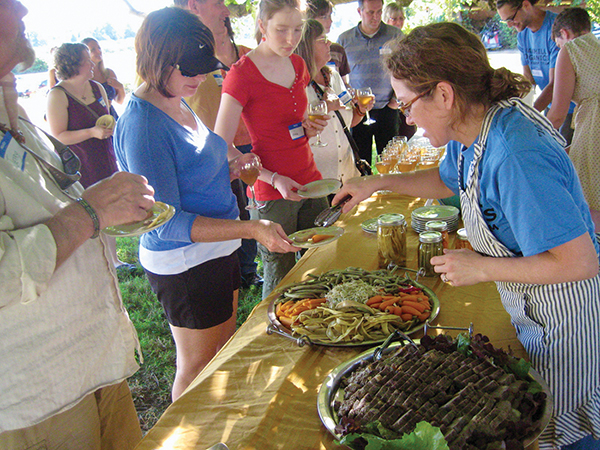 It’s important to recruit appropriate help when hosting a more elaborate on-farm event, such as at this sit-down dinner on the author’s farm. Farm employees and their friends helped organize and serve the food, including these appetizers. Servers and guests were both invited to wear name tags, which helps ease people into conversations.
It’s truly wonderful when it is your employees who help, because often they share your pride in the farm and benefit a lot from the positive feedback of interacting with customers and showing off their work. But, be sure to pay employees for their extra time.
Safety and liability
Before the actual event, think through safety for your visitors and liability for your farm. Check with your insurance agent about your coverage and make sure that you have liability coverage for on-farm events. Be specific when you check with them, because different types of events will be covered differently (an open house versus a sit-down meal, for example).
If you are serving food, you’ll also need to research what the legal requirements are. These will vary depending on whether or not you are charging for the food, offering free refreshments, or organizing a social potluck. If you want to be extremely cautious, hiring a caterer will be the safest option, but obviously the most expensive as well.
Before inviting people to your farm, consider which spaces might be off-limits and mark them as such by putting up signs or caution tape. Put away farm equipment and remove keys from tractor ignitions. We often also put notes in our invitations asking parents to keep track of their children at all times to make it clear that the farm isn’t a playground.
While it often took us at least half a day to prepare the farm for guests, we loved how on-farm events were a great incentive to clean up neglected messes, especially at the end of the season. Don’t be offended, however, if guests still express surprise at the “working” nature of your farm’s aesthetic, too.
One year a customer on tour remarked, “I didn’t think there’d be this many weeds.” We had a good laugh about that with our employees later, and we also thought it valuable that people got to see what a real farm looks like up-close.
Hospitality and flow
You’ll also want adequate parking and make sure the flow of parking is clear and safe. This can be handled with good signage or with a volunteer to direct people. Likewise, make sure you have bathroom facilities available to your visitors. Some years we just let people use our house bathroom, and other years we moved our farm’s porta-potties close to the gathering site and scheduled a cleaning for just before the event.
The reality of most working farms is that they’re not the most accessible places. We’ve had to be creative to welcome people with more limited mobility to visit our farm. That includes choosing tour routes that stick to our most level farm roads and moving at a slow pace. We also make sure that we provide seating near refreshment or gathering spaces so that people can be present without needing to stand for long periods of time.
Think of the weather when planning. Do you have cover for protection from hot sun or rain? We have several covered porches and sheds that we’ve used over the years when needed for weather shelter, but at times we’ve also used portable pop-up market canopies to expand our cover.
Once people start arriving at your event, remember to welcome them. Be present and visit. To help people feel even more comfortable interacting with you and others, I recommend wearing and offering name tags.
Logistical considerations will vary depending on the size of the event. With more people on site, you’ll need a lot more care around safety and flow of people and more extra hands to help. Smaller events are simpler to manage, which brings me to my last point.
Realistic attendance expectations
As I write this article, I worry that I might be making it sound as though we led double lives as farmers and as excellent event planners. The reality is that a lot of this planning and preparing was very simple, and the majority of our events were equally simple over the years. I wanted to give you lots of ideas and examples so that you can think creatively about what’s possible on your farm.
However, also remember this final, sometimes challenging, reality of event planning: unless you require RSVPs for an event, it will be difficult to anticipate your attendance. And, it’s possible that fewer people will come than you might hope.
I’d say that about a third of our on-farm events were attended by fewer than 20 people. We had poor weather to thank for most of those low turnouts, but some stalwart folks always still came to pick up pumpkins and taste apples. Thankfully our more elaborate, expensively planned events were always better attended, drawing crowds of 75 to 100 plus people.
We learned over the years to measure the success of our events in the long-term rather than just in individual event attendance numbers. Did the guests (regardless of how many) have fun? Remember, on-farm events also create positive content opportunities for newsletters and social media. For many customers, even just knowing that they are invited to the farm adds value to their overall experience.
Finding motivation
At our farm we always emphasized the “community” in “Community Supported Agriculture.” We wanted that word to feel true for us and for our eaters. Hosting people was a part of us achieving that goal, and over the years it worked. Our new CSA sign-ups came almost entirely from word-of-mouth recommendations. So, we considered the work and time we put into all the extra “add-ons” like on-farm events to be in place of what we might have otherwise had to spend on advertising for new customers.
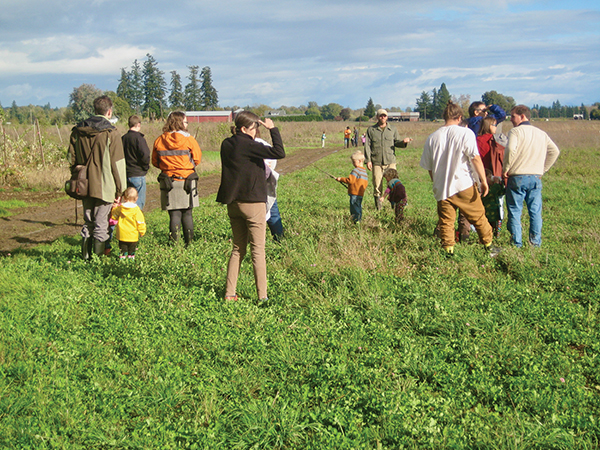 The author’s husband gives customers a farm tour as part of an open house. Simple walking tours were often the highlight of the event experience for customers. They could see their food growing, pick and taste vegetables in the fields, and ask their farmers lots of questions.
But ultimately we hosted people on our farm because we believe that people benefit from a real, first-hand connection to their food. Yes, we had delicious refreshments and fun activities, but the real goal was to see their feet on the soil and witness the joy in the children’s faces as they picked and nibbled in the fields themselves. Whether we were perfect event planners or not in any given year, we knew we could offer people that vital life connection.
And, if you’re up for it, so can you.
Katie Kulla lives and farms with her family in Yamhill County, Oregon. You can find Katie at KatieKulla.com and on Instagram: @katiekulla.
Copyright Growing For Market Magazine.
All rights reserved. No portion of this article may be copied
in any manner for use other than by the subscriber without
permission from the publisher.