











Last month I wrote about how we sell flowers at farmers markets and through a CSA. This next article focuses on selling to florists, brides and weddings. The market streams covered in this article require, to me, a more seasoned skill set to do well. This does not mean you cannot start by selling to florists, but farmers markets are more forgiving than florists, or brides, or mothers of brides.
Wholesale florists and designers
This brings me to the last large topic of wholesaling, florists, and designers. We do not sell to wholesalers. To do this you have to have quite a lot of production, ideally have the wholesalers close by and be able to produce flowers bunched, wrapped with bar codes and with consistent stems of high quality. Wholesalers have high standards set by a global distribution system of flowers. If you grow close to a wholesaler or have large quantities, stop by and ask if they want local product and what their standards are. Even if you are not selling to them, stop by and see what they have in their coolers.
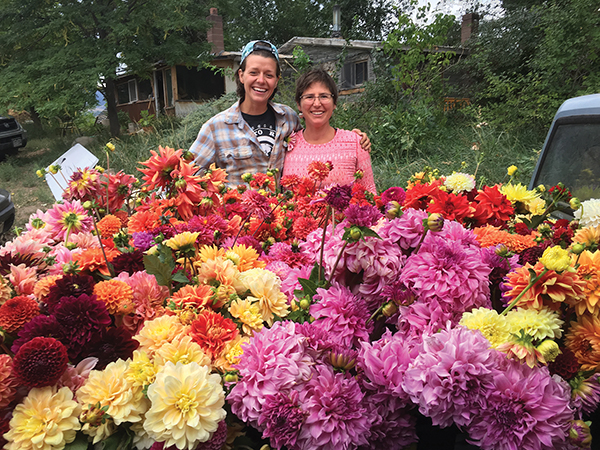 Dahlia harvest on the author’s farm. Photos courtesy of the author except where otherwise noted.
We signed up as a customer with a wholesaler to get price lists and occasionally would buy things like cans, vases, and some flowers for big events. Knowing what is for sale and at what price from the wholesalers in your area is key information and worth a trip. These companies are the real wholesalers, but what I call selling wholesale for our farm is sales to florists and designers.
These big wholesalers supply the florists with the flowers they need all year long, even when our farm is buried in snow. Additionally, there are many wholesalers who these florists buy from coast to coast. So if you see boxes at your local florist with the name of national retailers, look them up online to see if you can get a price list from time to time.
In the end, I do not consider myself competing with these true wholesalers. But we do need to be aware of what types of flowers our florist customers get from their wholesalers and for what price. Being competitive will drive sales. This is where we learned how much flowers sell for in the wholesale market. We realized some of our stems at the farmers market were being sold for way too little.
Also, you can see the quality of flowers coming from the wholesalers. Bells of Ireland for example from the wholesaler are very thin, always de-leafed, and frankly puny compared to our big stems. But they are cheap so some florists will not buy ours, and others love ours. For this reason I love dropping flowers off at florists and looking at what they have in their coolers and talking to them about what they buy and why. This will give you a sense of their style and the type of customers they service.
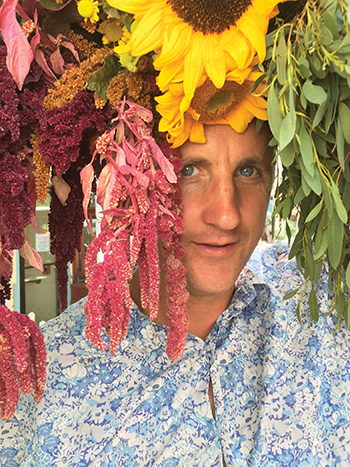 The author with flowers on his head. Photo and design by the Mud Baron, @mudbaron.
Selling to florists can be tricky since we are typically selling to florists in the places that we also do the farmers market. If this is avoidable, do so, especially if the market is small. For us there is a big enough market that it is not really a problem. We have been successful because we are able to provide a good deal of quantity as well as diversity of flowers they can’t get from wholesalers — zinnias and dahlias come to mind as two big ones and many unique perennials.
We avoid selling to them at the farmers markets. But for some smaller customers, we will allow them to order ahead for pick up. Finally, if we get a last minute request we will do our best to fill these orders and deliver before the market or have them pick up at market.
We consider these customers some of our best as they buy week in and week out all season. So, treat them as special and build a relationship. Giving them special service at the market is a great way to build that relationship, but they must get the flowers before the market opens. We tell our farmers market customers if they need a bouquet on Wednesday to get it from the florists. So being aware of the politics and keeping everyone happy is key in this situation, which can require concessions from time to time. But long-term florists and designer customers are worth it. We have worked with many of these businesses for over 12 years now.
How to get them as customers in the first place is a much-discussed topic. First, you must know that you can be consistent, provide quality and quantity, and be professional. This is why I see this market stream as a more difficult one. Just as chefs find it hard to buy from many small, seasonal farmers, so to do florists. So often it is just easier to not buy from everyone who comes through the door with flowers to sell.
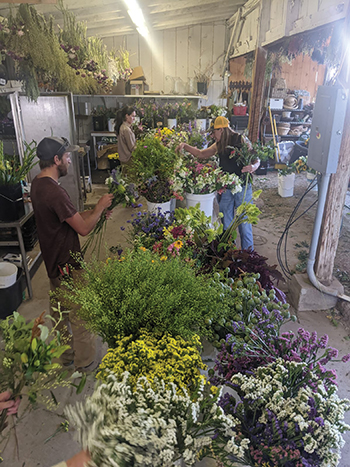 Making bouquets and pulling stems for wholesale delivery.
Being prepared with how you will work in terms of ordering, selling, billing, pricing, and delivery is key. You can always change how you do things as it evolves. But have a good idea of how all of this will work so they understand right away what is being offered beyond just the stems. They are business people so need the whole picture. We have changed how we operate over the years to benefit us and to drive sales and work with the florists.
We send an email a week before their orders are due. We estimate which flowers, colors, and what quantity will be available. There are programs that do this, but we found a simple email, with a follow-up by phone or text works best for us and our customers. We include what’s coming on next week, what is ending this week, and a very brief farm update. Keep it simple stupid.
They email us back with their orders. Often they are very particular about color so you need to be on it if you cannot fill an order so they can substitute or get it elsewhere. It takes time for them to order flowers in, so they need lead time to replace what you cannot. The more you understand this the more they will appreciate your efforts. Ideally, you have enough to fill all of what they order. Can they use salmon instead of peach? We have learned who is more flexible and who really wants exactly what they ask for.
We offer lots of stems and typically do growers bunches which amount to 10 stems plus or minus. The industry standard for each kind of flower is different, but as long as they know what they are getting it seems to work. Big flowers we sell by the stem or five-stem bunch. A few flowers are 20 stems such as sweet peas. We also offer bouquets; over the years it has grown and many florists buy quite a lot.
You can find our bouquets at three florists in the same town where we also do a farmers market. Obviously, this will not work everyplace. But many florists like to have pre-made bouquets that customers can grab and go and all they have to do is mark them up. Making these bouquets quickly is key to keeping them profitable. But we charge enough so that it is worth it, as they are not simple grocery store bouquets.
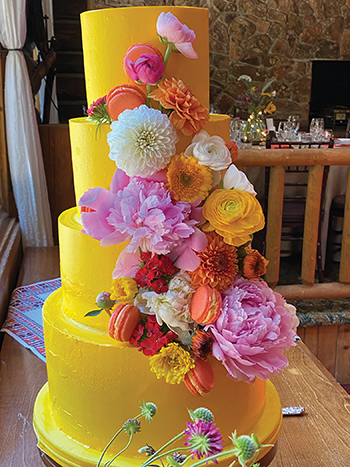 Flowers from the author’s farm incorporated into some wedding work.
We deliver on Tuesdays to five towns where the bulk of the florists and designers work and have studios or shops. It works well for our harvest schedule, opposite from our farmers markets. They likely would prefer a delivery later in the week since most design work is for the weekend weddings and parties. But you have to be clear with what you can provide and when.
We charge for delivery, a flat fee and then a percentage of the bill total up to an upper limit. There are many ways to do this just make sure to pay for the time, miles, wear and tear, and gas. If you see an invoice from a wholesaler these florists pay a lot in delivery fees, so do not be shy and make it worth it. Often part of why they buy from us is that our delivery fees can be less as they do not involve airplanes and shippers like FedEx — and flowers from the other side of the planet.
For the last many years we have had a refrigerated truck, which florists and our farmers markets alike appreciate, but especially the florists. It means their product is cold from harvest to their door. For us it means we can add buckets of flowers extra on the truck and they know we will have different product on the truck to buy. Sometimes it is more of what we had on the list, other times flowers that came on faster than expected, something we did not want to sell wholesale but decided to later.
You have to know who in the shop makes these purchasing decisions and show up when they are there. We add another 10 to 30 percent to original orders this way. Often they get last minute orders or maybe their wholesaler can’t get them what they wanted, then, we show up with a truck full of flowers. We have had people say, “I will take it all,” and go home empty. If not, the flowers come home cold and go back into the cooler for market.
Then, we invoice all they bought off the truck and what they ordered on one invoice that gets emailed out. This makes it easy with only one invoice per week. They have two weeks to pay the bill, longer-term customers have a month. We use QuickBooks to keep track of all of this. Each month we send out statements to remind them if they missed a bill, which happens. Making sure to catch this early on will avoid issues that can turn ugly. We have had problems collecting on occasion so it is important to keep up on people paying their bills.
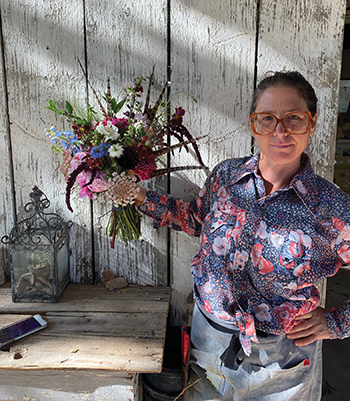
Their busy season is our busy season so it is easy to lose track. There are certainly better systems, but this is what works for us and it’s what the customers expect and they keep ordering so it must work for them well enough. We sell to about 10 to 15 florists and designers, probably about six to eight each week and others only special orders for event work. If you have a lot more than this, it would be worth finding a program made for selling like this for more automation. We are frankly just old school, and I like the personal touch of email and the phone and text.
Finally, I like to write them all a thank you note in the fall when all is slow. If you have farm events invite them and give them tickets, or free tours to their staff. Anything you can do to go above and beyond will endear them to your farm. Also, we have sent out surveys to see what is and what is not working. What they want to buy more of, or want to buy from you. Really anything you want to stick in a quick survey, keep it simple.
We don’t do this every year but it has helped hone the system for us and the florists. Also conversations with owners or buyers about what is working and what is not working teaches you a lot and improves things for everyone. So spend a minute on deliveries and get as much information as you can about their operations and how you can best serve them.
DIY brides
Once you have a presence in the community you are undoubtedly going to be approached by brides, mothers of brides, and all of their friends. When they see you at a farmers market or maybe you have flowers someplace else they are going to assume you are a great, more affordable (cheap) option for flowers for their big day. I loosely categorize these one-time customers as ‘DIY Brides’ though sometimes it’s for a party or event instead.
These customers can be a pain in the butt. They are only going to buy from you once, but will make a big enough order that they feel entitled to a discount. It often takes multiple phone calls and emails and follow up with billing and delivery. In the end sometimes they are disgruntled about one aspect or another. We have learned how to make all of this worthwhile for us. I know there are many other ways so do more reading and come up with something that works for you.
I created a general availability list by month with a price range for bunches that I keep in a folder. At the top is a description of how we work. They get this list by email, and I encourage all communication by email to discourage endless phone calls. They have to get an order into us based on that sheet two weeks ahead. We will then send a confirmation back with substitutions or quantity updates based on actual availability. The price list is such that they feel like they are getting a deal. However, the range of prices allows us to change based on availability, demand from our other regular customers, and quality, from above wholesale to full retail.
If these customers are regulars at the market then they might get more special attention. But if they are a one-time customer they could be taking away sales from regular customers who you are then disappointing. On the other side, if it is an abundant time of year like July or August it can be another $500 to $1000 for the week. Finally, as these events are usually happening a day or two after the pickup, you can move flowers that may only have a few days of life left in them. But this requires really knowing well your vase life and storage of the flowers. I always encourage them to find coolers for the flowers so they are prime for the event.
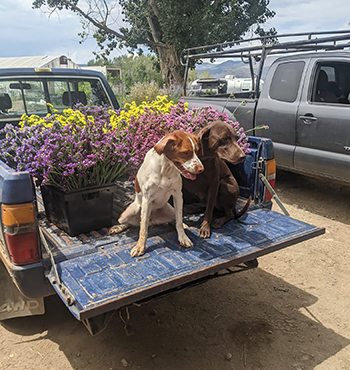
In addition we offer a set list of basic offerings, bridal bouquets, boutonnieres, table arrangements in a mason jar and so on. We do not offer these at a discount. In fact we set the prices high to encourage them to order stems and make their own instead. Typically we will get an order for the bridals and they plan to do their own tables. You can price this however you want to encourage or discourage these types of sales. Adding in a bunch of table bouquets to our weekly schedule can be disruptive which is when we price it high.
Make sure to get all your jars, buckets, crates or anything else back or charge ahead and give them a refund. Either way make sure they know the value of these items to you. We always add the price of the jar in so they can just keep them. Of course, if delivering to the market, charge a delivery fee. We charge more than we do for our wholesalers. If it is a large order we take a deposit and require payment in full at pick up. All in all this works pretty well, keeps the unending communications to a minimum, allows us to sell more flowers, and makes the time and energy worth it. There were many years where I gave way too much time and service to these customers for not enough money, so that is what to avoid.
Other sales channels
There are of course many other ways to sell flowers, and GFM articles in the archives detail the ins and outs. We do not do grocery store bouquets, which take a lot of speed, counting of stems, and selling low. In our area we have looked into it but with our other channels have not needed it to move product. A roadside stand is another option and one in our remote area I have not considered. If you are on a busy road could be well worth it.
Finally, a word about consignment, don’t. They never take care of the flowers, usually want them to make their store look pretty or are next to a hot espresso machine. They don’t sell and you eat the cost. In my opinion if selling flowers someplace is a great idea, they can buy them from you at wholesale cost and resell them at a profit. If they have no skin in the game it won’t work.
Weddings are a whole other article, one that I am not the best person to write. But I will share that years ago we spun off another business (DBA under our farm) that does all the wedding flowers. The needs and time it takes was better done not by the farm. Also, having a design studio that only did weddings kept away the people who wanted a cheap wedding. We only work with people who believe in using local, seasonal, organic flowers, and whose vision we share. You have to have someone with the skills who wants to do this to make it worth it. Just something to consider if this is the direction you are going. Of course, having the farm do weddings works, too, and you can find articles on that in the GFM archives.
No matter the sales channels you choose it is important to make sure you do not spread yourself so thin that you don’t do any of them well. At the same time it is nice to have different channels so that you are not solely reliant on one or another. Each farm’s best sales channels are context dependent, so what works for us might not be the best mix for you. Your market base, competition, and your experience and desires all need to be considered. When you add new sales channels try to do so consciously. Thinking things through ahead of time will set you up for success in the seasons to come. Finally, make sure the way you sell your flowers is something you enjoy; that is one of the best ways to ensure success.
Don Lareau has been farming flowers organically for 20 years on the western slope of Colorado with his wife, Daphne Yannakakis, and an amazing crew of farmers. Currently on sabbatical in the Netherlands, he is studying agroforestry, agrovoltaics and agroecology while pursuing a Masters in Organic Agriculture. He has been on the board of the Organic Farming Research Foundation (OFRF).
Copyright Growing For Market Magazine.
All rights reserved. No portion of this article may be copied
in any manner for use other than by the subscriber without
permission from the publisher.