











We grow food for ourselves, food for our customers, food for our animals, food for the native pollinators, heirlooms and novelties, old favorites and something new and different. But it’s always important to identify the specific crops that pay the bills.
The 10 crops that follow are ones which, on our farm, are very much worth the growing and selling. This is usually because of a combination of reasons. It could simply be that they fetch a good price. Or maybe they are comparatively little work. Or that in a single crop they offer a variety of sellable items, which is especially attractive if some of them are more shelf-stable than what farm marketers usually deal with.
Should you grow all of the crops yourself? Maybe not. Every operation is different, as are the customers they deal with. There are a few perennials on this list, and growers with very limited space and the need to optimize the harvest off of every inch may not be able to spare the room. Some of these crops have a novel value at our markets, which they may not have where you are located. Or perhaps there are several competitors (or one large one) in your area that already specialize in one of these crops, and so its market is already fully exploited.
However, even if you can’t grow each crop, pay attention to the criteria used to establish their value and you may be able to better spot your own most valuable crops.
Asparagus
If you have the room and the time to wait for this perennial, you should certainly get to planting. Yes, it requires a permanent space. Yes, that means perennial weeds to do battle with. Yes, their harvest is for a relatively short period of the year. And yes, the asparagus crowns do take a few years before they have become established so that you can begin harvesting spears.
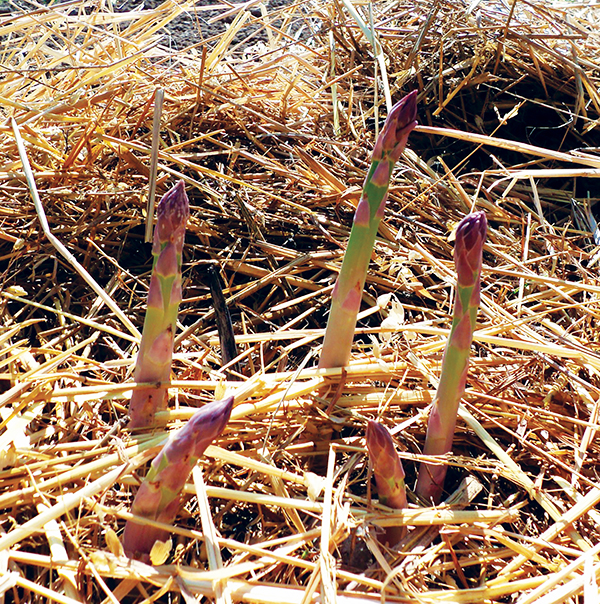 An added benefit of asparagus is that it comes on in the spring when there may not be a lot of other crops available yet.
But asparagus brings in a very good price. As an organic producer with a good product, we always have demanded top dollar for our asparagus. In especially productive years, we have offered bulk discounts for those buying several pounds, but were still earning a comparatively good price.
Additionally, though its perennial nature may be viewed as a con by some, I find the addition of perennials to the production plan to be an increasingly valuable asset these days. The unreliable nature of the weather can make working the soil challenging. But perennials tend to be more resilient, and, of course, you can work to improve their condition from year to year — they give you a longer timeline to work with.
Lavender
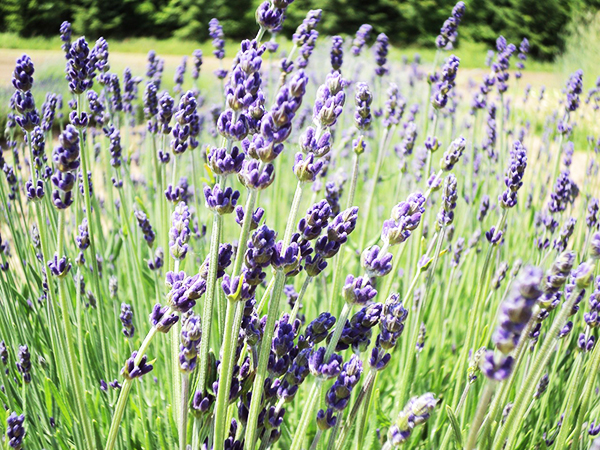
Another perennial that you should consider is lavender. Freshly picked bundles and dried bouquets, both as a single variety or arranged, tend to be excellent sellers. Dried flowers can also be added to wreaths or swags. And the freshly harvested flowers and stems may be woven into lavender wands which will dry and then have a long shelf life. The dried flowers and leaves are wonderful in potpourri blends. Or the dried buds may be used in drawer sachets, or sold for culinary uses, or used to stuff dream pillows. No matter what you want to do, lavender is sure to meet you half way.
 Full-size and baby leaves can be harvested off the same white Russian kale plant.
Garlic
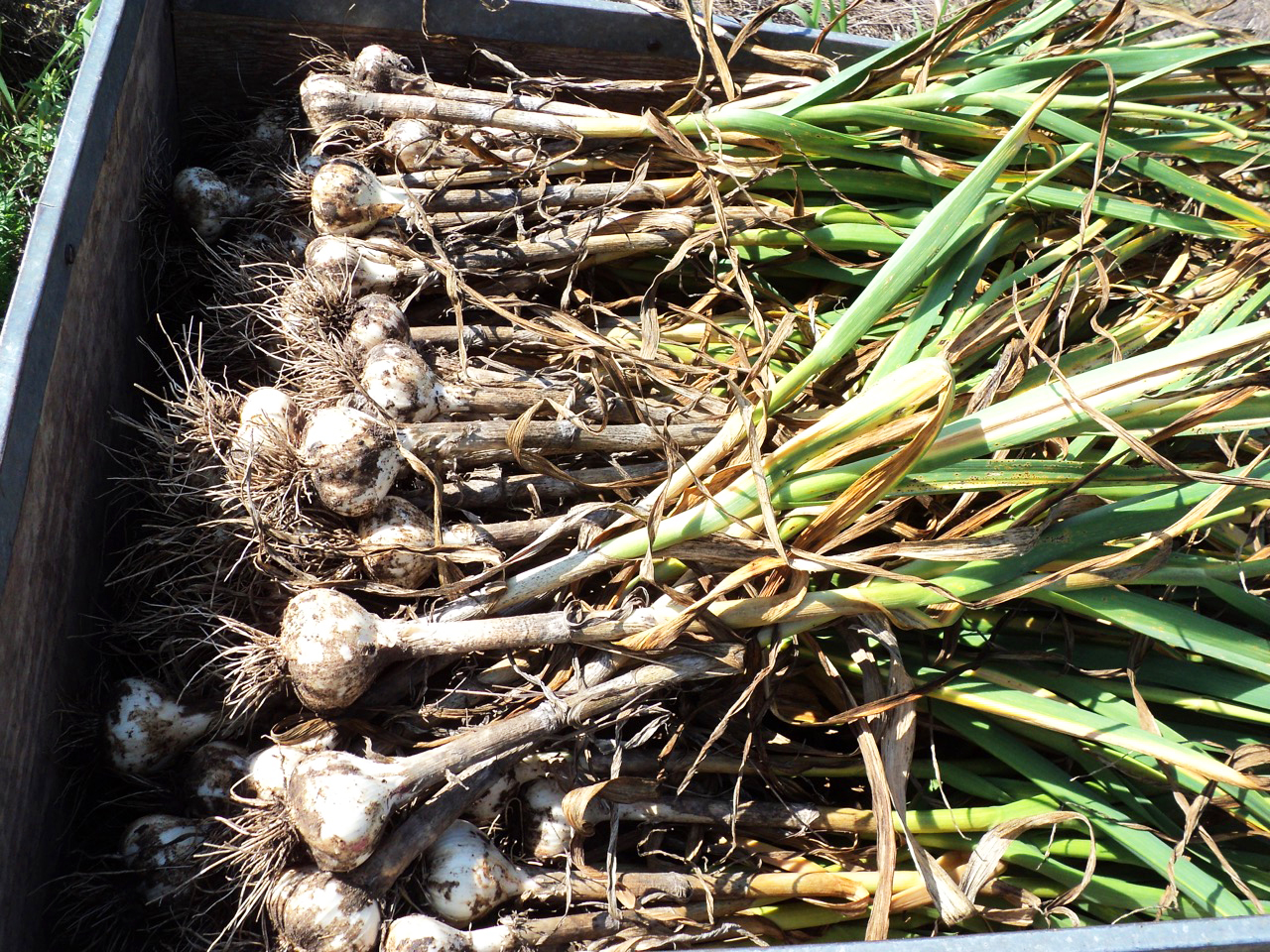
There is so much you can do with garlic, it is really the gift that keeps giving. To begin with, garlic brings pretty good prices and is a shelf-stable product. I have seen co-vendors do various value-added maneuvers with it to offer something specialized. Some have offered a certified-kitchen processed product, such as pre-minced or simply peeled cloves. Also, I have seen vendors sell individual cloves of garlic to customers who don’t use much. I have also seen braids of softneck garlic sell for more than double of value of the individual heads because of the decorative value of the braid itself (even more so when dried flowers are woven in).
 Full-size and baby leaves can be harvested off the same white Russian kale plant.
Hardneck varieties produce scapes in spring, which are really a vegetable with a fan base all their own. Garlic cloves which weren’t planted the previous autumn may be planted in the spring to be harvested as garlic scallions. This is simply the very young garlic plant (with only about two months of growth) which has the flavor of garlic and can be used like a scallion. We also have customers who will buy several dozen heads for their storage needs. This is a good market to tap as well.
Globe amaranth
Globe amaranth is occasionally identified simply with its genus name gomphrena or called Spanish clover as the flower heads certainly bear a superficial resemblance to clover. It has without a doubt long been the most popular little single-species dried flower bouquet we make, year after year. For us and many, it is also getting more and more use in fresh bouquets. It is one of the more visually interesting, long-living, heat-resistant flowers you will find for a summer fresh-cut bouquet.
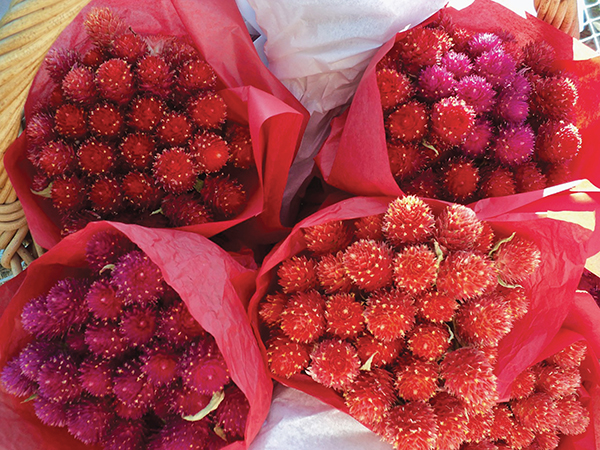 Globe amaranth can be used fresh or dried.
This annual comes in two species with two slightly different growth habits. G. globosa flowers come in a light pink, rich pink, purple, and white. Its stems are a bit segmented and thin, so much so that the flower heads will frequently nod pendulously and add a nice touch to fresh bouquets. G. globosa works very well to give light, romantic touches to arranged/mixed dried bouquets.
G. haageana produces longer, sturdier flower stems and larger flower heads in red, hot pink, and orange colors. It is this species that we use for our single-species dried bouquets because they are more emphatic. With regular picking throughout their season, both species will give you many flowers to use.
Kale
Some customers have their true favorites — lacinato, curly or Siberian. But with our customers we really get the orders for baby kale, and variety is unimportant. Though we will often plant a second crop for the autumn, you can keep one planting going for the entire season. By mulching and watering, watching for insect pests, and feeding when a boost is required, this is a rather low-maintenance crop with a very long harvest period.
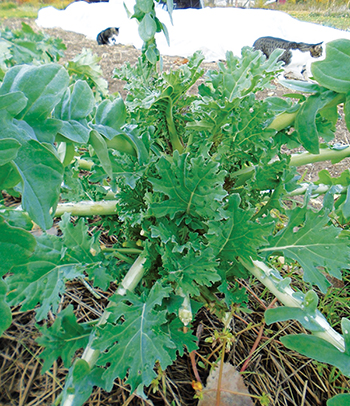 Full-size and baby leaves can be harvested off the same white Russian kale plant.
Though I know many people raise baby greens by planting and harvesting them from their own baby plant, we prefer not to raise them in this manner. We harvest both baby and mature kale leaves from the same plants. Both types of leaves readily grow simultaneously. Heavy harvesting does nothing but spur more growth, and the baby leaves are suitably tender and delicious. For excellent baby kale production, I highly recommend the Siberian-type variety ‘White Russian.’ Once it gets going, it will begin to simply burst with an abundance of small leaves for you to harvest.
Fingerling potatoes
A fellow vendor once said to me that there is no reason for him to grow potatoes; his operation was intensively managed successional plantings on raised beds, so he didn’t feel he could allow them the space and time they need. Though we did make him think twice (he said) with our fingerlings.
Even if it doesn’t make sense for you to grow storage potatoes, the higher prices for fingerlings may make them lucrative enough for you. And of all the fingerlings, I have never seen any fly off the market table like the pintos, even to people who have never tried them before. Sometimes with fingerlings, people question why the higher cost for this quart of potatoes — but never with the pintos, for which they seem ready to pay more for at first glance. They are waxy and visually appealing. For the grower they have the added attraction of producing more prolifically than some fingerlings do and not being prone to scab.
Small colored peppers
The number of customers is prodigious who have told me how happy they are to find a small sweet onion, cabbage, colored pepper, sweet potato, winter squash, etc., because when all they can find is a large one, they end up throwing at least half of it away.
Not everyone has a big family to feed. Not everyone has a big appetite. And, simply, not everyone needs a lot of this or that vegetable. If you have not experienced this reaction from your customers, my guess is you are not raising enough baby varieties.
As an added bonus, many of the small, sweet peppers that have come on the market have exceptional flavor and fewer seeds than their larger cousins. Mini bell peppers, conically shaped peppers, round “cheese” peppers, there are a lot of options. Pimientos such as ‘Round of Hungary’ are a great option. For years, we have been producing exceptional fans of the ‘Doe Hill,’ a thick-walled, squat-shaped, orange pepper that is a pre-1900 Virginian heirloom.
Spinach
Spinach can be a bit of work compared to other crops. It will need to be kept cool with shade cloth in these hot and hotter times. And no matter what you do it will want to bolt. Variety selection is very important here, as you must stick to more bolt-resistant varieties when there is a chance of a heatwave.
Variety selection will also help with cleanliness, with the smoother-leaved types picking up less dirt and being easier to clean compared to savoy. If spinach isn’t completely clean, customers won’t be back for more gritty spinach. Despite the challenges, spinach just sells and sells. Anytime of year you will find customers for it.
Strawberries
It is probably no surprise that strawberries would appear on a top crops list. I am not sure any berry (even blueberries) can dethrone them as the universal favorite. Frost protection to their flowers can be easily provided by placing some straw mulch on top of them, which is more than you can do for any fruit tree. And they don’t have thorns to catch you with as raspberries, blackberries, and loganberries do. With their high customer demand and attractive selling price, consider giving strawberries a try.
If there are already too many strawberry growers in your area, you can focus on growing the early- and late-season varieties. It is true that in the thick of strawberry season, competition may be fierce; it could benefit you to have a plan for any unsold product.
We had some co-vendors who would make strawberry jam with any unsold berries, and would then sell the jam at market. I know several people who would develop relationships with small, local food businesses and sell them surplus product at a reduced price for pie or smoothie making. For our part, we have never had unsold strawberries that were more than we could eat up ourselves.
Sweet potatoes
They may be more prevalent where you are, but at the markets that we attended over the years sweet potatoes have been hard to come by. And when customers discover the superior flavor and storability of locally produced sweet potatoes, they are even more delighted.
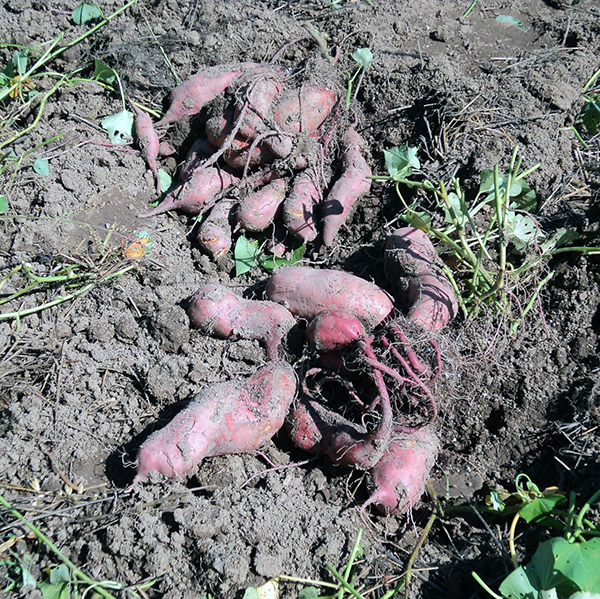
However, when it comes to soil selection we go against popular advice. When we first attempted to raise sweet potatoes, we followed the recommendations of bed digging to loosen the soil, choosing soil with some sand in it, and adding some organic matter (if necessary) when it wasn’t ideally loose. But all we ever grew were very long, thin potatoes.
Then we came across in interview in an old book with a farmer who said sweet potatoes need hard soil to push against in order to fatten their tubers. It worked for us. Though most sources call for sandy loams, we and this old farmer had much better success with a touch of clay. We have always picked a clay portion of the garden for our sweet potatoes ever since and have never been disappointed.
For ten crops that are worth your time to try growing and selling, test the recommended varieties, they are winners. Where varieties weren’t specified, try others, pay attention to the results and create your operation’s own top ten list.
Leah Smith is a freelance writer and home and market gardener. She works on her family’s farm in mid-Michigan called Nodding Thistle (certified organic from 1984 to 2009). A graduate of Michigan State University, she can be reached at noddingthistle@gmail.com.
Copyright Growing For Market Magazine.
All rights reserved. No portion of this article may be copied
in any manner for use other than by the subscriber without
permission from the publisher.