








The H-2A visa process is fairly complex so it’s no surprise that most farms hire consulting companies, recruiters, and attorneys to help them navigate requirements to bring migrant farm workers into the United States. But it’s actually quite possible to DIY the H-2A process entirely. Because of grant-related obligations, we recently went the DIY H-2A route and learned a lot of lessons along the way. As a disclosure, I’m not an immigration attorney, just a fellow farmer with some tips to share.
For a look at what it’s like to go through the H-2A process with an agency, see the article Demystifying the H-2A program by Gretel Adams from the April 2021 GFM.
Pros and cons of DIYing H-2A
The obvious benefit of completing H-2A requirements without outside help is cost savings. Based on our conversations with recruitment firms and other farmers, it can cost $1,500 to $3,000 or more to hire an H-2A consulting company, attorney, or recruiter to guide you through the process, depending on how many workers you are bringing over.
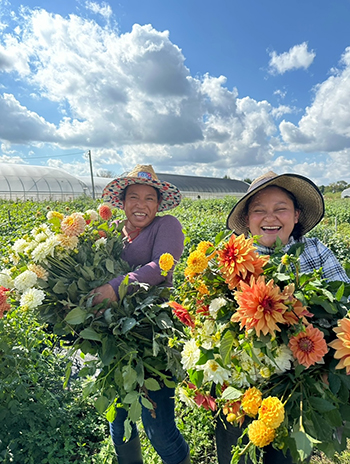
While many farms rely on lawyers and consultants to navigate the H-2A process, it’s possible to do it on your own. In 2024, we brought on two H-2A workers and this year we brought on three.
Participating in the H-2A program brings a lot of regulatory risk for the farmer, and fines for noncompliance are steep. But navigating the process yourself can minimize issues down the road. Finally, you may wish to avoid recruitment firms as bribery is rampant.
In 2024, we received a Farm Labor Stabilization and Protection (FLSP) Pilot Program grant, which provided funds to improve worker conditions and pay for costs including wages and housing. To apply for the grant, we had to commit to ethical recruiting. If we wanted to work with a recruiting firm and apply for the grant, the firm would have to pledge that they would not take bribes from workers. Notably, we could not find one firm willing to work with us on the grant and sign the pledge. So, we did it our own.
Step 1: Connect with your State Workforce Agency (SWA)
The United States Department of Labor (DOL) sets guidelines for the H-2A program and relies on states to help enforce them. Every state has a workforce agency that will be your first contact in the H-2A visa process. Googling Your State + “Workforce Agency” + “H-2A” should help you find the right office to contact.
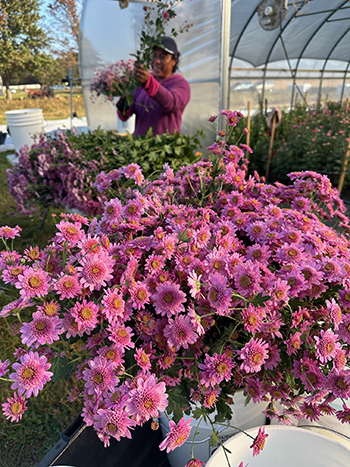
Housing and daily transportation for H-2A workers must be provided by the farmer.
Officially, you don’t need to contact your SWA until 60 to 75 days until you want your workers to start work. But I recommend contacting them as soon as possible. They may have guidance and suggestions on navigating the process, and it can help to establish a relationship. Here in New Jersey, our office has been responsive to the many questions we’ve had.
Step 2: Housing
To begin the process of applying for H-2A workers, you must have housing for them identified, under your control (e.g., a valid lease or mortgage), and approved by the SWA. If you don’t have on-farm housing readily available, this could mean signing a lease or purchasing a house many months before your workers arrive, and therefore spending considerable funds. But you cannot apply for migrant workers without housing that has been approved by the SWA.
Always check with your SWA, but here in New Jersey we found a workaround. H-2A workers can be housed in hotels; a long-term hotel with a kitchen is ideal as they’ll be able to cook their own meals. Because hotels are already approved by the local fire department, the SWA may not require additional inspections, which can save time in the application process. With most hotel chains, you won’t need to pay anything until your check-in date, so this can save money, too.
Although even the most basic hotel is expensive, the cost difference may surprise you. Here a two-bed hotel room with kitchen costs around $3,000/month, compared to a two-bed rental house at $1,700 a month. An annual lease costs $20,400 for the house. But if your H-2A workers are here less than seven months, a hotel would be cheaper than full-year rent on a house.
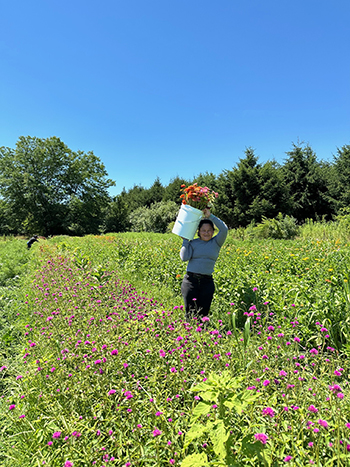
We recruited our workers directly with the help of the Guatemalan Ministry of Labor. This was free and also helped prevent potential bribery and fraud.
Once our workers arrived, we signed a lease on a nearby rental house, got the house inspected and approved by the SWA, amended our job order housing location, and then moved our workers in. Check with your state if this is a possibility, as it may save a lot of money over renting a house months before they arrive.
The Department of Labor uses two separate checklists for housing approval. Lodging built before 1980 are subject to ETA (Employment and Training Administration) regulations, and later housing is inspected under OSHA (Occupational Safety and Health Administration) regulations. The rules are similar and checklists of requirements can be found online.
In speaking with farmers and inspectors, a few common issues come up often with housing. The government requires that all bedrooms have a means of egress. For first-story bedrooms, this can simply be a window. But bedrooms on the higher floors would require a fire escape, not commonly found in single family homes. All external openings on the housing must have screens — both windows and doors. We faced a hefty fine for not having a screened front door (more on that below). Finally, be sure to regularly check smoke detector batteries and first aid kits, which have expiration dates.
To keep up with requirements, we created a weekly checklist that we review with our workers. Drop-in housing inspections can happen at any time, so it’s important that the housing remains in working order.
Step 3: SWA approval of job order
To formally initiate the process, 75 days before you want your workers to start, you file a job order (Form ETA-790) with your state, online via the DOL’s Foreign Labor Application Gateway (flag.dol.gov).
On the job order, you’ll need to include the location of your housing, your worker’s schedule, details about the job duties, and other information. The form can be daunting and requires highly specific details, but here’s a hint: approved job orders are publicly available on SeasonalJobs.dol.gov. Search for approved jobs in your state to find examples of the required details. Be sure to click “View Job Order” to see a farm’s full ETA-790.
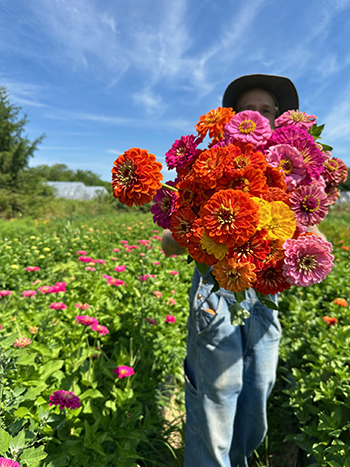
While we did face a surprise inspection from the DOL, we were well prepared and had become experts in the H-2A process by the time the inspectors came.
It’s critical that you include any possible duties on this form, and that those duties don’t extend beyond farm work. For example, loading a truck for market or driving it short distances would be common farm worker tasks. Long-haul commercial truck driving, however, might raise red flags for your job. Our job order (which you can currently find publicly available on the DOL website) includes all potential tasks our workers might do, from washing buckets to seeding and transplanting to harvesting flowers and preparing bouquets for market.
It’s also important that you include all wage details in your job order, as you won’t be able to change that later on. The government sets the wage for H-2A work (here in New Jersey, it’s currently $17.96/hour), but you might offer additional pay and benefits. Our farm offers the same benefits to H-2A workers that we do our U.S. workers, including time-and-a-half overtime, paid sick leave, and seasonal bonuses. All of that must be included in your job order or you can’t offer it.
Information about working conditions (e.g., all weather) and potential hazards like bee stings or chemicals should also be included. The state usually reviews the job order within a few days and then lets you know what changes are needed — usually some tweaks are required before they’ll approve it.
Step 4: Federal DOL approval of the job order
Once the state has approved your ETA-790/job order, you submit it in the same FLAG system to the federal office (the Chicago National Processing Center). You’ll also need to include a Statement of Temporary Need with your application — basically a few paragraphs explaining the nature of your farm business, your efforts to recruit domestic workers, and why you need seasonal workers.
The Chicago NPC takes a few days and up to a couple of weeks to review the application and should notify you of issues via email. Like with the state review, changes are typically required by the federal government. For example, we needed to update our form with more details about worker reimbursement for their travel expenses.
This stage of the process is handled electronically. In our experience, the Chicago NPC is fast to respond to changes and questions. Before they issue final approval, you’ll likely need to submit proof of workers’ compensation insurance as well as a Recruitment Report, detailing what steps you have taken to date to attract domestic workers, as well as evidence that you’ve contacted previous employees who worked for you over the last year. Once you’ve submitted all of the required documentation, you should electronically receive an approval notice from the DOL (form ETA-9142A).
Step 5: Filing with USCIS
In our experience, working with DOL to get the approval is relatively easy, as the agency is responsive and the paperwork is done electronically. The next step in the process, which is approval from the Department of Homeland Security’s U.S. Citizenship and Immigration Services, was a lot trickier for us.
In this step, you must file form I-129 with USCIS. Unlike the DOL, USCIS requires hard copies to be mailed to their Texas Service Center. Along with the I-129 form, you should mail a cover letter explaining your application, the ETA-9142A from the Department of Labor (DOL), and checks for their fees. USCIS will review your application and then reply to you via postal mail, so the process can be slow.
On the form I-129, you’ll need to indicate which country and consulate you are recruiting from, so that they can send your approval notice to the right embassy. Most farmers seeking H-2A visas will apply for “Unnamed Workers” on this form. My understanding is that the only time you need to apply for “Named Workers” is if you already have H-2A workers here and are applying to extend their stay. Be sure to fill out all pages of the form, including the “H Supplement” appendix. Missing pages or information will result in automatic denial.
Our first year doing this, our form was rejected four separate times for missing pages/fields and then for including incorrect fees. It turned out that they had published a new fee schedule right as we were submitting our application, and we had been basing our check amounts on an outdated schedule. Their denial letters did not include what the correct fee should be, only that what we had paid was wrong, and their phone number only led me to a robot who could not answer my questions. All fees must be paid in exact amounts indicated on their fee schedule.
I ended up going to our local USCIS office in person, where I was not allowed to see an agent, but the security guard gave me a weird tip. When calling the USCIS help number, try using the phrase “info pass” to be connected to an agent. It sounded totally dystopian, but it worked, and I was able to resolve questions about the correct fee.
Because of the USICS issues, our first year’s H-2A application was delayed by over six weeks. In the second year, lessons learned, we checked the USCIS fee schedule and guidelines on the same day we mailed our paperwork to ensure we were using the latest guidelines. We also mailed our paperwork using overnight mail (with a tracking number) so that the paperwork would arrive a little faster. This year our application was approved immediately.
Once your I-129 is approved, you should receive an emailed notification followed by a certificate in the mail. The mailed Form I-797 Approval Notice is what you’ll need to finalize your H-2A application and get your workers here.
Recruiting H-2A workers and the consulate process
There are a few ways to recruit H-2A workers without going through a paid recruiting firm. First, if any farms near you use H-2A, you can ask around to see if their workers have family members or friends to refer. This is a great option as workers will have existing relationships in your community, making their transition easier.
You can also contact the government in the country where you are trying to recruit, typically their ministry of labor. For example, as part of our FLSP grant, we committed to recruiting from Guatemala so we contacted the Guatemalan Ministry of Labor. They identified qualified workers for us, help set up video interviews, and helped to complete the consulate interview process. Working with the government agency, instead of a private contractor, helped ensure that the process was safe and legal.
Finally, once your job order is posted to the DOL website, you’ll get inundated with hundreds of applications for your job from workers all over the world. Be cautious about potential fraud, but many of these applicants are legitimate and experienced.
The workers you choose will need to then apply for their visa with the U.S. Department of State (DOS) at the U.S. Embassy or Consulate office in their country. This process and timeline will vary depending on the country. In Guatemala, you are able to book the appointment and pay the consular fees online. The embassy should issue the visa a few days after the interview, and your workers are then able to come to the U.S.
Bringing your H-2A workers here
Once your visa is approved, you can purchase plane tickets and make travel arrangements for your workers. They can arrive to get settled a few days before their work contract begins, but can’t start working until the date on the job order. Farms are required to reimburse workers for all of their travel expenses, currently up to around $60/day, as well as any consular fees. Be sure to retain all evidence of reimbursement and travel expense purchases.
Continuing recruitment of U.S. workers
It’s important to understand the recruitment requirements when you have H-2A workers. Technically, you must accept any U.S. applicant who applies for the H-2A job, and you must continue to recruit for it (usually on the Seasonal Jobs Portal) until the contract is half up. This means that, even if your H-2A workers are here and working, you may have to hire additional workers who apply.
You can’t have higher requirements for U.S. workers than H-2A workers. For example, if you don’t require a background check or references for H-2A workers then you can’t require them for U.S. workers. In our experience, very few (this year, zero) U.S. workers have applied for the H-2A position, but the possibility remains. We’ve tried to keep a little flexibility in our budget in case qualified U.S. workers apply for the H-2A job.
DOL Inspections
I’ve spoken with farmers who have used the H-2A program for decades and never had an inspection, but we had an inspection from the federal DOL in our very first year. Three federal agents showed up to our farm one morning unannounced with a long list of demands. The inspectors interviewed each of our workers one-on-one for around an hour each. During these interviews they asked questions about travel reimbursement, bribes/payments during recruitment, work tasks, schedules, transportation, housing, etc.
The inspectors also inspected our worker housing, our barn and bathroom/hand-washing facilities, and the vehicle that we use to transport our workers. For the vehicle, OSHA has a checklist with basic requirements like working headlights, seatbelts for all passengers, working parking brake, etc. Since this drop-in inspection, we’ve implemented a weekly vehicle check to ensure the car is ready for inspection at any time.
In addition to the interviews and inspections, the agents requested a long list of documents which we needed to provide immediately. I did not have copies of everything printed, but was allowed to send them electronically within 48 hours. Record requirements may vary based on the inspector, but here was what we were required to provide:
Two most recent payrolls/copy of wage statements
Corresponding time records/time sheets
Vehicle insurance
Workers’ Comp Insurance
Farm Umbrella policy
Water test for our housing
Pre-occupancy certificate from the SWA
Evidence of Inbound transportation reimbursement
Recruitment reports
Evidence that employer provided all equipment
Evidence of following the 3/4 Guarantee (the employer must guarantee to offer the worker employment for a total number of work hours equal to at least three-fourths of the workdays of the total contract period)
Work contracts for all of our U.S. employees showing their job descriptions and wages
We were flagged by the DOL for two issues. First, our pay stubs did not have our farm’s EIN on them, which is apparently a requirement. We were able to work with our payroll company to quickly add this and did not receive a formal violation.
The second issue was that our worker house did not have a screened door — a requirement we were not aware of and one that the state inspector did not mention. We installed a screen door on the house that very day, but still received a formal violation. According to the inspectors, at the time of our inspection, the minimum fine for an H-2A violation was $2,100. Our fine was initially reduced to $800, but we submitted a formal request to have it reduced further, and it was reduced to $400.
Would we have avoided this fee if we had worked with an H-2A consulting firm? No, I don’t think so. The screened door violation hadn’t even been caught by the state inspector. A consulting firm may have made the records request process of the inspection easier and helped us to ensure we’re following requirements, but ultimately we navigated those aspects on our own.
I actually think we were better prepared when the inspectors arrived because we had managed our own visa process and become experts along the way; we understood their questions and were prepared to respond. Other farms in our area, most of whom had used external consulting or recruiting farms, also faced inspections that week and all of them also had some resulting fines.
If you’ve been considering the H-2A process but feel daunted by the requirements, I hope this article gives you a little more confidence that it is possible to navigate the process on your own. Because the requirements are constantly evolving, the best source for more information is the Department of Labor’s H-2A website (tinyurl.com/287x3yrr) and the USCIS H-2A website, (tinyurl.com/y7wpw5z2) both of which are regularly updated.
Rebecca Kutzer-Rice owns Moonshot Farm, a specialty cut flower farm in East Windsor, NJ. She grows flowers year-round including in a geothermal greenhouse, for retail markets in and around NYC.
Copyright Growing For Market Magazine.
All rights reserved. No portion of this article may be copied
in any manner for use other than by the subscriber without
permission from the publisher.