











Over the past couple of decades, winter-grown greens have increased dramatically in popularity, and subsequently in ubiquity. We are miles beyond the era of my grandmother’s northern Vermont childhood, where the hungry period set in during the end of winter and the beginning of spring, as the supply of stored food in the root cellar was emptying out and the garden was not yet productive.
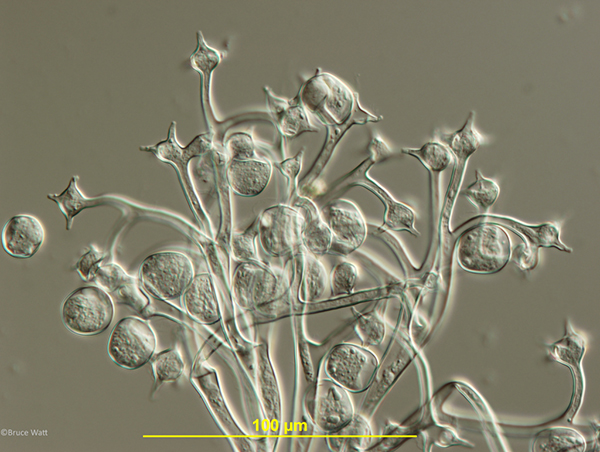
Figure 1. Downy mildew sporulation, shown here on the underside of a spinach leaf, gives downy mildews their common name. Photo by Bruce Watt, courtesy of Alicyn Smart.
However, the increasing ubiquity of winter greens production may be creating its own sets of problems. Until relatively recently, spinach downy mildew was a concern primarily in the American West and not in the Northeast. Before 2014 it hadn’t been reported in the Northeast for about 15 years. The disease is suspected to have appeared in this region from infected seed, or possibly shipped in infected plants. It has increasingly become an issue that needs to be managed.
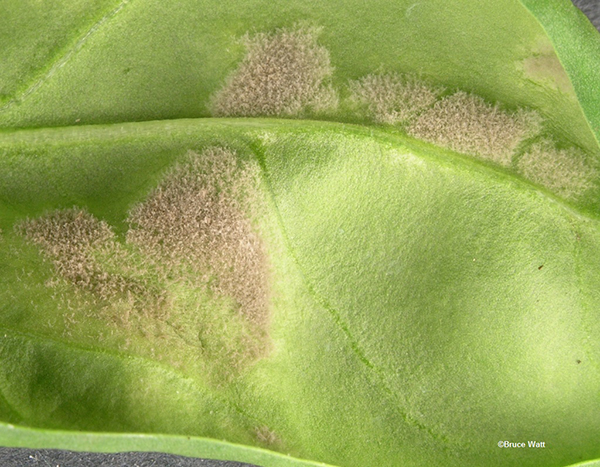
Figure 2. Yellow leaf spot symptoms and less common sporulation on a spinach leaf surface. Photo by Bruce Watt.
Downy mildews affect all three of the most commonly grown winter greens crops: spinach, lettuce, and brassica greens. One important thing to remember is that “downy mildew” is merely the name we give to the disease presentation in these crops. Similarly to powdery mildews, downy mildews are all caused by different, but related, disease organisms which have coevolved with different plant species. That means that spinach downy mildew can infect spinach but will not spread to lettuce or brassica greens.
Spinach downy mildew is caused by Peronospora effuse; downy mildew on lettuce is caused by the species Bremia lactucae; and brassica downy mildew is caused by Hyaloperonospora brassicae. Although the different species of downy mildew will not spread between these different crops, they do all thrive in the same conditions. If you have a greenhouse or high tunnel environment that is favorable to one of them, it will be favorable to any that are present.
Although these are separate disease organisms, their management considerations are largely the same.
Disease identification
Downy mildew species are all within a class of fungus-like organisms called oomycetes (formerly known as water molds) that also includes some of the nastier plant pathogens (such as the Phytophthora species responsible for late blight of tomatoes and potatoes, which caused the great potato famine). Downy mildews are primarily a disease of foliage, causing harm by reducing the photosynthetic capacity of a plant and, more importantly for market growers, making a greens crop unmarketable and just plain unappetizing.
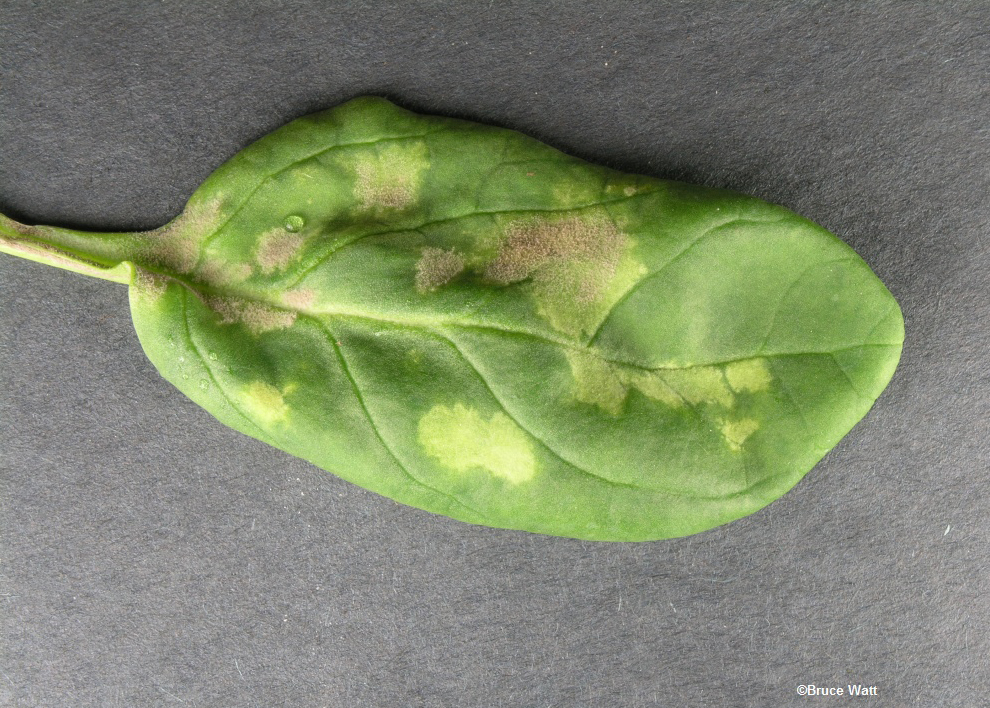
Figure 3. Brassica downy mildew on a kale leaf. Photo by Noami Brautigam.
Downy mildews are usually noticed first as yellowing patches on leaves, typically starting on older leaves closer to the soil surface. Because the disease doesn’t easily digest the thicker cell walls of leaf veins, the yellowing area is often bounded by those leaf veins, creating an angular leaf spot.
As the disease continues to grow within the plant, it emerges through stomata on the underside of leaves, producing characteristic fuzzy masses of sporangiophores and the sporangia that they bear. Though the sporangiophores are typically present on the undersides of leaves, the higher humidity and lower light conditions of a high tunnel may allow them to emerge on leaf tops as well. Despite being a “water mold,” the sporangia of downy mildews require only high humidity to infect a plant they land upon.
Sporangiophores and sporangia are produced overnight and therefore most easily seen in the morning before their sporangia have dispersed on air currents. The sporangiophores formed by spinach and brassica downy mildew are typically purplish-gray in color, while lettuce downy mildew may resemble a powdery mildew because sporangiophores are more commonly white. It’s these sporangiophores that lend the “downy” descriptor to the disease name.
Disease lifecycle
There is some evidence that downy mildews can be seedborne, which could allow an infected seed source to create an initial occurrence on a farm. This is a topic with disagreement surrounding how often it actually occurs, especially because many of the larger and more common seed suppliers are testing seed lots for the presence of common diseases.
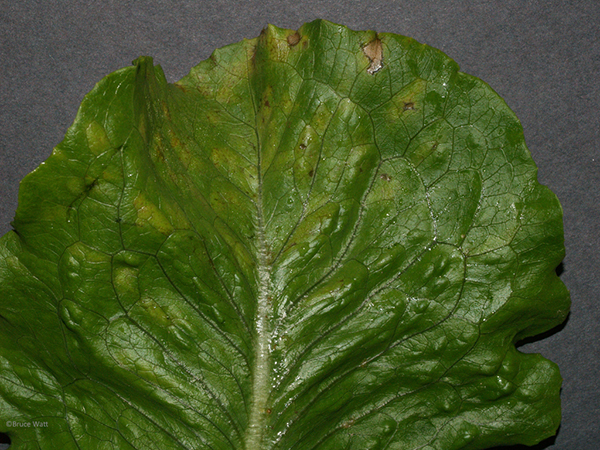
Figure 4. Yellow leaf spots caused by downy mildew on lettuce. Photo by Bruce Watt.
When downy mildew is already present on a living host, its further spread and economic damage in a crop is primarily from asexually produced sporangia moving on air currents — whether those are wind moving them from one field, or farm, to another outdoors when moisture is abundant, or the nearly imperceptible convection currents moving air within a closed high tunnel.
Because spread of these diseases is predominantly via airborne asexual sporangia, they often require a living host to spread at their maximum destructive potential (i.e., sporangia don’t persist in soil). As a result, year-round growing may create a “green bridge” allowing early spring high tunnel or greenhouse crops to infect the next season’s seedlings or outdoor plantings. However, if two downy mildew mating types (analogous to sexes) are present on the same plant, sexually produced oospores can be produced as overwintering structures that can persist in the soil for up to three years.
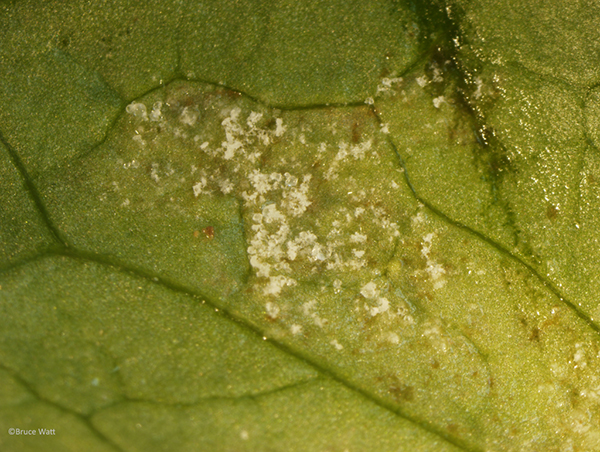
Figure 5. Lettuce downy mildew sporangiophores and sporangia. Photo by Bruce Watt.
In addition to creating a longer-lived spore type, the mating event that produces oospores is the opportunity for the disease organisms to mix and match their DNA, potentially creating new races that can overcome the genetic resistance which some crop varieties have to them. As perhaps the best example of this, spinach downy mildew was first described in the United States in 1890, but only three identified races of the disease occurred before 1990.
Many new races have emerged since then, overcoming the genetic resistance of some spinach varieties. Now, 19 races exist, as do more currently unlabeled “novel” races.
Management
Unfortunately, few satisfactory organic controls exist for downy mildews, so the most effective management approach is to target all three sides of the disease triangle (Figure 7). In other words, avoid the diseases and limit their spread if they are found. The second component of that (limiting spread) begins to address the “pathogen presence” side of the disease triangle and is particularly important for reducing future issues when you consider the greater potential for sexual reproduction of persistent oospores from an infected planting that is ignored.
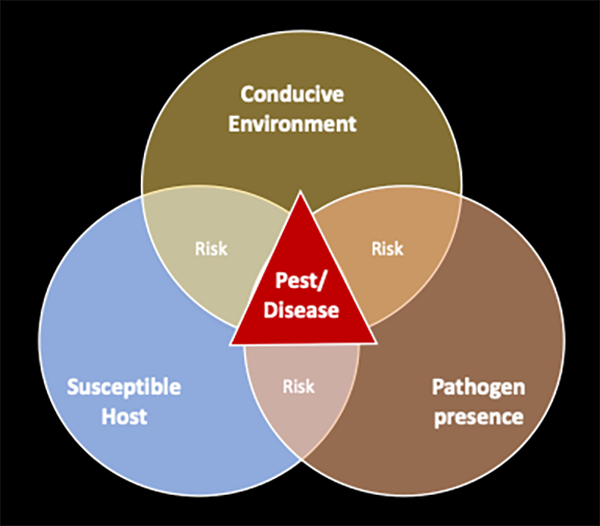
Figure 7. All three conditions of pathogen presence, susceptible host, and conducive environment must be present for a disease to be successful and to take hold and spread.
Similarly, it’s best practice to rotate out the crop families you plant in your protected growing spaces for at least a couple of years to reduce likelihood of planting into soil that may harboring downy mildew oospores (or other diseases). The other way to reduce pathogen presence is to consider hot water treatment of seeds before planting. Hot water seed treatment is not without risks and needs to be performed carefully to be effective without overly reducing the germination success of your seeds.
However, it can also be effective in controlling other seed-borne diseases, and some growers have found it to be worth doing when using the most easily controlled sous vide method. Nuances of the approach are beyond the focus of this article, but many university extension services have good information on the practice and some will even do the hot water seed treatment for you for a fee.
I’ve only found resources that list spinach downy mildew being controlled, however, lettuce and brassica downy mildew species would probably be similarly susceptible to the treatment in similar conditions. Hot water treatment conditions for spinach are 122°F for 25 minutes; for lettuce, conditions are 118°F for 30 minutes.
Resources I have seen do not get into fine detail of the brassica species we commonly grow as winter greens, however, the different brassica species listed are typically recommended to be treated at 122°F for 15 to 20 minutes. Some experimentation with smaller practice batches may be needed to ensure that you do not cook a whole planting’s worth of seed.
If an infective spore is present, all diseases still need both a susceptible host and conducive environmental conditions to both infect and to spread. Downy mildew favors cool and humid conditions, which are common in protected growing in late fall and early spring in cold climates. As a result, best practices to reduce incidences of the disease include drip instead of overhead irrigation to reduce leaf wetness; generous plant spacing to promote good airflow; horizontal air flow fans angled toward the growing zone; and ventilating and removing row covers when weather conditions allow.
While wider plant spacing may likely help to reduce the conduciveness of the environmental conditions for downy mildew, I readily acknowledge that the high value and limited supply of protected growing space for winter greens makes it a difficult recommendation to make with a straight face. Similarly, improving airflow and ventilation will be helpful, but realities of winter greens production in cold climates may also limit that approach.
One approach that may be helpful in some situations where infection risk is highest is to “harvest in a thinning manner” — which is to say, if it works well enough in your system, don’t just harvest a planting in big blocks, instead harvest every other row or, in the case of larger plants like head lettuce, harvest every other plant.
The last side of the disease triangle that we can leverage to prevent downy mildew is probably where we have the greatest potential control. Increasingly, modern varieties have resistance bred into them to at least some downy mildew races, and seed suppliers typically display that resistance information. Although new races of downy mildew will likely continue to emerge, choosing a few varieties that resist one or more races known to have been present in your growing area the past few years is advisable.
Efficacy of pesticides approved for use in organic production is limited. As with all fungicides, preventative application will always be the most effective — essentially reducing the leaf surface environment’s conduciveness to infection. Biofungicides may help reduce infection potential or severity, but efficacy trial results are inconsistent, and complete control in high disease pressure situations with non-resistant varieties should not be expected.
Best efficacy from these products might be achieved by a “many small hammers” approach using multiple modes of action from multiple products, though that may drive costs beyond acceptability, and care should be taken to understand the modes of action of each product to best consider their compatibility (i.e., don’t mix a living biological with a product that will kill it). Products found to be effective in at least some trials include: OSO, OxiDate, Regalia, and SoilGard for lettuce downy mildew; Actinovate, Howler, LifeGard, Procidic, Serenade, Taegro, Timorex Gold, and copper products for spinach downy mildew; and Regalia and copper products for brassica downy mildew.
Of these products, only OxiDate and Procidic might be expected to help reduce further spread of a downy mildew infection that has already begun, and likely only if it is caught very early. Although OxiDate can effectively kill spores on contact, it has essentially no residual activity and would essentially need to be reapplied daily whenever conditions conducive to downy mildew spread were present. Procidic is supposed to have some systemic effect, inducing further plant defense mechanisms in addition to its contact effect on disease organisms. Neither product is well suited for pairing with a living biocontrol product.
If you have downy mildew confirmed, you may consider preemptively harvesting unaffected crop plants before further infection sets in, destroying crop residues, and ideally rotating that soil out of that crop for at least three years. If you have multiple protected growing spaces for winter greens production, it may be advantageous to designate entire spaces for spinach, lettuce, and brassica greens production, respectively, and rotating where each crop gets planted each autumn.
This information is for educational purposes. Any reference to commercial products or trade/brand names is for information only, and no endorsement or approval is intended. Pesticide registration status, approval for use in organic production, and other aspects of labeling may change after the date of this writing. It is always best practice to check on a pesticide’s registration status with your state’s board of pesticide control, and for certified organic commercial producers to update their certification specialist if they are planning to use a material that is not already listed on their organic system plan. The use of any pesticide material, even those approved for use in organic production, carries risk — be sure to read and follow all label instructions. The label is the law. Pesticides labeled for home garden use are often not allowed for use in commercial production unless stated as such on the label.
Caleb Goossen is the organic crop specialist of the Maine Organic Farmers and Gardeners Association (MOFGA) and the author of MOFGA’s Pest Report newsletter (sign up at mofga.org/newletter-sign-up-pest-report). Formed in 1971, MOFGA is the oldest and largest state organic organization in the country. MOFGA’s mission is to transform the food system by supporting farmers, empowering people to feed their communities, and advocating for an organic future. Learn more at mofga.org.
Copyright Growing For Market Magazine.
All rights reserved. No portion of this article may be copied
in any manner for use other than by the subscriber without
permission from the publisher.