











Welcome to Part Three of Growing for Weddings. Part Four will run in January. There’s a lot to cover so let’s go.
Promotion
You’ve done the research, now let’s get you seen. In Part Two, we covered crop planning and partnerships. Now that you know who you’d like to sell to, the next step is helping them find you. We’re creating your business’s ‘bat signal’ to let everyone know you, what you grow and your unique superpowers. How you want to fit into the wedding ecosystem (selling to florists / wholesalers / designers / DIY brides) determines where you need to be seen. How you promote your flowers depends on who you want to sell to.
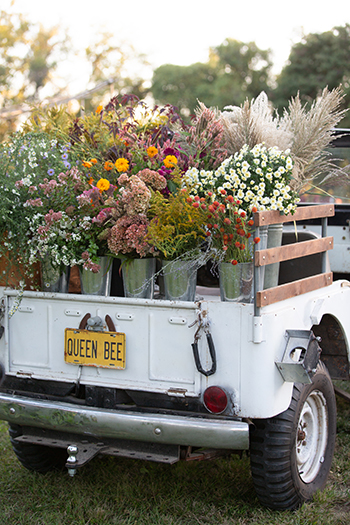
Harvesting & prepping fall orders.
A grower marketing to DIY couples uses a completely different language than one selling to florists or designers. Decide which audience fits you best and tailor your message to them. At some point, you may serve all three markets—but start by mastering one. When you understand who you’re speaking to, every post, photo, and pitch becomes more effective.
DIY couples
- These are hands-on brides, grooms, and families who want the farm-fresh experience and may be working with a smaller budget.
- Create free listings on Wedding Wire, The Knot, Zola, and local directories.
- Use friendly, emotional language — “farm-grown,” “seasonal beauty,” “cut fresh just for your day.”
- Offer clear, simple packages: by bucket, color palette, or mix.
- Keep your tone approachable. They’re drawn to authenticity, not jargon.
Florists
- This is where professionalism shines. Florists need to know you can deliver quality, consistency, and communication.
- Provide an easy-to-read weekly availability list or live online inventory.
- Offer clear pricing, stem counts, and a seamless ordering process.
- Include a brief “Commitment to Quality” note referencing Floral Standards: A Practical Guide for Harvesting and Delivering Professional Quality Products or another reputable resource.
- When dropping off sample blooms, follow through — schedule visits to show your quality over time, learn what matters most to them, and build genuine trust.
Designers
- Designers are driven by story and emotion. They buy with their hearts as much as their eyes.
- Showcase the unusual — your signature celosia, color subtleties, or wild seasonal forms.
- Use storytelling to help them fall in love with your flowers’ origins.
- Offer flexible access, last-minute add-ons, or unique ingredients that elevate their work.
- Remember: you’re not just supplying a product; you’re inspiring their art.
Your marketing toolkit: images
You’re going to need photos to help sell what you’re offering. Not just flowers, colors, variety, but also process, professionalism, and also your growing story. Here’s what I suggest to get you started.
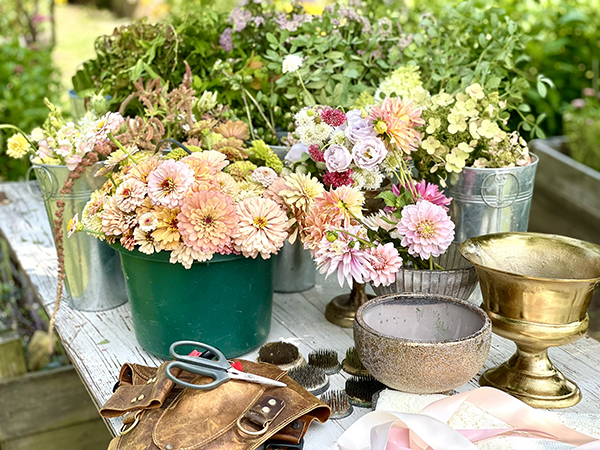
There is a new generation of zinnias with more subtle colors that are great for weddings.
DIY clients want images of beautiful easy bouquets with gorgeous flowers they can’t buy anywhere else. Show them flowers in your signature buckets, a wedding party assembling bouquets or making centerpieces. Show close-ups of simple centerpieces or vases and photos of brides or couples holding wedding flowers. If you sell DIY bundles or packages, have photos of what the bundle or kit includes (floral wire, floral tape, chenille twists, packets of flower food, snips, corsage or wrist corsage forms, ribbon, pins and such).
For florists use images of flowers growing in your fields/high tunnel/greenhouse, harvesting photos, unique varieties, a photo of your online inventory and order page, and photos of flowers in buckets and in sleeves ready for delivery. Showing tons of flowers signals that you won’t run out.
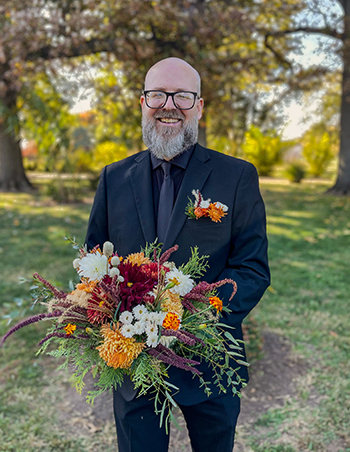
The finished product with the groom – from seed to celebration.
Designers like gorgeous vibe farm shots with mood and romance. Long shots capture stems of flowers and big hero shots. Also processing shots, cooler shots and shots of buckets of flowers. Think of these shots as storytelling for storytellers.
I strongly recommend partnering with a wedding photographer to stage some of these shots, possibly a barter of product for a photographer’s styled shoots in exchange for images. In a pinch, use stock images, but a great resource for images that have vibe and mood is unsplash.com New wedding photographers need a portfolio. They need staged shots that look like they’re taken at a wedding. They partner with floral suppliers, rental vendors and planners to create these. Link up with new photographers or planners and you’ll be set.
Presentation
Use language in promotional materials that resonates with whomever you’re selling to. Regardless, present yourself as a reliable, professional supplier. DIY customers want to know what you grow, availability, ordering and pickup cost and process. Florists need to know availability, stem counts, color families, and quantity. Designers want more story-driven language, but don’t skimp on specifics.
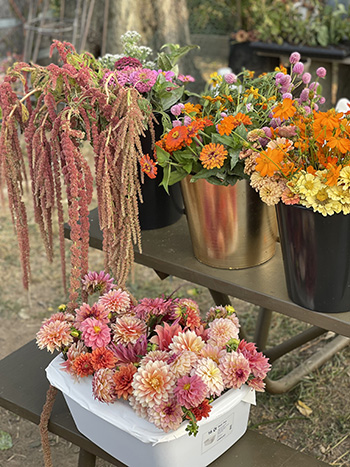
Order for pick up by a floral designer.
Create a website link clarifying that you sell seasonal flowers to your target markets, be it florists, planners, designers and DIY couples, along with your monthly window with a list what you’re growing (a downloadable seasonal chart). Include links for ordering, contact information, costs, packages and pick-up policy. For florists and designers, include more specifics about what you’re growing, availability and costs.
Show up authentically on social media, your storefront window. You don’t need cinematic reels or polished ads — just honest glimpses of the life of your flowers. Post videos of harvest mornings, cooler shots, or new colors in bloom. Use local hashtags and tag local vendors so they can see your work.
Create engaging content to interact with followers/potential buyers. Feature specific unique crops. Increase engagement with surveys, ask for help naming something or feedback. Document getting orders ready. Take more photos than normal, and when you can, ask florists, designers and DIY clients to share photos of their events and to tag your farm in their posts.
Relationship-based promotion
Start with a florist you already know or admire. Offer to drop off a sample bucket. Follow up a week later. Make an appointment with a florist to bring samples and offer to provide blooms for them to host a client event (bloom bar). Even offer to be on hand for the event so the florist’s customers request your flowers by name or refer other people. This helps you build your brand. You may capture images or incorporate a giveaway that adds followers and increases your social media sphere of influence.
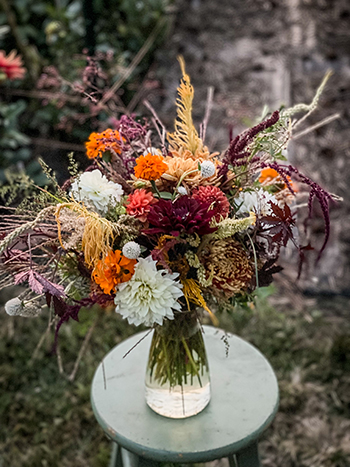
A finished fall bouquet.
Another way to kick-start your business is to donate blooms to a charity that offers promotion in exchange. Whatever your target market, take a gift of flowers to wedding venues to learn which florists and planners they frequently work with. Ask to contact them as a reference from the venue.
There are so many ways to get your name out there. It’s important to not focus entirely on flowers, but also share why growing flowers became a passion.
Pricing
The story of your flowers makes them stand out above commercially available wholesale flowers. Bulk imported flowers lack what your flowers have in abundance — intention, care and heart. Share that because you’re competing with bulk pricing that will never make sense for an independent grower. Wise words from a fellow flower farmer friend who tells new growers not to price their flowers to be the cheapest; you can never come up from there.
Consistency builds a reputation faster than advertising ever can. Show up when you say you will. Reply promptly. Always under promise and overdeliver. In the wedding world, word-of-mouth is everything.
Best practices to start immediately
Before you call anyone, create promotional material, put anything online, you need to have policies in place way before anyone has the opportunity to ask about what you offer. Make sure you set minimum order amounts. If not, people will want to buy flowers like penny candy. Establish minimum order amounts for each market segment.
Clarify that all orders are paid in advance. This is the most helpful planning element I can share. No flower is cut without having a paid home, with the exception of an agreement with a florist or an ongoing designer contract where you can bill directly to their account when needed. Weddings are notorious for having many random variables. If you leave payment until delivery or pickup, things get messy.
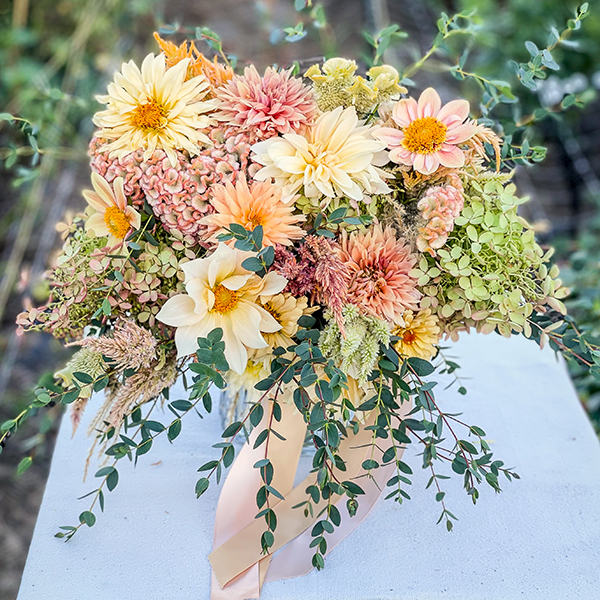
The beauty of locally grown that international can’t match. All photos courtesy of the author.
A policy of not harvesting without payment makes sense with perishable flowers. Have your partners and repeat clients fill out a one time credit card billing authorization form when they place orders. It also saves them time and aggravation. People respect that your business is ready to handle their orders seamlessly.
If you have a refrigerated truck or van, you can offer delivery for premium add-on pricing. We deliver within a 25-mile radius from our farm for $55 with a minimum $225 order. There are also delivery companies with refrigerated trucks that you can subcontract with.
Peripheral sales include buckets for customers who don’t have them. We have branded buckets for DIY clients to do some promotional work for us. We also sell these buckets to designers, planners and florists if needed.
If a designer needs day-of-event delivery, that’s a premium charge. It’s up to you how you want to monetize the extra add-on services, but everyone recognizes that time is money. Don’t feel bad charging for delivery time. For larger orders or for committed partnerships, we don’t charge for delivery (it’s built into the agreement or pricing).
To compete with imported flowers with florists, they’re not likely to close shop to pick up flowers, so they’ll need deliveries. Whether you use that to sweeten a deal for a committed standing order, or build it into your pricing, that’s up to you.
We also sell packages and supply kits. If you have a space on your farm, you can host ‘bloom bars’ for bachelorette parties, showers, luncheons, etc. That’s great money and super convenient. We also offer ‘bloom bars’ for events off site. That’s also a great add-on flower service.
Contracts
Work by contract. It doesn’t have to be elaborate or fancy, the order sheet can simply have disclaimer language as part of your business policy. When someone places an online order or phone order, send back a copy with the small legal inclusion at the bottom so you are clear from the beginning. Always get the order form signed when someone picks it up or during delivery.
Here’s language from our contract that you might consider using for larger orders:
Note: Changes and updates are welcome throughout the planning process. However, to secure the specific flowers and colors for your event floral needs, we need all changes to be made by three weeks prior to the event. Orders are placed at a minimum of two weeks prior to the event, after which point, any changes may not be possible and additional fees may result. Please note that we are unable to absolutely guarantee color and availability in relation to floral as there is always the possibility of acts of God / natural disasters / other forces beyond our control. It is our policy to fill committed orders at the highest level, while also having the ability to make on the spot decisions for substitutions if we feel that the color, condition, or quality is not to the standards of quality to be utilized in your event floral.
Fulfillment
Once inquiries and orders start coming in, production and deliveries create opportunities to promote your business during the entire process. People want to see behind the scenes, buckets filled and prepped, flowers harvested, processed and bunched — images of abundance. Even if it’s only a few quick snaps, let people see behind the curtain.
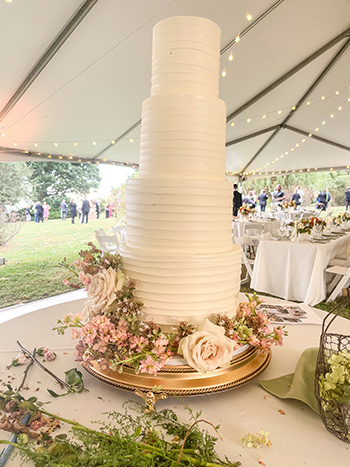
Wedding cake with local flowers.
Once you’re really focused on growing for weddings, there is a clear distinction. Your days look different. Your fields look different. As you check on things as we growers do, you look at dahlias and labels hover such as ‘these dahlias are for the big wedding downtown next weekend’ or ‘this feverfew, heirloom mums, sunflowers and eucalyptus are for Thursday’s big DIY bucket order,’ or ‘this gomphrena is for an all-white designer order.’ The flowers start having homes while they’re growing. That’s a really satisfying feeling versus making market bouquets and hoping it doesn’t rain this Saturday.
Planning and order logistics
One of my most important tools is my Order Sheet. It works for all buyers. It covers my side of the transaction and functions as a worksheet, update-able form, receipt and inventory tool. Mine includes: client name, name of contact person with cell and email, event date, date order placed, harvesting and processing date, date for pick up or delivery, color palette, requested colors/possible substitutions, column for quantity/variety/color/bunch or per item price and section for notes.
In the bottom corner is the word ‘color’ with a blank space behind it. We color-code the buckets using colored gaffer’s tape. On this line, I add what color buckets go with the order, the number of buckets prepped and a put a checkmark after it to show that the bucket prep is complete. A copy for the working orders lives on a clipboard for the week, and a copy goes out with the order itself so it can then be inventoried and checked on site. Easy. One form to rule the world.
Timing is everything
This goes without saying, but for weddings the stakes are higher because of distinct windows of time that flowers transition to becoming wedding flowers. Within 48 to 72 hours, they need to be cut, rehydrated, processed, prepped, transported, and then have their containers switched out while possibly adjusting to a new environment or temperature. Then, they are handled and cut for design work, possibly rehydrated or dipped and then wait for their moment to shine.
Your part as a grower is to anticipate when to pick, how long a bloom will hold, and based on all the variables of this process, whether it will open on time. Wedding flowers are like thoroughbreds prepped for the big race. It takes skill, knowledge and feel to get everything lined up to fall precisely in place. A great rule of thumb is harvest early, finish early and hydrate deeply. Work in this order: premium blooms first, supporting stems second, foliage last. Shade harvested stems immediately and condition them in clean cool water.
Here are highlights of what stage to harvest: Dahlias – outer petals flat, firm center; Lisianthus – first bloom open; Zinnias – firm heads; Snapdragons – bottom third open; Hydrangea – fully colored petals, papery touch.
Postharvest handling
With your buckets already labeled or color-coded, always make sure they are clean and sanitized before filling with clean cool water before harvest. Always make sure to strip leaves so that there are no leaves making contact with water for decay to begin. Leaves in contact or submerged in water create a toxic effect on the blooms. Keep your blooms cool during the transition from absorbing water by root to through cut stems. The perfect temperature range is 36°F to 40°F to help them adapt and bounce back for the wedding.
Load your orders into your cooler based on the order they will go out. Keep checking to make sure there is good airflow around each bucket. If you’re sleeving the blooms into bunches, make sure that they are labeled correctly and record when the order leaves the cooler.
Delivery and pick up
Whether delivering to a florist, planner, designer or DIY couple, always make sure you arrive early, keep stems in water, and confirm the order sheet out loud as you turn over the flowers. A nice touch for DIY clients is to include flower food packets along with care instructions and your contact information. For the above and beyond experience, a simple handwritten card wishing them a wonderful event, including your business card they can share. A calm, professional delivery leaves a lasting impression. Your beautiful blooms will do the rest.
Headspace: holding it all together
Wedding seasons are a marathon, not a sprint. The more business you get, the tighter the mental organization and task stacking. Remind yourself in the thick of a super busy wedding season that you are exactly where you wanted to be. Stay grounded and connected to the joy and passion that makes you grow flowers.
I don’t have to tell you how much work farming is, but it is a labor of love that we chose. and Having the opportunity to be pushed to the edges of our capabilities doing something we love is a gift everyday — even if some of those days involve blisters, cuts, sore feet and frazzled nerves. Protect your energy, stay organized and give yourself the same thoughtful care that you give your flowers.
You’ll find your rhythm. Harvest, hydrate, deliver, recover. Repeat. Plan lighter days after big weekends. If you can, protect Sunday or Monday for your own rest and reset. Even a short walk through your flowers helps clear your mind and reset your focus.
Although it technically doesn’t count as rest, I keep a notebook where I jot notes from events about things I would do differently, ideas on how to improve, feedback from clients. I keep all the thank-you notes from clients to keep me grounded and recharge my batteries when I feel ragged or just need a reminder of why I do what I do.
Control what you can
Weather, color changes, and last-minute requests do happen. Focus on what you can control: clean tools, cool water, and solid communication. When things shift unexpectedly, your steadiness will become your strength. Your resilience will fortify others. Your ability to anticipate and have backup plans will help you and endear you to partners and clients. It has the effect of making others calm when you can keep your head. Write everything down. Leave nothing to chance or assumption. Confirm delivery details early every week. Have a mental checklist you run through like the board of weekly orders that helps quiet mental noise and builds confidence.
Saying no (or not yet)
When your flowers and business get popular, and requests multiply, don’t fall into the trap of saying ‘yes’ to everything. Know your capacity and protect it. It’s better to say ‘I’d love to work with you, but I am at capacity for that weekend,’ than to say yes, and overstretch yourself, your team or your product to beyond what you can successfully and professionally deliver. Everyone would rather you say ‘no’ when you know your limits, to a ‘yes’ when you do not.
Reliability will always outshine overcommitment. It’s a great problem to have, and when you get to the point where you can say ‘no’, you’ve done a great job getting there. It’s probably time to evaluate if you want to scale up and take your business to the next level. In any case, these are good challenges to have.
In the final part of the series, we’re going to that next level. The chess wizardry of flower growing. Becoming a Farmer Florist Designer, and finding your superpower that pulls all your talents into focus. I look forward to pulling you into the core of my experience. Feel free to reach out with questions or any help you need.
For worksheets for specific promotions and a full list of wedding jargon, see queenbeeblooms.com.
Elizabeth Fichter is a flower farmer, botanical artist and writer who grows flowers as Queen Bee Blooms, and creates floral art as Floral Alchemy in St. Louis, Missouri. She can be found on social media @QueenBeeBlooms. Queen Bee Blooms specializes in growing people who grow flowers, with education, resources, support, seed sales and inspiration. Queen Bee Blooms has over 150 seed varieties and bespoke mixes at queenbeeblooms.com/shop-seeds.
Copyright Growing For Market Magazine.
All rights reserved. No portion of this article may be copied
in any manner for use other than by the subscriber without
permission from the publisher.