











So far 2013 is off to a full and flying start! In the first few weeks alone I’ve rebuilt the farm’s website, overhauled my blog, looked at a dozen potential farms to buy, enrolled in two intensive floral design workshops in California, and spent a handful of days with my flower farming BFF, Jennie Love. Jennie and I have been pen pals for the last few years, often sharing tips and tricks for both small-scale flower farming and high-end wedding and event work via the internet. Watching her take her love for flowers and turn it into the incredibly successful, highly profitable, and totally trendsetting business that she has is just mind blowing! In only four years, Love n’ Fresh Flowers has become an industry leader in both eco-friendly wedding design and successful small-scale urban farming. Jennie is a savvy businesswoman, brilliant marketer and gifted floral designer. During our visit she sat down with me and shared the behind-the-scenes magic of how this all came to be and how she keeps it growing. I hope you enjoy her wisdom as much as I did!
Can you tell me a little about your business? Location, land size, and what you specialize in?
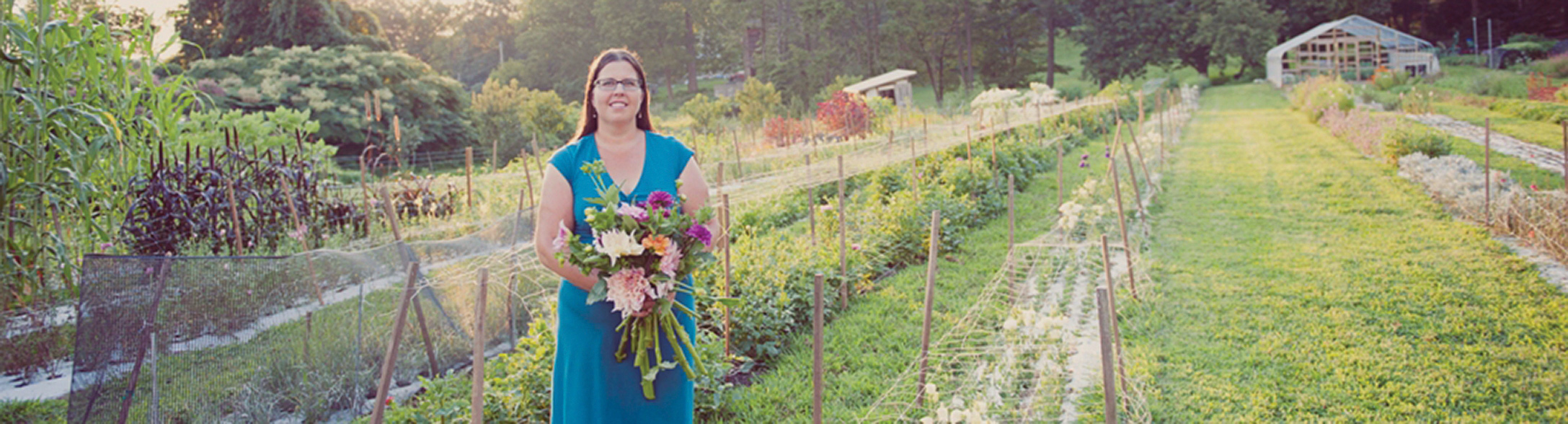
Love ‘n Fresh Flowers is a two-acre organically managed flower farm and floral design studio located within Philadelphia city limits (zone 7). Since the business first began in 2009, Love ‘n Fresh has been dedicated to working with locally grown flowers, foliage, grasses, seed pods, fruits and even vegetables to create signature textural floral art. The farm’s flowers are largely used in weddings and other special events, which makes up about 95 percent of all sales.
The two acres of flower production are spread out over three separate sites in the northwestern section of the city, all within about a mile of each other. There is one 21’ x 48’ unheated hoophouse and a large heated greenhouse that is cooperatively shared each spring with two other farmers to start seeds. All annuals are grown from seed along with a large number of perennials. About 350 feet of low tunnels, or caterpillars, are used to grow early spring crops like ranunculus and anemones. Production consists of approximately 40 percent annuals, 30 percent perennials, and 30 percent woodies. Though the woodies are still young and are yet to be truly productive, another season will see heaps of ninebark, flowering quince, snowball viburnum, callicarpa, willows, and more.
Can you share a little about your past life before flower farming and how you got from there to here?
I grew up on a dairy farm in central Pennsylvania, and farming has stuck with me ever since, even though I was in denial for a few years. After I got my Bachelors in Communications and Comparative World Literature, I moved to Philadelphia and took up a career in marketing and business development. I worked in a corporate environment and yet longed secretly to get back to the dirt. I got involved in the budding urban farming scene in Philadelphia and was hooked. I then decided to take a leap of faith and quit my job to pursue studying horticulture and floral design while working at Longwood Gardens for two years. While I was still working there, I started growing flowers in a community garden in Philadelphia and thus Love ‘n Fresh Flowers was born.
The first full season was spent just in the community garden on several large plots there while I searched desperately for more land. I approached several non-profits with unused parking lots, proposing raised beds on asphalt and other nonsense. Fortunately a close friend introduced me to a landowner who had a beautiful full acre of sunny flat (though rocky) field in my neighborhood. The field was being used to grow potatoes but the landowner wanted to diversify so he invited me to grow flowers on half of it. I quickly consumed the whole field in flowers.
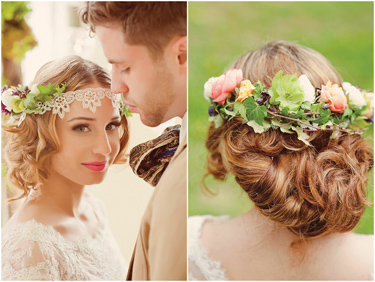
From the beginning, I knew I wanted to work in weddings, both to make the farm profitable and to scratch my creative itch. I did four weddings the first season solely out of the community garden plots and sold the rest of my blooms at two farmers markets. The second season I dropped one farmers market and had 18 weddings. Word began to spread about the unique quality of Love ‘n Fresh Flowers’ designs since no one else was using locally grown materials for wedding designs. After being featured in local magazines, on television and in the city’s major newspaper, the business exploded. The third season, I dropped farmers markets all together and decorated 45 weddings. In 2012, Love ‘n Fresh Flowers handled more than 70 weddings.
This coming season, Love ‘n Fresh is focusing on high-end weddings and working towards an even more elevated design aesthetic that engages a greater audience in locally grown flowers. The hope is to give local flowers and more farmers a footing in this lucrative and creative industry.
As a grower you are very unique in that you use social media in a highly effective way. Would you share what platforms you prefer and how they’ve impacted your business?
First and foremost, having an information-rich and beautiful website from day one was critical to building the business. Any thriving business needs to have a virtual home that encapsulates everything that’s important about the business, including professional photos and well-crafted text. The vast majority of my brides find me via my website.
The social media standard is obviously Facebook. It’s not quite as effective today as it used to be, but it’s still worth the time. First, it’s important to have a business page, not just a personal page, so people can choose to follow you without having to get your permission. I use my business page to post lots of photos (again, high quality, not blurry) that give fans a sense of daily life on the farm, including harvesting, planting, loading the van, feeding the chickens, and all that lovely stuff. I also share photos to highlight any wedding or other design work that’s being done, which gives fans a sense of how the flowers go from seed to centerpiece. Photos are awesome for helping people connect to your work and your mission. In addition to pretty pictures, I also share interesting links to other related flower topics to help inspire fans and build community. I believe the key to successfully using Facebook is to keep the content professional, but not “market-y.” Tell your story with heart and soul in quick tidbits that are engaging. Be sure to proofread your comments before hitting enter! You can also use Facebook as a great networking tool if you look around to find other relevant pages to leave comments on which can re-direct new fans to your own page.
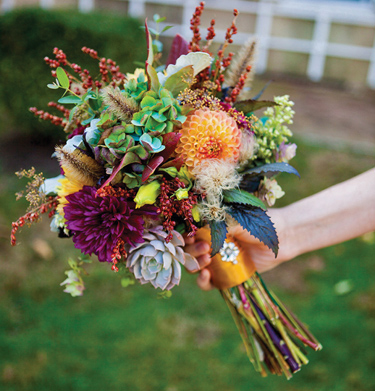
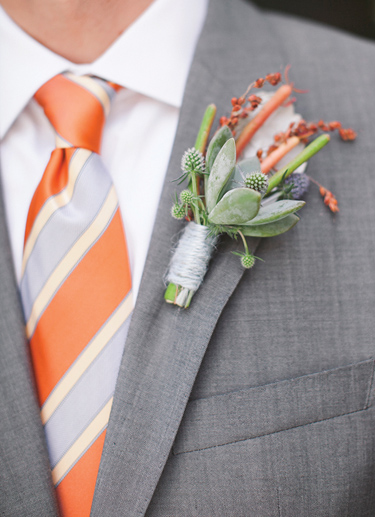
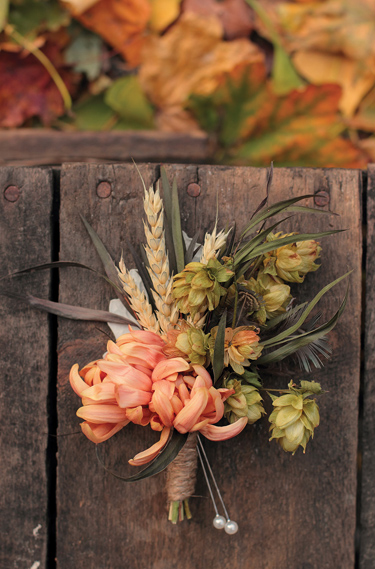
Pinterest is the new wonder kid on the social media block. It is a purely visual tool, which is fantastic for flower farmers.I use it in several ways to both network and grow my business. First and foremost, this is the easiest place to build an online portfolio of your designs. I have boards dedicated to just my bridal bouquets, just my boutonnieres, just to my hair flowers, and just to reception decor. These boards help potential clients zoom in on the details and hone their vision for their own flowers. I also use Pinterest to help communicate what flowers are available throughout the season. I have boards for each month so when a bride asks me what will be in bloom when she’s getting married, I can easily direct her to a pictorial collection of those blooms, which is particularly helpful for brides who don’t really know flower names. I also use Pinterest to create inspiration boards for each wedding that I am working on, which gives me and my brides a powerful tool for communicating the vision for the big day. Many clients love having this personal inspiration board made because they can really envision what I have planned for them. Having a robust Pinterest board is also a way of demonstrating to wedding clients that you’re staying on top of all the current trends and constantly seeking new inspiration.
Instagram is another fun visual tool available to smartphone users. It’s an app that you add to your phone that allows you to take quick snapshots with your phone’s camera and apply artful filters that make the photos unique. These photos are then visible to other Instagram uses that are following you. You can also post the photos to Facebook. It’s very fast to use and a great way to capture the moments that might otherwise go unnoticed. Remember, a photo is worth a thousand words.
You’ve had amazing luck selling your flowers for top dollar to a high-end clientele. To what would you attribute your success? How were you able to elevate farm flowers into the “cool” category?
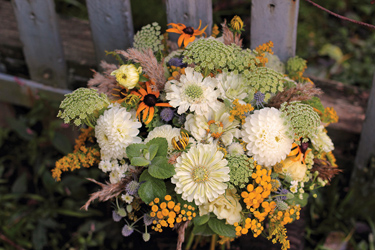
I used a multi-pronged strategy to communicate my passion and vision for what locally grown flowers could do for the wedding industry. I spent a lot of time networking with other wedding vendors, particularly high-end caterers and photographers who bought into my zest for sustainable practices and working with unique clients. Through these relationships, I was able to both learn a lot about client management and received a lot of referrals. I also worked very hard to capture beautiful images of my flowers that cast them in an artful light. These photos were used all over the web, in print media, and elsewhere to capture the attention of a more discerning bride. Having a critical eye about branding, both for the business and for my own personal image (after all Jennie Love and Love ‘n Fresh Flowers are one and the same), has been essential to earning the trust of higher-end clients and also inspiring them to want to use locally grown flowers.
While keeping a brand consistent throughout social media and your printed materials is important, it is absolutely possible to re-invent the brand as you evolve personally and professionally. A brand is not a logo; it’s a living and comprehensive identity. To that end, I’ve spent the winter redesigning my website to take Love ‘n Fresh Flowers to a whole new level, focusing in on the artistic process that makes our locally-grown designs so unique and communicating the value of buying local. The new site will launch in a few weeks so be sure to check it out and hopefully find some inspiration for pushing your own business to new heights.
I know you’ve received an enormous outpouring of interest from growers all over the world wondering how you find inspiration and where you go for information when it comes to floral design. Can you share your process and favorite resources?
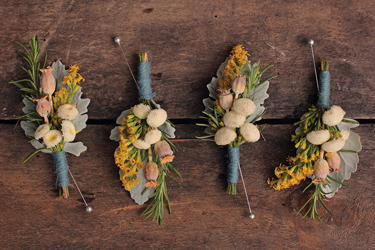
My design process is incredibly spontaneous and fluid. I never pre-plan a bouquet or centerpiece. I truly rely on nature’s beauty, using whatever’s been harvested that week from the fields and making the most beautiful combinations I can. Somehow it always works out! I draw a lot of inspiration from other leading designers like Amy Merrick, Sarah Raven, and Ariella Chezar. Looking at their work helps me take new risks with my own. I’d be lost, though, without amazing supportive relationships with other local flower champions and designers like Erin at Floret and Ellen at Local Color Flowers. These ladies help keep me grounded!
A few publications well worth checking out for inspiration and tutorials to get started with higher-end designs are Paula Pryke’s Flower School: Mastering the Art of Floral Design and Wedding Flowers, Sarah Raven’s Cutting Garden, David Stark’s To Have and To Hold, Nicolette Owen’s Bringing Nature Home: Floral Arrangements Inspired by Nature, and a subscription to Martha Stewart’s Weddings.
For more information and inspiration, visit Jennie on the web at:
Website: www.lovenfreshflowers.com
Facebook: http://www.facebook.com/lovenfreshflowers?ref=ts&fref=ts
Pinterest: http://pinterest.com/lovenfresh/
Erin Benzakein runs Floret, a small organic flower farm in Washington State. www.floretflowers.com
Copyright Growing For Market Magazine.
All rights reserved. No portion of this article may be copied
in any manner for use other than by the subscriber without
permission from the publisher.