











Growing and transitioning through nearly 50 years of farming
By Ellen Polishuk
There are a few market farms in the Washington, D.C., region that have been at it from the beginning—the early 1970’s. I was lucky enough to work on and then get adopted by one of them—Potomac Vegetable Farms (see the article about the writer’s experience at Potomac Vegetable Farms in the February 2019 GFM). Another long-standing farm is New Morning Farm (NMF) in south central Pennsylvania. I’ve met the owners a few times over the years, but somehow, I never made the two-hour drive to go see them!
A couple months ago, I sat next to Jennifer Glenister at a farm to institution study group meeting. Jennifer let me know that she was now the Head Farmer at NMF, that Moie Crawford is mostly retired and that Jim Crawford is partially retired. Now, there was a story I wanted to capture for my own curiosity and for GFM readers. Some of you may be thinking about farm transitions, and others of you may wish to be the next generation of farmers! Lucky for all of us, Jennifer agreed to be interviewed, and to make time for it during the busy planting season of early May.
New Morning Farm began at its present location in 1976. Over the next 40+ years, Jim and Moie Crawford built a fairly large, certified organic farm, growing a wide array of mixed vegetables. To those crops they grow themselves, the Crawfords added other farm products sourced directly from local producers they know, like tree fruit, berries, and baked goods. They take their produce from rural Pennsylvania to bustling, hungry Washington DC.
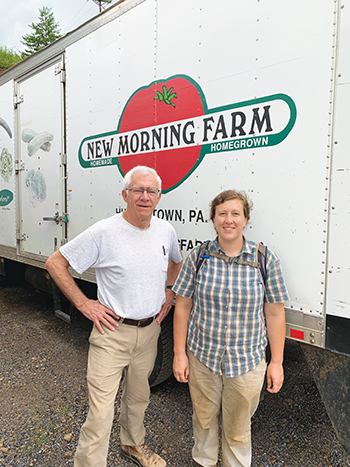
Jim had friends and colleagues from pre-farming days that were the first NMF eaters. Since there were no organized farmers markets in the area way back then, Jim started with a huckster route, and then set up his own markets in several different DC neighborhoods. One of those markets persists to this day and is NMF’s biggest market.
This Saturday market is massive — NMF is the sole vendor, and at its busiest, they use 12 popup tents, and have 10 cashiers, with their biggest, five-hour sales days coming in at around $26,000 gross. The second largest market now is the Dupont Circle market, where they bring only their own farm-grown products (no reselling allowed at this market). In addition to these very successful markets, NMF sells through the organization they founded in 1988, the Tuscarora Organic Growers Cooperative, which is headquartered on its own land, but adjacent to the farm.
New Morning Farm occupies a peninsula of land surrounded by a creek, as well as some land rented on the other side of the creek. There is quite some fall, roughly 150 feet, from the center of the landform down to the creek, thus the fields make their way around the peninsula. Jennifer explains how the lay of the land makes farming complicated. They farm three different kinds of land: bottom land (sandy loam), middle ground (clay loam), and high ground (shale clay loam). Sometimes they get flooded by the creek.
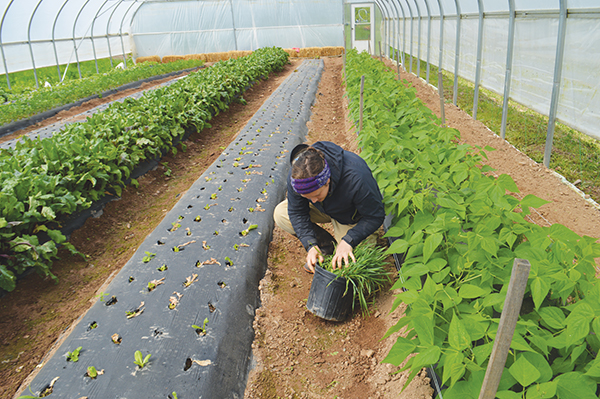
It’s prohibitively expensive (so far) to build a permanent deer fence, which means temporary electric fencing is the only avenue. Flooding in the lower fields happens semi-regularly, which further complicates fencing decisions. Fields are all different sizes. A facet of farming in a rural setting is that cell service is either spotty or non-existent, so NMF depends on walkie talkies to keep communications happening throughout the day.
I have to say, in this day and age of seeing what I call the “whippersnappers” on the YouTube, market gardening on perfectly flat land and 50 foot beds, this complicated, undulating quilt of a farm feels pretty good to me. This place has grown a vast quantity of food over the years, and flourished as a business, in spite of (or maybe because of?) its crooked creek-hugging shape.
Jennifer Glenister has only ever farmed at New Morning Farm. She began in 2009, after graduating from University of Vermont, with a Biology degree. She was no stranger to hard work, and organic systems, since she was raised on a small family farm in the Finger Lakes region of NY. Jennifer’s mom runs IPM Laboratories, an integrated pest management company that produces and distributes beneficial organisms. Her Dad is a small grain farmer.
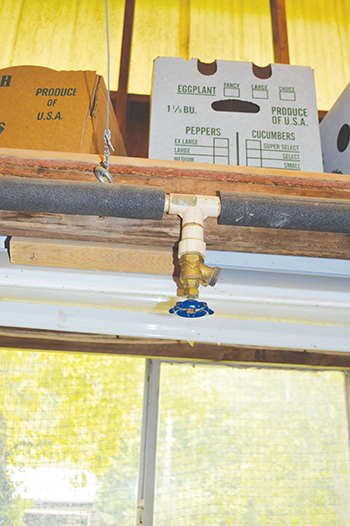
So, systems thinking, organic practices and biological methods are part of Jennifer’s DNA. She never left NMF because the Crawfords continually offered her opportunities to learn and grow her skills. By 2012, Jennifer and the Crawfords were beginning the process of figuring out how to transition the farm’s management.
This 2019 season is Jennifer’s first as the Farm Operator, and third as Farm Manager. Jim assists Jennifer in making some decisions, but mainly works as the public facing farmer, and as market mentor—helping the farmers markets run smoothly. Moie still does some market prep, and local product sourcing.
Two long-time local folks, Shirley and Leslie, perform vital jobs as Produce Manager (focusing on inventory management and sales) and Accountant/Bookkeeper respectively. Then two senior crew members, Caitlan and Adam, handle greenhouse management and field management respectively.
To understand NMF requires fathoming its rich and complex management system. Jim discusses this at some length in his episode of the Farmer to Farmer Podcast. This farm runs with a more horizontal management system than most any I’ve ever seen. While Jim and Moie were clearly the owners and the buck stopped with them, they were eager to share heavy levels of responsibility and authority with employees.
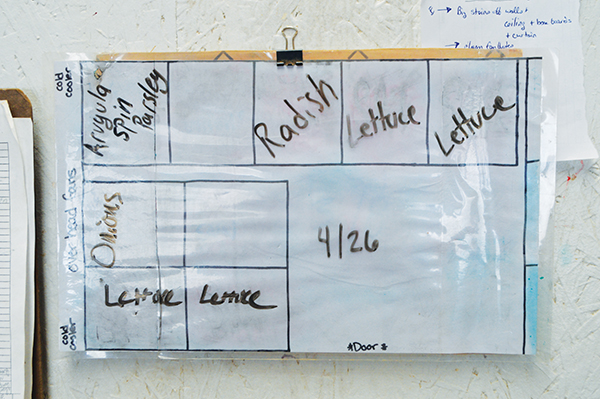
NMF still uses an apprenticeship model for providing the bulk of the farm labor. Most apprentices come with at least one year of farm experience under their belts. They are given a stipend along with room and board. NMF has done a lot to entice folks to keep coming back for additional seasons, including offering significant benefits. This year, there are five senior crew members, ranging in experience from 2-10 years. NMF also continues to employ three foreign H-2A visa temporary workers who concentrate on harvest activities.
The work load is distributed in a most interesting way—the list of 45 crops is divided up by the number of apprentices and senior crew members, so each person is responsible for overseeing 4-5 crops. Each crop manager watches over their crops, from seed to harvest. They coordinate with other team members to make sure all the production and harvest activities are timely and done well. They scout their crops at least weekly to look for problems and to gauge the health of the crop.
On top of this crop management system is the layer of managers as described above: field manager, greenhouse manager, irrigation manager etc. Jim has tried to keep all of his staff interested in the work through this responsibility sharing. It has also woven trust into the relationships with team members. It’s worked very well for NMF over the years. And, for Jim, it’s been what is the most fun—having a big team, getting lots of work done, and growing LOTS of food, while minimizing the stress on any one person. I can relate completely.
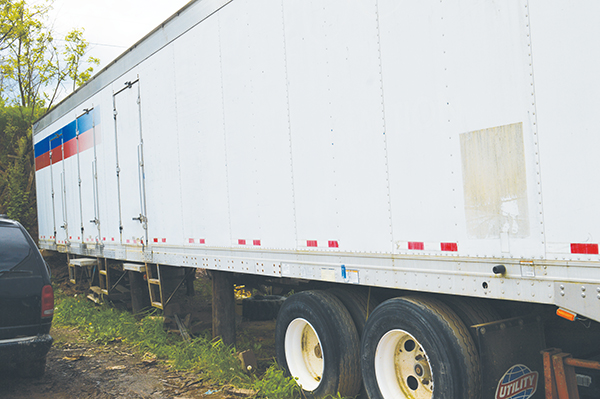
As for some nerdy grower details, here are some unique growing/business techniques I saw at NMF.
Green beans are one of the highest grossing crops at NMF, about $55,000 in sales! When’s the last time you heard that? Never, that’s when.
They do it with 18 plantings, of which six are transplanted in the spring. They grow Provider and Jade, which have concentrated fruit sets. They forgo the very first beans, waiting for the bulk of beans to be ready, then they pull the plants and pick the beans off—a once-over destructive harvest. So far, pediobius wasps have been effective in controlling bean beetles.
How it works is: each person pulls entire plants, holds them upside down, and pulls off all beans (except culls) into bushel box in the field. Some people like to do it sitting on the little garden carts that they call “butt carts,” and some like to put up an E-Z up canopy for shade, but the Jamaican guys who usually come on H2-A visas never bother with those amenities.
Mostly they pick a bushel of 25 pounds in about 45 minutes. We pay piece rate of 40 to 50 cents/pound depending on the density and quality of the patch. They always make more than their hourly rate. A crucial element is that the crop manager needs to judge carefully the exact day to pick for correct maturity of beans.
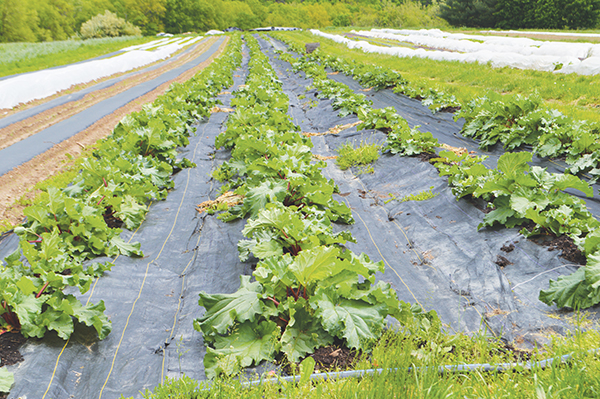
Spinach transplanted on plastic only now, no more bare ground. NO WASHING, just harvest and sell. Same for cilantro and dill. 6×6 inch spacing, 4 rows with waterwheel.
Very little Salad Mix, only high tunnel grown, on plastic, so no soil splash. They much prefer lettuce heads grown outside (just like me). They transplant lettuce in 26 plantings!
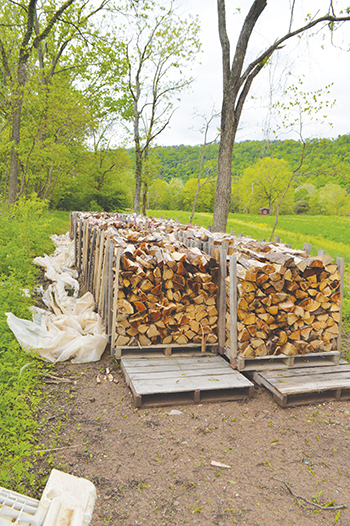
A small addition to winter food sales is a firewood business, bought from neighbors in PA and sold as ¼ cords palletized, then delivered and stacked in DC for good money. They go so far as to walk through someone’s row house to get to the back yard!
Pallets of product for market “built” the day before, so that at 4AM it takes Jenni only 15 minutes to load her truck.
They are trialing basil that is downy mildew resistant called Obsession, which is looking very good!
As is often the case, once one becomes aware of something, all of a sudden one starts seeing it everywhere. That’s what happened with having New Morning Farm on my radar screen—I began to see Jennifer and Jim all over the place. A colleague suggested that I really should get Jim’s perspective on this whole farm transition process, which made sense to me. So, Jim graciously accepted my invitation to meet, and we had two such face to face meetings here at my house.
It turns out that Jim drives past my exit in Maryland on I-270 every Monday on his way home from working the NMF market stand on Sundays (after staying at his city apartment overnight). We spent three hours together over the course of two weeks. Let’s just say right here, Jim Crawford can tell a story. He’s got such a wealth of experience and knowledge, and he’s really good at talking about it all. I enjoyed myself immensely.
Jim has long been committed to transparency amongst peers and even the public regarding how NMF is run and more remarkably, how the financials look and work. Jim is in his 70’s and has been influenced by the founders of the farm where I grew up and prospered (Hiu and Tony Newcomb of Potomac Vegetable Farms), who were always big proponents of such open dialog about the nitty gritty details of farm business. Jim carries that torch, and has passed it to Jennifer. The Newcombs passed that torch to me.
Innovative financing
One note I highlighted while listening to Jim on the F2F podcast, was his history of using “ambitious, innovative financing.” So, I grabbed this chance to ask Jim to describe in more detail what that has meant for NMF. Jim started with “we buck a lot of the rules.”
Way back at the beginning of the farm, Jim bought a pickup truck using financing so that he could get a credit history. That lead to other small loans, and then eventually to such a good relationship with his local bank that he could get $10,000 with just his signature, no collateral (this was in the 1970’s!). Then during the Carter administration, interest rates for borrowing went up to 17%, about the highest rate in 50 years.
Frustrated and needing cash to continue building the farm, Jim instituted the Turnip Program. This was the original crowd sourcing situation—NMF borrowed money from customers and well-wishers, with a “demand note”, and paid investors halfway between the going interest rate, and what rate they would make with a CD type of investment, readjusted every 6 months. It was all common sense, written up and legal. The smallest investment acceptable was $1000. Here again, the transaction is based on the trust that had developed between Jim and his customers over the years.
The idea was a great success and was the main source of capital through the 1980’s and 90’s. At one point in time, they had $250,000 in borrowed capital via the Turnip Program! NMF is still carrying $100,000 of this kind of debt. Very few investors called in the loans, so the Crawfords paid them back as resources allowed, comfortably. They also came to have a $300,000 line of credit from the local bank.
The second form of non-traditional financing was playing the credit card game. With great precision and care, Jim has gamed the banks by continually obtaining new zero-interest credit cards, moving balances, and avoiding paying the crazy high rates after the special offer period. He has sometimes paid a balance transfer fee, but never an interest charge. At one point in 2011, after the second hurricane NMF endured, they were carrying $120,000 of debt this way. This game is not for everyone for sure, but it’s worked well for Jim.
Farm transition
At around 60 years of age, Jim began thinking about who was going to take over NMF. The Crawford children weren’t interested, so it would need to be a non-family person or group. Various excellent farm managers had good long stints, but none ended up committing to the farm for the long term, for a myriad of reasons, mostly personal/family.
Then in 2012, when Jim had his whole crew of twelve return for another season (wow), a group of three senior folks formed and stated their interest in taking on the future management of NMF. Jennifer was one of the three. Over the course of the next five years, two of the three dropped out, leaving Jennifer as the last woman standing: still interested and capable of taking over complete operation of the farm.
So, in 2017, Jennifer took on the role of Farm Manager. Then came 2018, The Worst Year Ever for many growers in this area (my old farm included). It rained almost double the annual rate, crops were delayed or never planted, diseases and insects ravaged, markets suffered from rainy day totals etc. It was absolutely awful.
New Morning Farm lost $100,000 that year. Yikes, what bad timing for this devastating year to happen right during the transition period from Jim to Jennifer. Jim remarked to me over and over, how throughout these last few years, Jennifer proved herself as “brilliant.” He is deeply impressed by her skills, and especially her can-do attitude, and steady demeanor in the face of adversity.
The big transition to Jennifer as the Farm Operator, with Jim as the Farm Owner, occurred in March of this year, thanks to a $150,000 loan from FSA (Farm Services Agency of the USDA). This cash infusion was needed to get the season rolling: Jim was tapped out, and it made sense for Jennifer to be the one to put her name on the line.
But, before Jennifer settled on this loan, she and Jim consulted with Dirt Capital Partners, who was interested, but advised that they first check other public sources of capital. So, Jennifer went to Farm Credit, who declined her application. That led the way for Jennifer becoming the perfect client for a loan from FSA for new and beginning farmers.
For this season, here’s how it’s working. They are addressing the balance of cost and value with a three pronged approach.
1. Jennifer leases the farm land, equipment, buildings, the whole ball of wax, including the business and good NMF name from the Crawfords for $3600 a month. How did they come up with that number? Simple, Jim figured out what cost he would have once Jennifer took over all operating expenses, which turned out to be interest on debt. So, they settled on the rent payment being the coverage of that expense.
2. They also agreed that Jennifer would pay Jim and Moie a salary to continue to work in the business, covering various details, and Jim doing markets. They earn $3000 a month for Jim’s 3-4 days a week of effort, and Moie’s one day a week. How did they come up with that number? It’s what Jim figured they needed to live life in the style to which they have become accustomed.
3. They have agreed to share the bottom line equally. Jennifer will take a draw as the season progresses, which will come out of her half of the net income. Let me interject here to applaud and appreciate the beauty, simplicity and generosity of spirit being exhibited by both parties. It is so real and good for this non-traditional (old-school perhaps) style of deal making to exist and persist.
Nobody is taking advantage of anyone. It’s all possible because of the robust level of trust between them. They will re-negotiate terms once the 2019 season is complete, and make changes as needed. It doesn’t make sense for Jim to charge prices that Jennifer won’t be able to pay. It is also the case that Jim can’t subsidize the farm operation forever. They will work it out, of that I am sure.
Because we are all farmers and always want to get technical, let’s check back in to part of the story where NMF suffered a tremendously bad season in 2018. Before the 2016 season, NMF had cleared a profit every year, which became the Crawford’s salary and capital improvement fund. For quite a number of years, that number was around $130,000 (remember that a significant part of profit was generated via reselling).
The winning streak was broken first in 2016, when they suffered a $60,000 loss. “We fell off a cliff,” says Jim. Why? Much bigger deer problems, fertility issues, and the beginning of a new wetter weather pattern that has persisted into the spring. While the 2017 season improved and was profitable, it was still way below historic numbers.
Then came the washout 2018 season. This three-year streak of bad numbers has been shocking and disturbing. How have they taken these hits and kept moving? By doing a lot of analysis and making adjustments. Let’s look at a few of those.
The 2018-19 winter meetings were themed, “how can we reduce cost and risk?” They came up with a five-pronged approach.
1. Reduce payroll by letting go of some employees. Keep the (reduced) apprentice program, and the three H-2A workers, hire outside mechanics when needed.
2. Reduce acreage across the board. Increase reselling opportunities, especially tomatoes from a wonderful local source which allowed dropping half the tomato plantings from four to two.
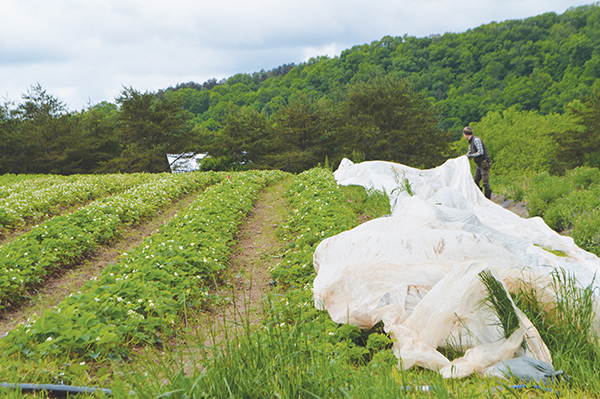
3. Stop growing some dumb crops. “Dumb” crops are determined by the management team assessing each crop’s sensitivity to deer damage, customer demand and insect and disease susceptibility. So what got dropped? Half the slicing tomatoes, potatoes, all the strawberries, and a few other minor crops.
4. Take on a new market, where NMF is the sole vendor. This is now a second Saturday market, two miles away from their very long-standing and profitable Saturday market, where the community begged them to come and is thrilled with them reselling other local foods from growers and food makers known to them in PA.
And finally, 5. Conduct a program of deer population reduction (assisted by a USDA “sharpshooter” program) to reduce the enormous deer pressure of recent years.
As is obvious by now, I am tremendously impressed with New Morning Farm—who they are, what they stand for, and how they are charting new territory in farm succession. Because I am cut from the same cloth philosophically, I can relate completely to their making trust the biggest foundational concept of the farm.
I am rooting hard for Jennifer to wrangle the farm into a profitable 2019 season. With Jim and Moie at her side, and Jennifer’s vast toolbox full of experience, strategies, and strength, I am confident that New Morning Farm will persist and prosper into the future.
Ellen Polishuk just retired from growing 25 acres of ecoganic vegetables and other crops at Potomac Vegetable Farms in northern Virginia. She is now a full-time farm consultant, writer and teacher. For more info go to planttoprofit.com.
Copyright Growing For Market Magazine.
All rights reserved. No portion of this article may be copied
in any manner for use other than by the subscriber without
permission from the publisher.