










By Ellen Polishuk
It only took me a few minutes to decide to put the Beech Grove Farm Fall Tour on my schedule upon seeing the advertisement in a Pennsylvannia Association for Sustainable Agriculture (PASA) e-blast. Visiting this horse-powered vegetable operation has been on my farm “bucket list” for many years. I hold Anne and Eric Nordell as some of my most highly respected farm heroes.
I don’t know when I first heard about the Nordells, maybe from a GFM article, or an Acres piece, I can’t remember. But I do know I figured that anyone who farmed with horses had nothing to teach me, because I was a tractor fanatic. How’s that for stupid and short-sighted? Anyway, I got to hear the Nordells present at an all-day workshop back in 2010. They described extensively how their “weed the soil, not the crop” rotation strategy was a foundational principle for their farm. I was tremendously impressed and inspired and took some of their ideas home to reshape my crop rotation system.
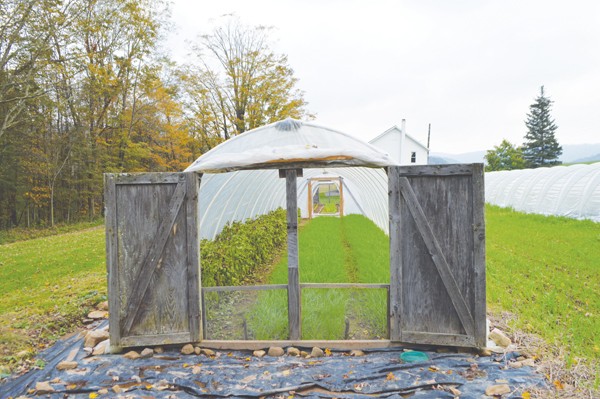
So, on a cool, rainy day in early October, I made the 200-mile drive straight up to Trout Run, in north central PA. (Note that 2018 was the wettest year on record for this area!) The highway got windier as I gained elevation. The land is hilly and does not make one think of a vegetable farm. Indeed, Beech Grove Farm has quite an elevation change within its boundaries: the farm house and hoophouses are snug in the valley next to the state road, and the vegetable fields are up a steep hill on top of a bluff. The Nordells say that when they came here in 1982, it was considered zone 4, but is now zone 5. The area is called The Steam Valley because the mornings are often misty, with heavy dews being the rule rather than the exception.
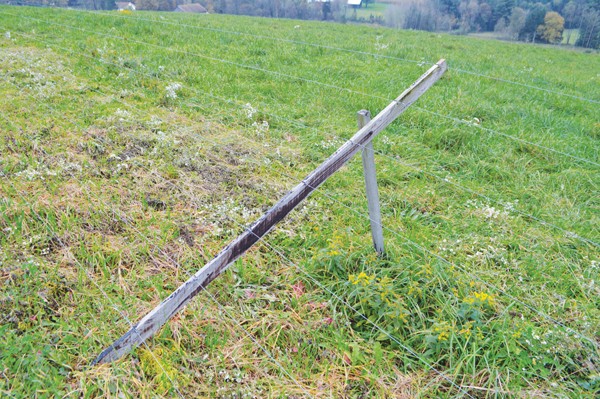
The vegetable fields are surrounded by an unusual sloped high tensile fence (described in detail in an article on their blog at tinyurl.com/y6ycvd2x). It’s been 100% effective against deer since they constructed it in 1992! Inside, the fields are lush with cover crops and a few remaining vegetables. The view in all directions is gorgeous and quite rural. There is only one three-sided shed up here to hold some equipment. It is tidy and neat, not a single thing out of place—just a six acre field placed on top of a rolling hill, with meadow and woods around it. It is remarkably simple and beautiful.
Eric had told me these five organizing principles they’ve held since day one: this is a two-person* farm, that uses horses not tractors, is low input – simple, has no/low debt, and grows organically. Okay, that all makes good sense by looking around, except the part where only 2 people make it all go! He begins the tour by divulging the unique practices used at Beech Grove, that are very different than mainstream organic farming contemporaries. Eric calls them “questionable” farm practices, in that they raise a lot of questions from folks. (*Beech Grove has morphed over the years to being a 3 person farm due to selling more retail crops, as well as the result of Eric’s debilitating illness. Eric discussed this at length on the Farmer to Farmer podcast, available here.)
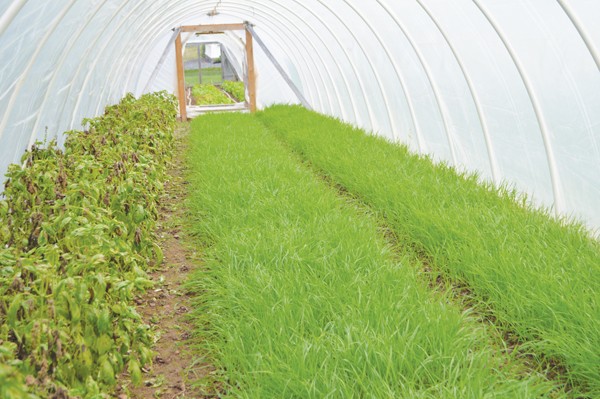
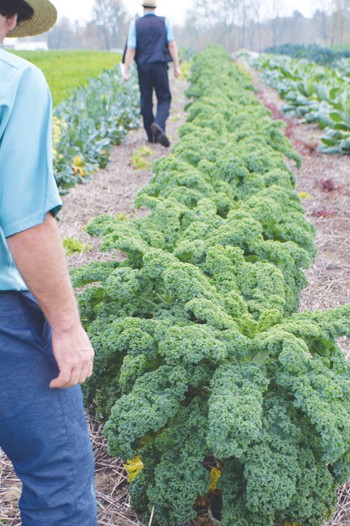
First, all crops are grown in a single row system, 34 inches apart, to allow for the space the horses need to traverse the field. Everything is in this single row system, salad mix, spinach, everything! It makes Beech Grove land extensive, rather that the oh-so-popular intensive approaches of so many market farms. The benefits of more space are excellent air circulation (less fungus), maximal sunlight on the crop leaf surface, and easier harvest. For more about their choice of spacing, read their article “Plant density for single and muli-row systems,” in the June/July 2018 GFM.
The second questionable practice is they farm with NO irrigation. (They do have water in the high tunnels near the farm house.) They don’t even use water at transplanting time, which is done by hand. They’ve developed numerous tricks to help make sure their plants thrive anyway, including using large sized transplant plugs, dust mulch, and that wide row spacing gives the plants a lot of soil volume to drink from. Also, remember all that dew? It sure comes in handy for establishing transplants.
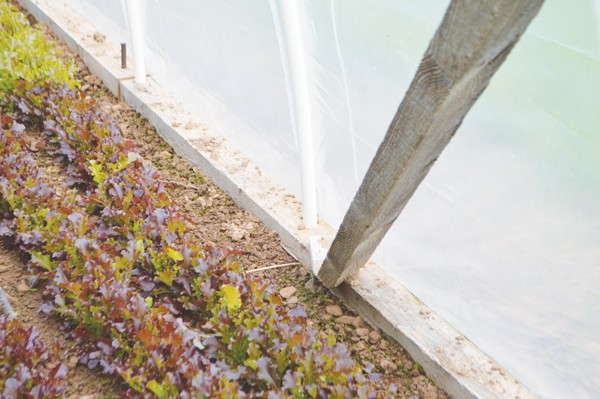
Using very shallow tillage is the third practice. Shallow meaning only 2-3 inches deep. Why? Because it goes well with practice #2. Also, the Nordells found that soil dries quickly to any plow depth, so if they keep tillage that high, then the plants can quickly reach the unplowed layer and tap into good soil moisture. All the cultivation and tillage done helps create a dust mulch (or earth mulch) that actually keeps soil water from wicking up and off the land.
A very generous rotation of half the land in cash crops and the other half in cover crops and green manures is questionable practice #4. This is the aspect of Beech Grove Farm that captured my attention years ago. They have written about this practice in an Acres USA article available at tinyurl.com/ybzyx85m.
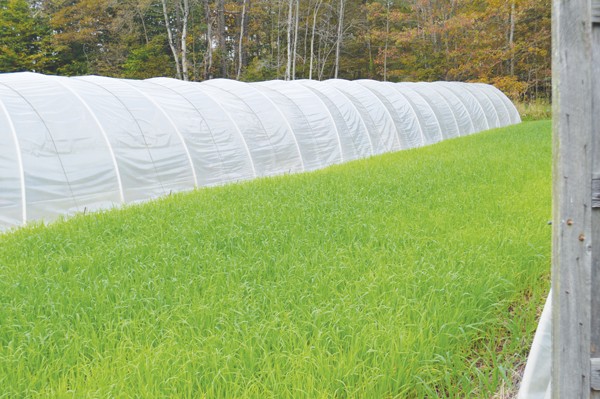
The original idea was to rid the soil of weeds, so that over time they would exhaust the weed seed bank, and their farming would become easier and easier. The system did include serious bare fallow periods to fight some pernicious rhizomatous weed species. It also includes making sure that each field experiences tillage at different times each year over the four-year rotation cycle, which also helps fight weed entrenchment.
So, after 35 years, is Beech Grove weed-free? Not 100%. But I don’t see any in front of me, that’s for sure! They still use some cultivation techniques, but the amount of time spent on weed management is tiny (averaging six hours per week!) compared to any vegetable farm I’ve ever heard of. They make sure that no weed that does grow will ever make seed. This is why only three folks can manage a 3.5 acre vegetable patch.
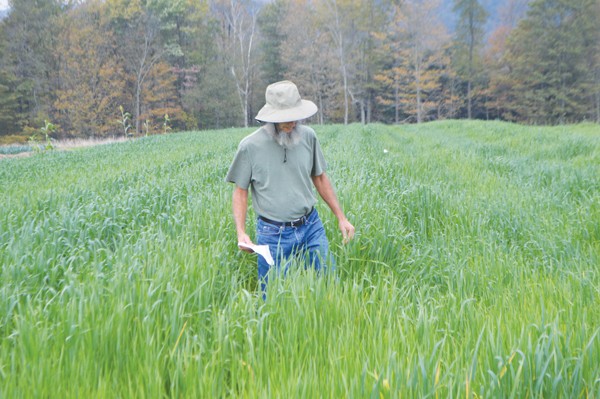
Beech Grove takes advantage of its relatively cool weather by specializing in greens, brassicas, beets, carrots, potatoes, garlic and onions. They can’t compete with other growers very well with the hot weather fruiting crops, so they grow tomatoes and cucumbers solely in the high tunnels, and small amounts of other heat loving crops. While the weed situation is shockingly in hand, the Nordells do battle some of the same insect and disease problems that most growers share: flea beetles, caterpillars, leaf hoppers, cercospora on beets etc. They employ the usual tactics with good results.
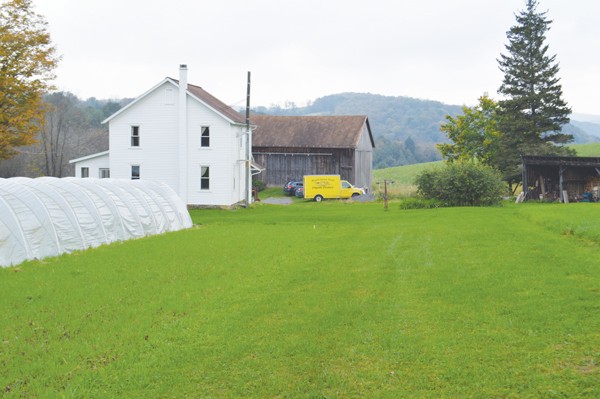
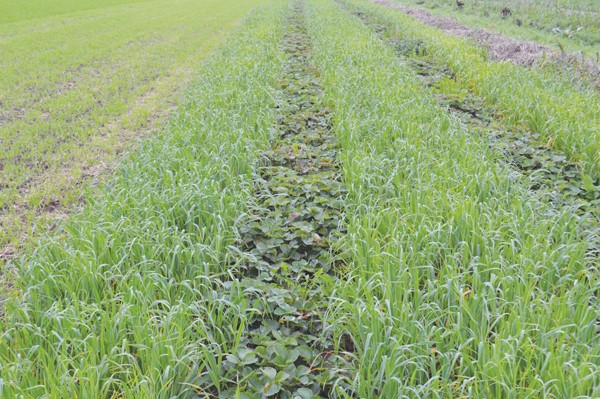
The Nordells believe in the power of both living and dead mulches to help keep the land full of organic matter, to prevent erosion and to conserve moisture. They seed a single row of hairy vetch in the pathway between every crop row grown on bare ground, to provide ground shade, erosion control and future fertility. The vetch does not interfere with the crop and makes harvest time more enjoyable. They employ the use of farm-made rye straw for eggplant, strawberries, peppers, squashes, onions and garlic. This is a key feature of their crop plan—making sure they have rye strips growing very near the areas where the mulch will be used. They use the horses to cut and rake the straw, and hand carry it over into the crop rows.
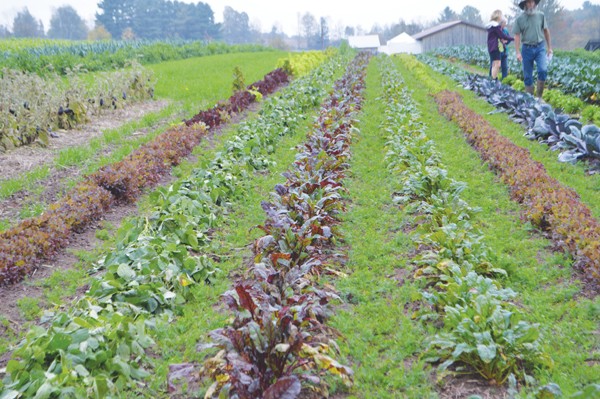
While the Nordells have been farming for so long and there is a strong sense of calm proficiency, they are still curious, inquisitive and searching for better ways to grow food. They are still tweaking fertility practices, coming up with new ways to handle and compost the horse manure, and responding to changes in the marketplace. Where once they grew and sold storage crops for wholesale, they now grow many more perishable crops that they move through the farmers market. They’ve learned over the years that the earliest spring crops (onion, spinach) do not grow well after live cover crop incorporation, so instead they use winter killed cover crops in those areas. They learned that maintaining a permanent bed system was not compatible with their horse drawn equipment, created pathway erosion, and couldn’t handle encroaching weeds.
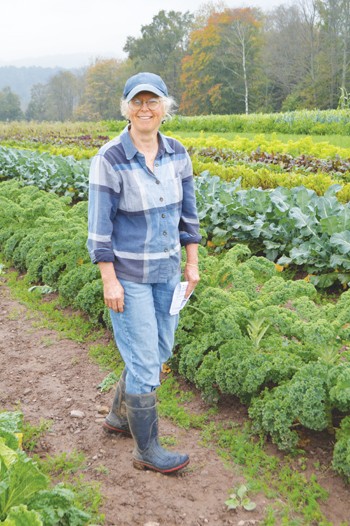
Throughout their careers here, Anne and Eric have achieved their core mission of growing great food, while living a relatively simple lifestyle that depends on horses and sunshine for power. They’ve made a fine living at farming, working primarily only with each other. They’ve created a thing of beauty. As they look into the future, they anticipate gradually slowing down and cutting back. Might a new grower come along to replace them? That sounds inviting, and they are open to that possibility. But in the meantime, they will continue to farm with tremendous intention and skill, enjoying their work, their animals and their winters off!
For more information on how the Nordells farm, visit their blog at covercropsincorporated.wordpress.com.
There are a number of articles by Anne and Eric Nordell in the GFM archive including:
Whoa-till: minimum-depth tillage for the dryland market garden
When no-till won’t work, try ridge-till
For more photos from this visit, go to http://www.tinyurl.com/y49lye6a
Ellen Polishuk just retired from growing 25 acres of ecoganic vegetables and other crops at Potomac Vegetable Farms in northern Virginia. She is now a full-time farm consultant, writer and teacher. For more info go to planttoprofit.com.
Copyright Growing For Market Magazine.
All rights reserved. No portion of this article may be copied
in any manner for use other than by the subscriber without
permission from the publisher.