











Up-front costs offset by incentives and cheaper operation
Here at Moonshot Farm in Central New Jersey, we produce cut flowers year-round for retail markets, including during the cold winter months from December through March. Winter production has a lot of upsides, including a less competitive market and selling flowers during peak floral holidays. Yet, a major downside is a higher ecological footprint due to burning fossil fuels for heat.
To resolve this, at the end of 2022 we converted one of our greenhouses from propane to geothermal heat. The system has been incredibly successful, resulting in a warmer winter greenhouse with significantly lower operating costs than our propane-heated houses — and a very low carbon footprint. Right now is a great time to consider geothermal energy on your farm as the technology has improved and the financial incentives are higher than ever.
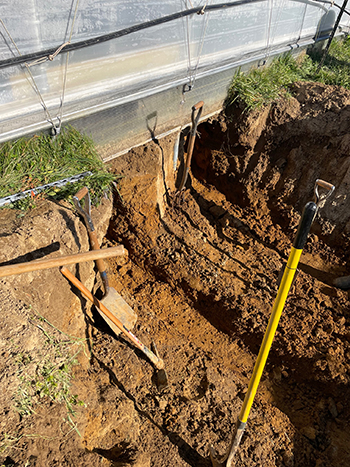
Connecting the geothermal loop to the equipment inside of the greenhouse.
An August 2023 GFM article by Catherine Sylvestre described the year-round carbon neutral greenhouse at Ferme des Quatre-Temps in Canada, an inspiring project using a climate battery to minimally heat the soil for winter greens production in Quebec. Catherine’s project is quite different from ours, underscoring an important point about the uniqueness of these systems. Unlike natural gas or propane heaters, generally “plug and play” heaters alike across many different scenarios, geothermal systems are highly variable.
Systems will be unique based on factors, including climate/zone, ideal heating temperature, local geology and soil types, and the location of the water table. A greenhouse’s design and R-value (how insulated it is) will also inform the system, as well as how much soil is available to be disturbed. Whether you have access to a water source, like a lake or pond, will also determine how you design your system.
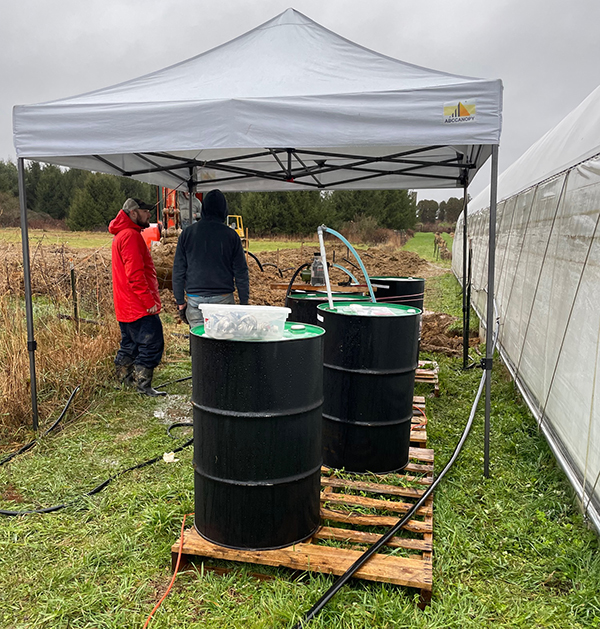
Filling the loop with non-toxic, alcohol-based antifreeze.
One similarity with Ferme des Quatre-Temps’ is that it was designed by an engineer (Thomas Geothermal Engineering, LLC). Finding a geothermal engineer with an HVAC license in your state is a good starting point to determining whether a system like ours is feasible. We had to call more than 20 engineers before we found one willing to try a greenhouse project as they are still quite uncommon.
While I’m not an engineer, my general understanding is that if geothermal energy is used to heat homes and buildings in your area, you should be able to use it for a greenhouse. Our engineer had access to equipment and subcontractors, including a ductwork specialist, to help get the job done.
Our design
While winter vegetables may be harvested from unheated or very minimally heated greenhouses, cut flowers require some heat to bloom, anywhere from 40°F for cool crops like ranunculus to up to 60°F for other flowers like tulips and scabiosa. We wanted some flexibility in that range, and our engineer designed our system to heat to 55°F during our coldest nights (0°F here).
When they hear “geothermal” many folks envision digging out a swimming-pool-sized excavation and then constructing a greenhouse over it. Our system, however, was actually retroverted to fit an existing 34-x-96-foot poly greenhouse with inflated double plastic walls. We had previously grown in this greenhouse using propane heat and left the propane heater in place as a backup system. Our propane heaters are connected to a natural gas generator, providing resiliency in case of a power outage.
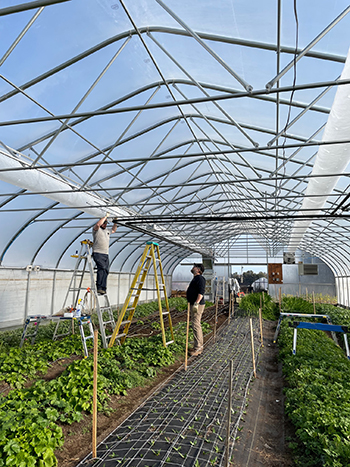
Setting up the equipment and fabric ductwork inside the greenhouse.
“Geothermal” can also bring up visions of deep wells drilled vertically into the earth. To save money, we went with a horizontal system design. Since the ground at 8-feet deep is around 55°F, the system acts as a giant heat sink or “climate battery.” During sunny days as the greenhouse heats up, the system pumps hot air out of the greenhouse and into the ground loop, storing the heat for use during cold nights.
We dug a horizontal geothermal loop 7-feet to 8-feet deep outside of our greenhouse. The loop consists of 2,100 feet of horizontal trenches in which flexible geothermal pipes were placed. While many greenhouse climate batteries use air-filled pipes connected to fans in a greenhouse, we filled our pipes with nontoxic alcohol-based antifreeze to add additional heating power. The pipes connect to two WaterFurnace geothermal heat pumps inside of the greenhouse, which is heated via fabric ducts filled with forced hot air. Radiant heating would have been more efficient than hot air, but we grow in the ground in this greenhouse and had concerns about overheating roots on cold-loving plants.
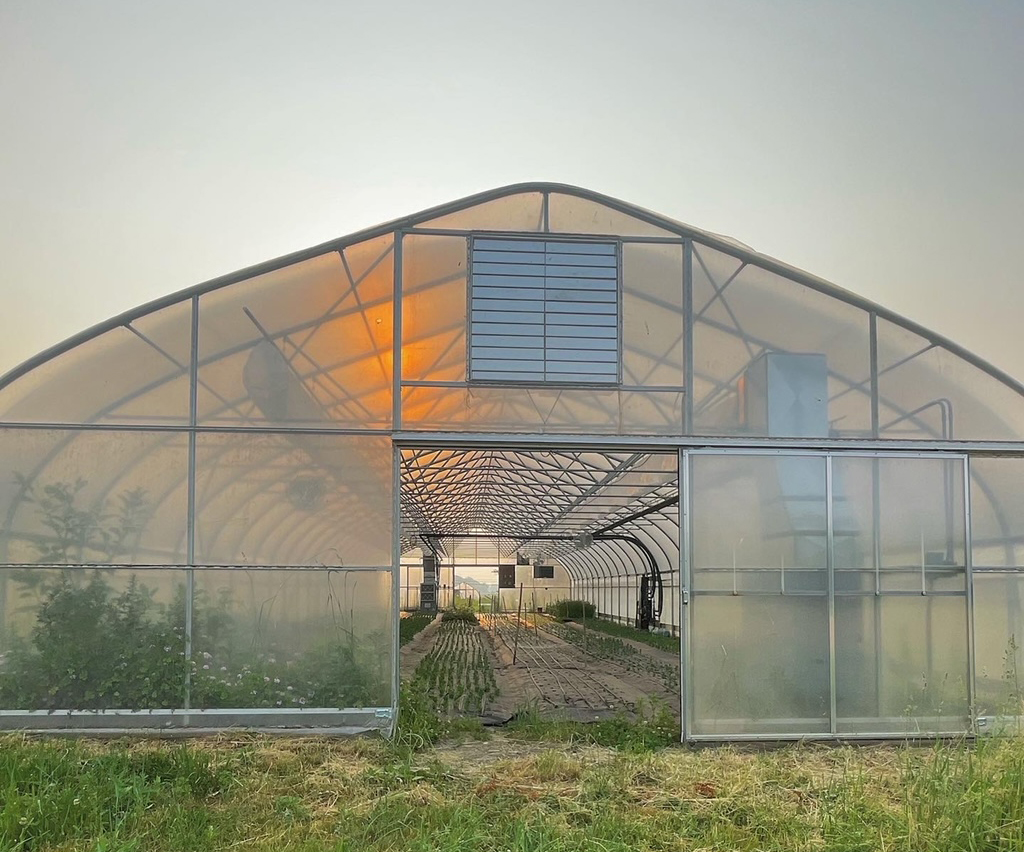
The greenhouse structure was built using NRCS EQIP funding and retroverted to be geothermally heated.
The modern, commercial heat pumps connect to an app on our phones where we can control the system remotely as well as get real-time data about energy usage and loop temperature. The app also alerts us if there are any issues with the system. In addition to the heat pump app, we utilize Govee thermometers placed throughout the greenhouse to help monitor temps and alert us to any issues.
My husband is a carpenter by trade and we DIY a lot of projects on our farm, but we contracted out the entire geothermal build as it was such a big and important project. The engineer worked with multiple contractors to set up all of the equipment, and we hired an excavator to dig the trenches. We also had to hire an electrician to run a new electrical service to our farm to power the system.
It took around six weeks for the build to be completed, plus lots of ongoing tinkering. The overall planning of the project took well over a year. I don’t want to underestimate the complexity and occasional frustration, especially planning a project like this during ongoing pandemic-related supply chain issues. In the end, though, it all came together.
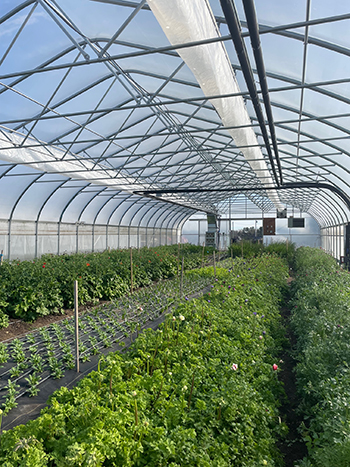
The system is able to add 55 degrees of heat on cold nights.
While the excavated loop felt like a big mess — over half an acre of disturbed soil — we were able to recover it and immediately plant crops on the land with no issue.
The results
Much of our system design was unproven and experimental, and so we were pretty nervous when we finally fired it up in late December of 2022. Much to our relief, it worked. Not only did the geothermal system heat to a warmer temperature than our 200k BTU propane heaters, but the fabric ducts provided much more even heating.
The system ran great throughout the following winter, including during an extreme cold snap in February. As outside temperatures approached 0°F, several of our greenhouses froze, killing crops. But the geothermal greenhouse stayed a balmy 55°F.
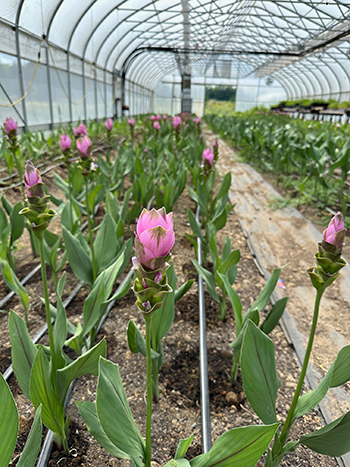
Using the system to grow tropical crops like curcuma flowers.
This most recent winter was our second year using the system, and we experimented with pushing the limits. We bumped the temps all the way to 65°F, enabling us to grow our winter tulips much faster. Occasionally this high temperature drained our geothermal loop, but we were able to supplement using the backup propane heater.
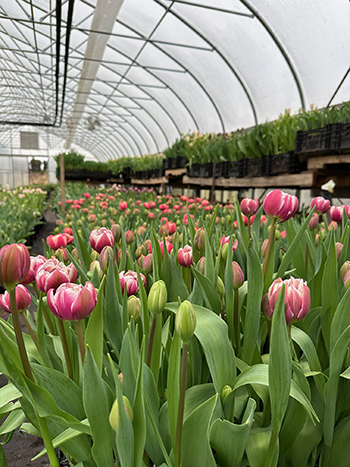
With high-value crops such as tulips, we were able to recoup our investment in just 6 weeks.
Having the backup heater in place with the geothermal system also has added a lot of peace of mind during extreme cold, power outages, and other winter stressors. We’re working with the engineer to learn how and when to set the loop to recharge for optimal heat. We see it as a continual work in progress.
The system uses minimal electricity to run, so, it is not truly “carbon neutral.” However, here in New Jersey our electric grid is around 50 percent renewable, a percentage that is increasing each year. The geothermal system costs around $200/month of electricity to run, compared with around $1,300/month in propane costs to heat to a lower temperature than the geothermal loop is able to achieve.
Cooling benefits
Because the geothermal system removes hot air from the greenhouse, it theoretically can cool the house down. I was excited to see what this could mean for some of our crops. Would we be able to extend our ranunculus season further by cooling the greenhouse down in late spring?
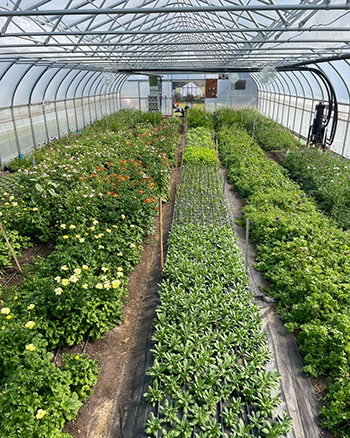
We converted our 34×96’ greenhouse from propane to geothermal in late 2022.
Ultimately we’ve found the answer is, no. As any greenhouse grower knows, solar gain can cause a greenhouse to get incredibly hot on a sunny day. The system just isn’t powerful enough to provide significant cooling on hot days, and the cooling function also uses a lot of electricity.
We did, however, find some benefit in using the system for “emergency” cooling. One day last winter, we left the farm and neglected to open up our greenhouses before we left. Although it was in the 30s outside, sunshine meant our conventional propane greenhouses got into the high 90s with the doors and sides closed up. The geothermal greenhouse, meanwhile, stayed significantly cooler — in the mid 60s. While we don’t plan to use this cooling as a daily function, it’s great to have as a backup in situations where the greenhouses aren’t properly vented.
Financial incentives
In the United States, grants and tax credits for commercial geothermal systems are better than ever before, thanks in large part to the Inflation Reduction Act. The Inflation Reduction Act (IRA) created expanded tax credits for commercial geothermal systems and provides for 33 percent of project costs back. Additional bonus credits may also be available for using American-manufactured equipment. The IRA also allows for accelerated depreciation of the out-of-pocket costs, further reducing the costs.
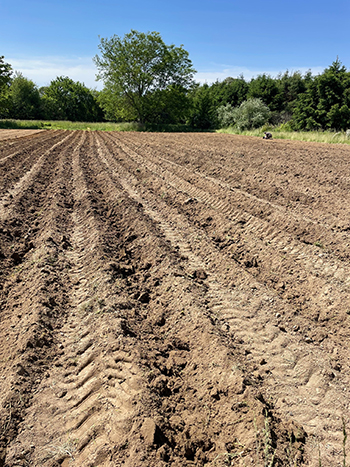
We were able to immediately recover and plant over the loop.
First, the greenhouse itself was paid for by Natural Resources Conservation Service (NRCS) Environmental Quality Incentives Program (EQIP) funding.
At least in New Jersey, there are no issues with adding heat to your NRCS high tunnel as long as you continue to follow their guidelines, including growing in the ground during the contract period. We initially added a propane heater to the greenhouse and the NRCS had no problem with us converting to geothermal as long as the structure was not damaged in the process.
To convert from propane to geothermal heat, we received a Rural Energy for America Program (REAP) grant. This was a 25 percent grant at the time of our project, but the funding has since increased to a whopping 50 percent.
While this grant is issued by the USDA’s Rural Development agency, the funding is available to both rural businesses and all farms (including urban farms) where the majority of income comes from farming. I was surprised that our farm, in a very suburban area (10 minutes from a Target), qualified under their definition of “rural.”
Cons of the REAP grant include its long, convoluted application process. Our application and supporting documents were over 200 pages and took weeks to compile. Funding is competitive, so completing the application is no guarantee that you’ll receive the grant. It’s also a reimbursement grant, so farmers must front the project costs and then be paid back by the USDA.
We actually emptied our retirement savings to fund the project, which I regret. I learned later that FSA operating loans could help cover the costs before reimbursement, which is an approach I would consider for future projects. Additional grants may be available through state agencies as well as through power companies, who often incentivize the purchase of geothermal heat pumps.
Costs and break-even point
All in, our system cost right around $100,000 total, including the new electrical service to our farm. After tax credits and with the expanded REAP grant, the out-of-pocket costs for a system like ours comes out to under $20,000. With the greatly reduced operating costs for fuel, we estimated a break-even for geothermal versus propane is around six to eight years for our project, including federal grants and tax credits.
That might sound like a lot, but we make cost concessions all the time on our farm in the name of sustainability. Choices like using beneficial insects instead of pesticides, biodegradable materials instead of plastic, etc., are all more expensive than their conventional counterparts. But our customers appreciate our efforts to grow in a more eco-friendly manner, and they’re willing to pay more for our flowers as a result.
We also got a great marketing boost from the project, including several local magazine articles, bringing in new customers and interest in the farm. We were able to recoup our out-of-pocket costs of building the system in just about six weeks on our farm, due to our ability to price geothermally grown flowers at a high price.
While I think the cost of the geothermal system makes sense for a production greenhouse, it may not make sense for a propagation greenhouse or a greenhouse that is only heated for a few weeks in the spring.
Future plans
We’re feeling great about our geothermal greenhouse and now hope to transition our entire farm (currently around half an acre of heated greenhouse space) to geothermal heat. For a future build, we’d likely dig vertically as we’re out of open horizontal space. We also would likely go with one large rather than two smaller heat pumps, just for ease of installation.
It was a hassle to construct the system while we were actively growing in our greenhouse, and some plants got wrecked in the process; next time we’ll plan to do the build during a down season or a window of cover crops.
Because the geothermal greenhouse has a significantly smaller carbon footprint than our conventionally heated greenhouses, we feel a lot more comfortable experimenting in this space. Crops that may fail, be less profitable, or require additional heat go into the geothermal house, where we feel less guilty if there’s a crop loss.
Winter standbys in our conventional greenhouses include tulips, anemones, freesia, and ranunculus, which we know will reliably bloom even under short days. Last year we experimented with some new crops, including scoop scabiosa, delphinium, and campanula in the geothermal greenhouse. These crops required slightly higher temps than our usual winter lineup, and they also needed supplemental lighting to bloom.
In addition to using the geothermal system for winter production, we’re experimenting with how it could expand our season and crop potential in other ways. This year we’re growing a new-to-us crop, curcuma flower, a tropical plant in the ginger family. The curcuma required a hot start (70°F+) in early spring, and the geothermal greenhouse provided a perfect tropical environment for it to thrive. The plants have been blooming since July, allowing us to see the benefits of our geothermal investment year-round.
For a long time, geothermal systems like ours didn’t make sense due to enormous financial costs compared to cheap fossil fuels. But as geothermal technology improves and comes down in price, new financial incentives arise, and fossil fuels continue to rise in cost, I expect that geothermal will become more and more common on farms. Someday I hope it is the standard technology used across our industry.
Rebecca Kutzer-Rice owns Moonshot Farm, a specialty cut flower farm in East Windsor, NJ. She grows flowers year-round including in a geothermal greenhouse, for retail markets in and around NYC.
Copyright Growing For Market Magazine.
All rights reserved. No portion of this article may be copied
in any manner for use other than by the subscriber without
permission from the publisher.