









Nothing sells a vegetable like a recipe
Many farmers market shoppers are food enthusiasts of one kind or another. Some really want to talk, discover and learn; they certainly want to know how to prepare unique and unfamiliar produce. Others are mostly interested in traditional produce but want to know your favorite recipes. Being able to give them one will help increase your credibility and connection with your customers.
Of course, foodies and your less adventurous customers should learn the best practices for storing produce, and who wouldn’t benefit from a few hints about getting optimum nutrition? If you can acquire and share such food knowledge with your customers, and perhaps even let it help to guide some of your farming decisions, it will serve to enhance your customer relationships.
In this article I’ll share the cooking, storage and nutrition tips that have helped our customers get the most out of our produce. There is more here than most people can digest in a sitting, so share these tips with your customers by printing the seasonally relevant information out for them.
Best produce uses
If you know produce, you are familiar with the fact that many varieties have uses for which they are particularly suited. Be sure to pass this kind of information along.
Beets have their specializations. Robuschka and (white-fleshed) Avalanche are esteemed as exceptionally tasty for juicing and raw eating; the cylindrical Formanova and Cylindra are regarded as excellent for canning and roasting. Albino (white), Boldor (golden), Chioggia (pink-and-white striped) or any of the off-color beets are valued by those who want in on the beet scene but can’t quite abide that beet flavor.
Bell peppers with thick walls produce better results when frozen or fermented than thin walled varieties. Look to Revolution, Corona or Gilboa and Golden Star or Goldrush Golden Éclat for immature green (of course) and red, orange and yellow peppers (respectively).
The mini broccolis may all look alike, generally, but they do not all taste the same. Piracicaba tends to have a sweeter taste and Broccoli Raab or Rapini is a bit more pungent, while Kailaan is more spicy. And then there are the Baby Broccolis or Broccolinis which, like the side shoots produced by standard crown broccoli (like Solstice and Umpqua) taste, well, like broccoli. It is important customers know what kind of flavor and level of tenderness to expect so they can know how best to prepare each (raw or cooked, plain or in a mixture) and thus not be disappointed.
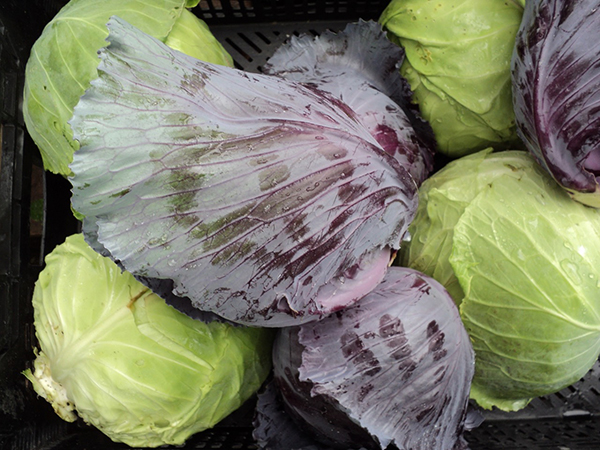
All cabbages are not created equal. Tenderness, leaf shape and head density make some more suitable for sauerkraut (Holsteiner Platter, Gunma), storage (Murdoc, ‘Storage No. 4’), cabbage rolls (Tendersweet) or raw dishes (Tendersweet, again), while Savoy cabbages, on the other hand, are generally used exclusively in cooked dishes.
Carrots like Bolero, Bangor, Scarlet Nantes, Newhall and Rolanka are exceptionally well suited for storage (see below). Rodelika, Dragon, Merida and Istanbul, on the other hand, are disposed to being very nutritious and produce excellent juiced products. And the carrots Danvers and Tonda di Parigi are at their best when cooked, not raw. Though it might be awkward to ask each customer, “What are you going to do with these carrots?”, what you can do is guide the use of each by how you market it. Offer carrots on special for storage, with other vegetables in juicing kits or in “roasting vegetables” baggies depending on which they are.
Pickling cucumbers have long been (and still are) identified as such, though they are also frequently referred to as kirbies. This name helps to take the emphasis off processing them, and it can be placed on eating them raw instead; you would not believe the number of delighted people we introduced to kirbies for fresh eating.
There was a time when everyone was asking what kind of kale made the best kale chips. Many think Tuscan or lacinato kale make excellent chips with their sweeter, milder flavor (it is also traditionally used in Italian minestrone soup). Siberian and Russian kales (usually with flat, frilled, sweet leaves) are perfect for green and massaged kale salads. Curly kales are more robust and suited to soups and side dishes. Note: pay attention to variety descriptions, as there are exceptions to these “rules.” Often, Brassica oleracea varieties are more aggressively flavored and B. napus ones are sweeter, but again this is not always the case.
Summer squash and zucchini that have naturally drier flesh are excellent for sautéing and virtually essential for grilling. This includes Lebanese or Cousa squashes like White Bush, the (ribbed) Costata Romanescas and really any of the Patty Pans.
Certain tomatoes are specialized for drying (Principe Borghese) and cooking, saucing, juicing and or canning (paste tomatoes, in all of their weird and wonderful shapes and sizes). Believe it or not, not everyone knows this, nor even when they are looking at a paste tomato — not that you can always blame them. We like to use tomato slices instead of pizza sauce for homemade pizza in the late summer and autumn. The meatier the better, which also makes paste tomatoes perfect.
All potatoes are not interchangeable. This is a dreadful mistake to make. Their texture ranges from dry and floury (with Russets being the ideal) to medium dry (the German Butterball is our very favorite of this type) to moist and firm (such as the Blue Gold) to waxy (practically any Fingerling — our customers love the Pinto). Generally, those from the waxy end of the spectrum are best used in potatoes salads, soups, casseroles and for roasting.
Those at the starchier end are better for baking, mashing, pan frying, oven frying and for making scalloped or au gratin potatoes. Even though some potatoes appear to be identical on paper, certain varieties really excel at particular uses. This is also great information to share. Russet potatoes of any kind make the very best oven fries. The Purple Viking is, for our money, the ultimate baked potato. Blue Gold is our go-to soup potato in winter. And a potato salad made with Nicola will be the best you have ever tasted.
Nutritious knowledge
A portion of farmers market go-ers are on a quest to improve their health. Pointers you can offer on cooking practices and the most nutritious food options encourage potential customers to value the knowledge you have, and therefore to stop at your stall.
The more colorful Irish potatoes are better. This applies to both skin and flesh, which should be mixed and matched for optimum effect. Purple, blue, red, yellow and white is the enumeration from most to least beneficial. Though diabetics have to exercise restraint with potatoes, with the Nicola potato they only need half as much. This is a tasty potato with a low glycemic index, so much so that its resulting blood sugar rush is half that of an average potato.
The color rule also applies to sweet potatoes — find the deepest colors of skin and flesh. And again, but this time with carrots. Though deep orange (Sugarsnax 54) and red (Red Samurai) are rather nutritious colors, purple is incredibly so.
Scallions can be substituted for globe onions in practically everything, using as much of the green stem as possible. They are an uber-nutritious onion family member, which is really saying something.
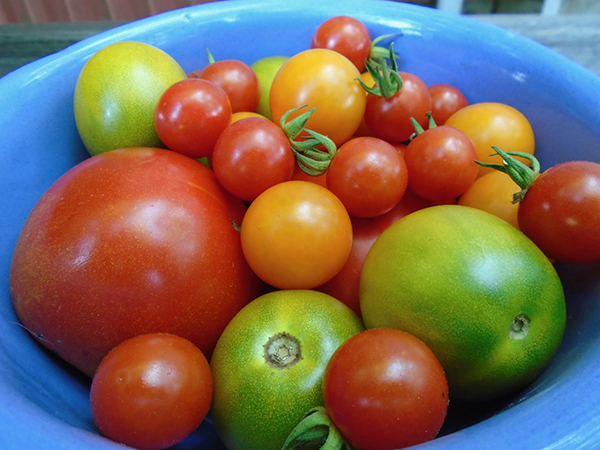
Tomatoes (also) are most nutritious when they possess a deep color, preferably purple, red, orange or even what is described as black or brown. The lighter colors (the yellows, whites, greens, pinks) should be eaten more for novelty than nutrition. Also, whenever possible do not discard tomato juice, seeds or skin, which are highly nutritious. Lastly, the more you depart from large-sized tomatoes and opt for small-sized ones (which have more skin per serving and therefore more antioxidants), the more you move in the healthier direction.
As sunlight exposure is one of the elements to antioxidant production in produce, opting for an open-head type of Chinese cabbage like Tokyo Bekana as opposed to the typical tightly formed heads will garner you more nutrition. This also applies to loosely heading radicchios like Radicchio del Veneto (Pink Radicchio) and Radicchio Variegata di Castelfranco.
Déjà vu on two points. Lettuce is most nutritious when it is grown as individual leaves (as in lettuce mixes) or is loosely headed, as opposed to the less nutritious tight heads. In terms of color, any browns or reds (the darker the better) are more nutritious than dark greens, which are more nutritious than light greens. Though if nutrition is your customers’ biggest interest, kale or collards will have more nutrients than even the most nutrient dense lettuce.
Preparation for nutrition
Getting the best nutrition from your food is not only variety dependent, it also hinges on how you prepare it.
To maximize the nutrition and minimize any blood sugar bounces from potatoes, be sure to 1) eat them with their skin, 2) prepare them with a little fat and/or vinegar and, when possible, 3) cook and chill them for 24 hours (and then reheat or eat cold). These steps slow digestion and make nutrients more bioavailable.
For the most nutritional gain, carrots should be eaten cooked (not raw) in the presence of a fat. Though sweet onions can be readily consumed raw, cooking onions are much more nutritious and should be eaten instead, if possible. Caramelizing and sautéing will make them more palatable. Or use scallions instead of either sweet or cooking onions.
Familiar and unique recipes
Sharing recipes with customers is a great idea for many reasons. If they have no idea how to use a certain vegetable, it may strongly encourage them to try it. I can’t tell you how many tomatillos and leeks we have sold because we offered them with salsa and soup recipes (respectively). Our sales of Hungarian Hot Wax peppers rested almost entirely on our recommendation of using them as bell pepper substitutes and enhancers of other flavors (in dishes ranging from hash browns to goulash to spaghetti sauce). And even though more and more people recognize them now, the first vendors at the markets with Shishito peppers needed to instruct on their typical preparation to be sure.
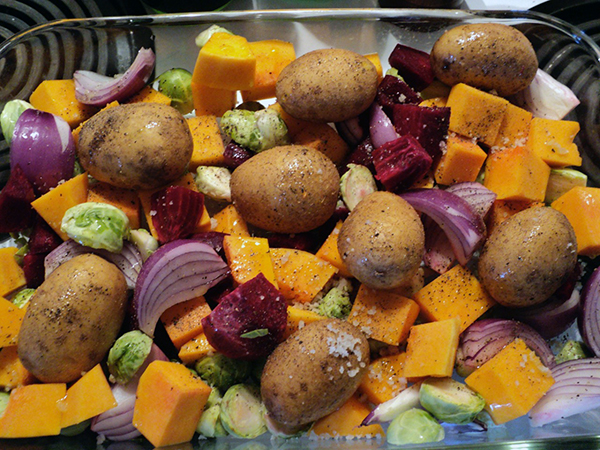 Suggestions like which vegetables to roast together may give your customers new ideas and help you sell more vegetables.
Even for familiar vegetables or dishes, different recipes can be welcome. Even though everyone has a recipe for potato salad, several customers were intrigued to find that we use scallions in ours (as well as celery seed). And we definitely would always find a recipe to partner with any bumper crops being brought in; pumpkin pancake and zucchini cookie recipes come under this heading.
Cooking tips
It is simply a fact that if you are in the business of selling people produce, people knowing how to cook produce — and cook it to its tastiest advantage — will be to your advantage. These how-to’s improve palatability or ease of preparation.
“Baby” versions of greens (such as beet greens, kale, spinach) will be more tender and milder/sweeter than their full-size counterparts, so use baby and mature leaves accordingly. If someone finds their zucchini baked goods are overly damp, recommend that after they grate it, they press the flesh to remove excess moisture.
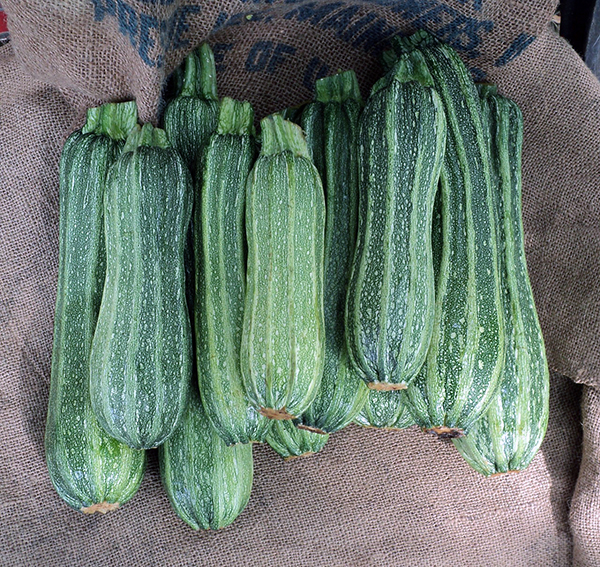 Summer squashes like Costata Romanesco with flesh on the drier side are excellent for sauteeing and grilling.
Cucumbers can release too much moisture into vegetable salads, which is especially destructive to those with creamy dressings. To remove excess moisture prior to constructing the salad, cut your cucumbers to the desired size, toss the pieces with salt (2 cups cucumber to 1 tablespoon salt is a good ratio), place them in a colander under a weight (like a ziplock bag filled with water) and leave them for two hours. Rinse the cucumber to remove the salt, pat dry and assemble your salad. Globe onions can also release too much moisture into a vegetable salad. Directions as above (plus, the salt soak will take the edge off strongly flavored raw onions).
Letting people know if a small fruit can be eaten out-of-hand (such as cape gooseberry, loganberry) or if it generally has to be cooked to be acceptably palatable (garden huckleberry, elderberry) is not only advisable but essential to make sales.
To increase the crispiness of potatoes in hash browns and oven fries, it is beneficial (in addition to using potatoes from the starchy end of the spectrum) to cut up and soak your potato pieces in warm water for 10 minutes, then drain and squeeze or pat them dry. This process draws out excess starch for a more rigid product.
Green and vegetable salads are best received (especially by children) when their components are cut into bite-size pieces. Though small beets are tender and do not need to have their skin peeled, more mature beets have a tougher exterior which should be removed. Easier than hand peeling is boiling or parboiling, which will allow the skin to slip off beets. Leave two inches of stem on to prevent nutrients and color bleeding into the water.
Best storage
Everyone should know how best to store produce to preserve its nutrition and flavor, and prolong its storability. I remember being quite surprised by a customer who thought it was normal to store cucumbers on the kitchen counter for weeks at a time. He was surprised when they did not last long at summer room temperatures. Not only do you not want to “take the blame” for produce that doesn’t last, you need your produce in good shape so customers will be able to appreciate its taste and come back for more. This applies to both short- and long-term storage situations.
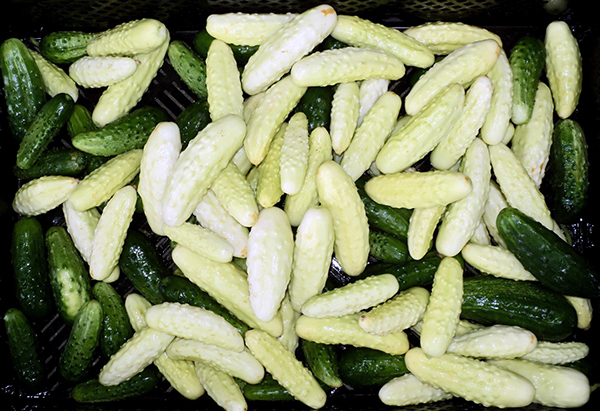 Some customers are surprised to find that pickling cucumbers are very good for fresh eating in addition to canning.
Even though strawberries which aren’t yet dead ripe may benefit from sitting on the kitchen counter for a day or two, generally speaking they and all other small, soft fruits (raspberries, blueberries, loganberries, currants) should be stored in the refrigerator. If the heat doesn’t get to them, the summer insects certainly will.
Lettuce is a green that many like to have as crisp as possible. Remarkably, you should first soak cleaned leaves in lukewarm water (as they will absorb water at this temperature, which they won’t do with cold water) and then transfer them to a 10 minute cold water soak for a rapid cool down (and then dry and bag). Jo Robinson (author of the invaluable book, Eating on the Wild Side, for anyone who wants to eat nutritiously) calls resealable (ziplock) bags which have been pin pricked with holes to allow for produce respiration (while limiting oxidation) micro-perforated. Using these helps to maintain stored food quality for as long as possible.
Greens (lettuce, spinach, kale, arugula) should be cleaned as soon as they get home, thoroughly dried with a spinner or towels and stored in micro-perforated bags. Both dirt and clinging moisture will decrease their storability.
Though many produce items appear to tolerate being left on the kitchen counter for half a day or so without any apparent ill effects, everything from summer squash and cucumbers to eggplant and peppers keep longer and especially preserve more nutrition with refrigerator storage. And for vegetables like asparagus and broccoli (which have high respiration rates), the use of micro-perforated bags is essential.
No summer tomato should ever be stored below 50°F; this not only arrests the further development of flavor and aromatic compounds, it degrades those that already exist. Tomatoes picked ripe and ready to eat should simply be left out on the kitchen counter. Those with ripening to do should be stored stem side up — to slow softening — in a closed paper bag on the counter (which is hopefully between 55°F and 70°F). Storage tomatoes that last through the winter months (and don’t quite have the flavor of their summertime counterparts) do balance great storage with good flavor best when kept in the 40°F to 50°F range.
Though the leafy tops of beets, carrots and radishes can be indicators of freshness when buying produce (and, of course, are edible in their own rights), they will remove the moisture from their respective roots (as well as increase respiration and decrease nutrient value) if they are left on in storage. Customers should remove them as soon as they get their produce home; detached leaves intended for eating should be stored separately.
Carrots, specifically, should be stored away from ethylene gas producers which will cause the formation of bitter compounds in their flesh. As everything from apples and cantaloupe to scallions to tomatoes and potatoes produce ethylene, store carrots in sealed plastic bags.
“New” Irish potatoes should not be stored for more than a couple of weeks. They don’t have the thick skins of storage potatoes and will dehydrate in storage. Both new and storage potatoes should be kept in dark, well-ventilated, yet rather humid spaces right around 40°F. They can be cooler but should never freeze as this will bizarrely sweeten their flavor and soften their texture. They can also be stored up to 50°F, but should be cooler for lengthy storage (of several months).
Sweet onions are not intended for long-term storage, and should be kept on a refrigerator shelf (as they prefer less humidity than found in the crisper). Cooking onions have a thicker skin and so store much better, and simply require dark, rather dry, 40°F to 50°F conditions. They can move to the refrigerator shelf in spring after winter storage.
Garlic also wants darkness, good ventilation and an absence of humidity for optimum storage. Typically, these conditions are offered on the kitchen counter in a garlic keeper for heads to be used up in a month or so, and so can be a bit warmer. For long-term storage, 33°F to 50°F is preferred (and in the spring, garlic can join the cooking onions in the fridge).
Winter squash and pumpkins have hardened skins, which means they can store very well (and do not require humidity to achieve this). Give them a 50°F, darkened location, and they will do great. Sweet potatoes loath humidity and cool temperatures. They should never get anywhere near the fridge. They prefer darkness and good air circulation at 60°F, so the bottom of an open bag or storage crock in the corner of a room is perfect.
Sharing useful information about the produce you sell will not only help your customers get the most out of it, you will sell more of it when they know how to cook or store it. It can be difficult to find the time to communicate all this information to customers at a busy market. Put some of this information, along with your favorite recipes, on paper by the vegetables that are in season and watch customers take a recipe and the vegetables to make it with. Even if it doesn’t end up being their favorite recipe, they’ll think of you as a partner in their food journey, and with any luck, they’ll come back to see what you have for them the next week.
Leah Smith is a freelance writer and home and market gardener. She works on her family’s farm in mid-Michigan called Nodding Thistle (certified organic 1984-2009, principally by Organic Growers of Michigan). A graduate of Michigan State University, she can be reached at noddingthistle@gmail.com.
Copyright Growing For Market Magazine.
All rights reserved. No portion of this article may be copied
in any manner for use other than by the subscriber without
permission from the publisher.