







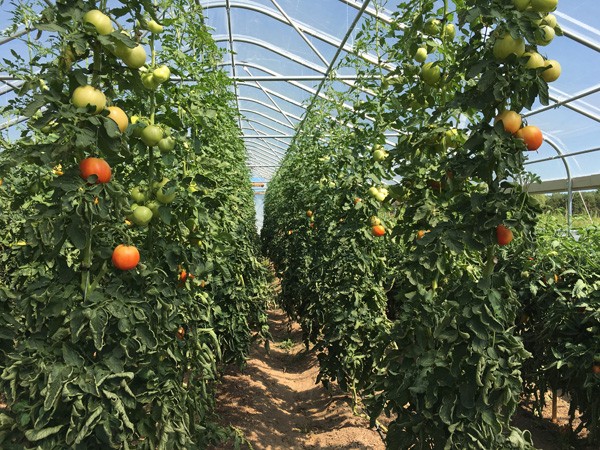
High tunnels are valuable real estate on a farm, but growing under cover long-term can result in nutrient imbalances and pH changes in the soil that impact yields. Phosphorus, calcium and magnesium build up over time and interfere with other nutrient uptake. High pH irrigation water and fertilizers cause soil pH to rise, limiting micronutrient availability.
Foliar testing is an easy way to check your fertility practices, showing imbalances before symptoms arise. Start foliar sampling two weeks post-transplant and submit a sample every 2-3 weeks throughout the growing season. Just collect 5-10 leaves from one variety and send them to a lab for nutrient analysis. Check with your local Cooperative Extension office for reputable labs in your state. The lab should provide you with macro and micronutrient levels and recommended ranges for each nutrient.
Nitrogen and potassium are the most commonly deficient nutrients. We aim for around 125-150#/acre of each for high tunnel tomatoes. Avoid using fertilizers with phosphorus after the first year. Your soil test results will determine potassium rates- apply what is needed.
To ensure nitrogen demand is met, we recommend planning to apply the total amount needed every year. Conventional sources of nitrogen can be added in small increments throughout the season via drip irrigation. Organic growers should apply at least 50% of the total pre-plant, using low-pH, low-salt, low-phosphorous fertilizers like soy, alfalfa, blood or feather meals.
Conventional growers can use 10-0-0 or urea to apply 5-10 pounds per week for the first 20 weeks of production. Soils with high organic matter may have natural release of nitrogen when soils are warm and this means less fertilizer may be needed. For water soluble, injectable potassium, organic growers can use sulfate of potash and conventional growers can use the potassium product of their choice.
Foliar testing throughout the season is essential for keeping tabs on nutrient levels within the plant. By detecting nutrient deficiencies before symptoms show in the leaves, you can correct imbalances in-season and prevent yield losses.
The authors work for the Cornell Vegetable Program. This information is the result of a multi-year project they are carrying out, supported by the New York Farm Viability Institute in collaboration with NOFA-NY. Look for a full-length article this winter for more about long-term soil health and fertility in high tunnels.
Copyright Growing For Market Magazine.
All rights reserved. No portion of this article may be copied
in any manner for use other than by the subscriber without
permission from the publisher.