










This is the first in a four-part series with Growing for Market Magazine & Queen Bee Blooms Flower Farm. If you’re a flower farmer, and have ever wondered about growing flowers for weddings, your time is now. Changing attitudes are opening up opportunities for local floral in weddings. In this 4-part series, we’re going to look at this topic from every angle including: Part One: Should you grow for weddings?
Part Two: We’ll be laying the groundwork- crops, partnerships and promotion. Part Three: We’ll dive deep into supplying for weddings- harvest, handling and headspace. And Part Four: Beyond the field- becoming a farmer/florist.
The new faces of weddings
One of the biggest reasons I think now is the moment for flower farmers to dip a toe into weddings is simple: the people shaping the industry are changing. Both the planners and the couples themselves are millennials. And that matters more than you might think.
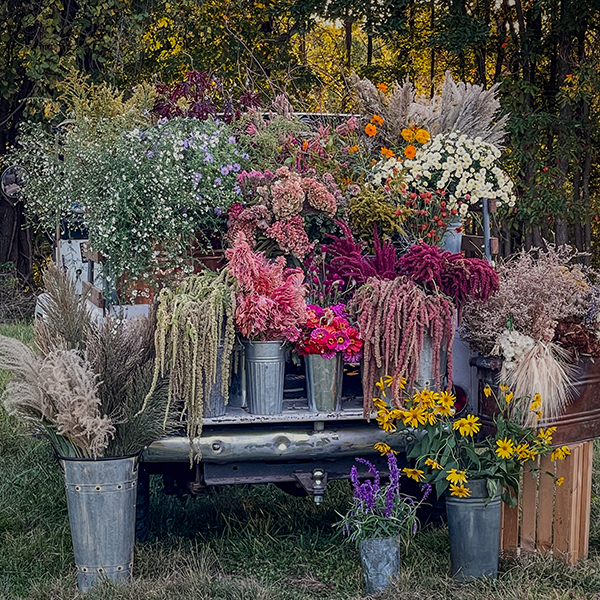
Grow your own palette of colors for weddings. All photos courtesy of the author.
For years, weddings were dominated by glossy catalogs, stiff traditions, and a lot of perfect that didn’t leave much room for what’s real. The wedding industry felt like it belonged to someone else — someone with more money, more polish, or more interest in pomp than most of us flower farmers could ever muster. But millennials don’t see it that way.
Millennial wedding professionals — the planners, florists, and coordinators now running the show — value collaboration and authenticity. They don’t want to boss everyone around or force a ballroom to look like a magazine spread; they want to tell stories and build experiences that reflect the couple. They care about sustainability, they care about community, and they care about working with people whose values align with theirs. That means you.
Sidebar: The Millennial Couple Mindset
- Value authenticity over spectacle.
- Prefer local, seasonal flowers that reflect place and time.
- Make eco-conscious choices: low waste, fewer imports.
- Focus on meaning and individuality over tradition.
- Often paying for their own weddings, giving them freedom to decide without parental pressure.
That’s the crux of the opportunity right now: for the first time in a long time, what we as flower farmers naturally value — sustainability, authenticity, and beauty that feels alive — is exactly what the wedding world is asking for.
And millennial couples? They are not their parents. They are not chasing status or filling guest lists just to prove a point. In fact, many of them are paying for their weddings outright or participating in the wedding budget and don’t feel beholden to let the tastes of parents dictate. They want intimacy, meaning, and experiences. They want their wedding to feel like them — not like the cover of a bridal magazine. They’re already on board with local food, local breweries, local makers. Of course they’re going to see the appeal of local flowers.
Why I’m talking to you
I say this as a wedding professional that started out on the planning side, then moved into venue, planning and customization, where I fell in love with floral design. Flowers are the beauty and emotion of the day. They are the soft representation of love that expresses itself in all aspects of the wedding day, and that takes everything out of the right-angled world of tables, chairs and churches, and adds those soft curves, colors and fragrance that above all the other vendor elements of the day, make it unforgettable for the couple family and guests.
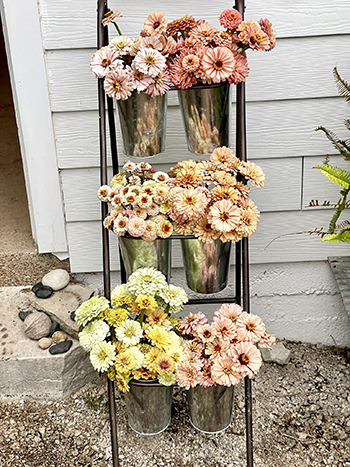
Flowers that are important for local growers are being bred with more subtle colors that are good for weddings.
Flowers are so important to me, and the international flowers flown into the country to wholesalers fell so short of what wedding flowers should be, that I started growing flowers to match my own expectations. That puts me in a funny position — one foot planted in the rows with all of you, and the other standing inside the wedding industry. From that spot, I can point out things you wouldn’t even know to ask yet, and I can be honest about what’s worth your energy and what isn’t. My hope with this series is not to push you into weddings, but to help you see the landscape clearly so you can decide, in your own way and at your own pace, if and how you want to step in.
How we’ll do this together
I want this series to feel less like a lecture and more like a conversation. I’ll share what I’ve learned, but I’ll also be listening and answering questions along the way. You’ll see extra videos and visuals on the Queen Bee social media feed, and if something doesn’t make sense, you can ask. I’m not just talking about weddings — I’m here to walk through it with you.
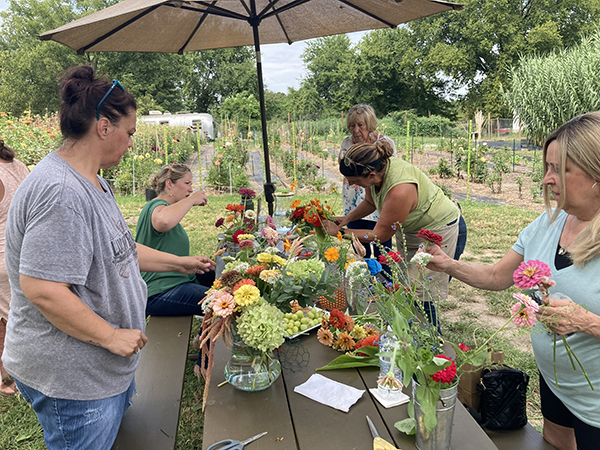
DIY flower classes at the farm are one way to try growing for weddings.
Fair warning, though: this is going to be a deeper dive into wedding flowers than you might expect. You’ll learn things you didn’t even know you didn’t know. But if you hang in there, I promise — on the other side, you’ll have a new appreciation for wedding flowers, and maybe even more excitement to grow them than you thought possible.
Understanding the wedding ecosystem
Before we talk about selling, let’s pause and look at the landscape you’d be stepping into. Weddings can feel like an intimidating industry from the outside, but once you break it down, it’s really just a system of people — planners, florists, and couples — all trying to create one beautiful day. As a grower, you get to decide where (or if) you want to fit in.
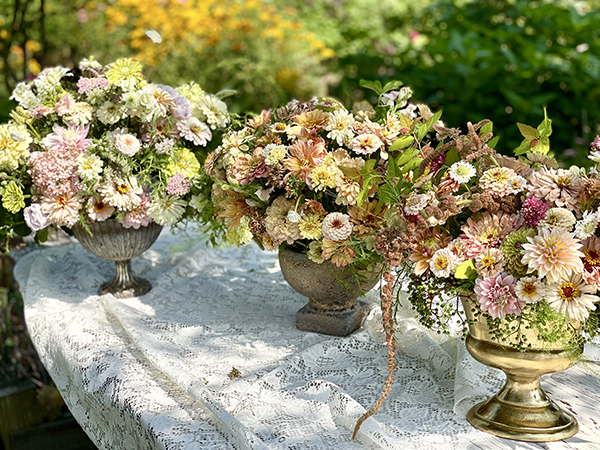
Farm fresh bridal arrangements.
Think of it this way: flowers can move through several different doors to get to a wedding. Sometimes they go farmer → florist → couple. Sometimes it’s farmer → planner → couple. Sometimes it’s farmer → couple directly. Each of those paths has different expectations, but all of them start with the same thing: reliable, beautiful flowers grown by you.
Here’s a quick sketch of the roles:
Planners & coordinators – They oversee the moving parts of a wedding, from the venue to the timeline. They may or may not care about sourcing flowers directly, but they often influence where the budget goes.
Florists & designers – These are the hands-on creators who turn stems into bouquets, centerpieces, and installations. Many are hungry for local flowers, especially those working with millennial couples.
Couples – Some couples want a florist to handle everything; others want to buy buckets of stems and DIY with friends. Both can be opportunities for farmers.
Wholesalers & middlemen – Still part of the picture, but less relevant if you’re growing local and working directly with your community.
The point is: there isn’t just one way wedding flowers happen. There’s a whole ecosystem of possibilities. Some are small and approachable (selling buckets to DIY couples). Others are bigger commitments (supplying a florist every weekend). And eventually, if you choose, there’s the path of designing yourself. But right now, all you need to know is this: weddings are not one giant door you have to storm. They are a hallway with many doors. You get to choose which one you knock on, and how far in you want to step.
Sidebar – The Wedding Ecosystem & their priorities:
- Planners & Coordinators > They care about timelines and budgets. They’re juggling dozens of moving pieces, so if they know your flowers will arrive on time and as promised, you instantly become valuable to them.
- Florists & Designers > They care about consistency and freshness. They want stems that hydrate well, hold up through the wedding day, and come in colors that work with palettes. Once you deliver consistently, they’ll buy in volume.
- Couples > They care about personal expression and meaning. They want their flowers to feel like *them*. If your blooms reflect a story, a place, or a season, you’re already speaking their language.
- Wholesalers & Middlemen > They care about volume and efficiency. Not every farmer wants to fit into this model, but it helps to understand that their priorities are very different from the intimacy of weddings.
By seeing what matters most to each role, you can start to imagine where your flowers might naturally fit — without forcing yourself into a lane that doesn’t feel right.
The big questions to ask yourself
Before you order seeds or call a florist, pause and ask yourself a few honest questions. Growing for weddings isn’t for everyone, and that’s okay. But taking the time to reflect now will help you decide whether this lane fits you — and if it does, how you might want to start.
1. Do you like the idea of your flowers being part of weddings?
This may sound obvious, but it matters. Some farmers light up at the thought of their blooms in a bride’s hands or on a family’s table; others prefer to sell at markets or through CSA shares and keep weddings out of the mix. Neither is wrong. Which feels like you?
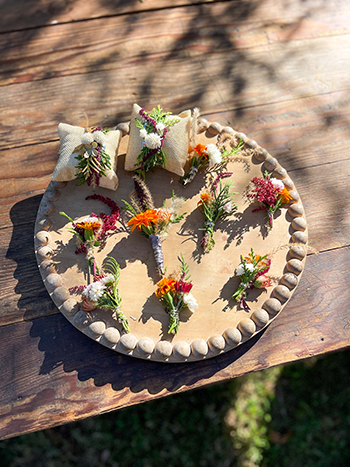
Personal flowers for a fall wedding.
2. How do you feel about deadlines and expectations?
Weddings don’t move. Rain or shine, happy or stressed, the date is set. That means crops need to be ready when they’re supposed to be ready, and relationships need to be clear and dependable. If that excites you — if you thrive on structure — weddings may be a good fit. If that makes your stomach flip, maybe test the waters gently.
3. Do you enjoy collaboration?
Supplying flowers for weddings often means working alongside florists, planners, or couples. If you like being part of a bigger picture, it can be energizing. If you’d rather hand over a bucket and walk away, that’s fine too — but it’s worth knowing where you fall.
4. Do you already grow crops that fit weddings?
Not every flower has a place in a bridal bouquet. But many farmers already grow “wedding-worthy” crops without even realizing it — lisianthus, dahlias, cosmos, snapdragons, amaranthus. If you’ve got these in your rows, you may already be closer than you think.
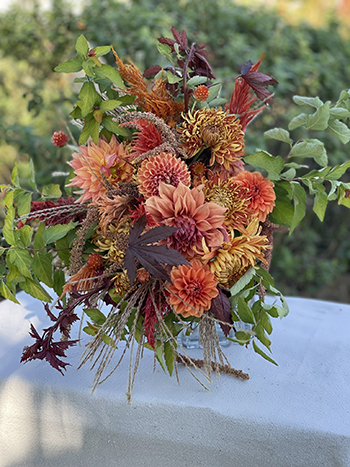
Today’s fall bridal bouquet – detail rich and asymetrical.
5. How does this fit with your current sales streams?
Think about the shape of your season. Does adding wedding flowers complement what you’re already doing — or stretch you thin? If you’re heavy into markets or wholesale, can weddings layer in without overwhelming you?
6. How do you feel about being part of a once-in-a-lifetime event?
Weddings are high-stakes in the sense that they only happen once. For some farmers, that feels thrilling — your blooms become part of memories that will last forever. For others, that pressure feels like too much. Be honest with yourself about where you land.
7. Do you enjoy growing in palettes?
Wedding flowers often work best in cohesive color families — blushes, creams, moody burgundies, soft pastels. Some farmers love curating beds by color; others prefer the riot of variety that comes with farmers market bouquets. Neither is better — but it’s worth noticing what excites you more.
Here’s the truth: you don’t have to answer all these questions right now. But even thinking about them will help you see where you fit, what excites you, and what might need adjusting if you take this on.
The opportunity and the fit
If your answers to those questions leave you feeling curious — even a little bit excited — then let’s talk about what “growing for weddings” can actually look like. The good news is: you don’t have to go all in from day one. There are many ways to participate, and each one can be a good fit depending on your farm, your season, and your comfort level.
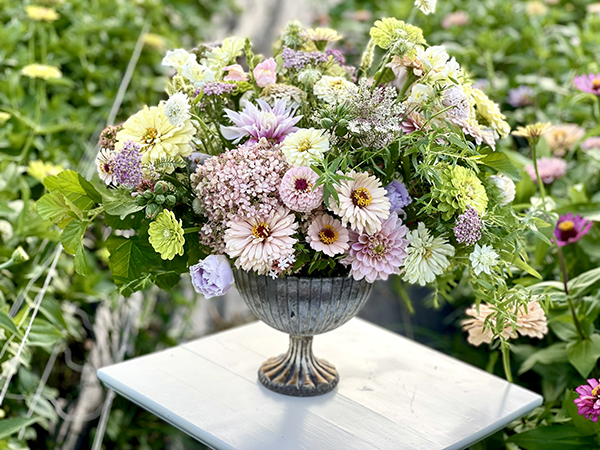
Farm fresh and wild wedding blooms.
Think of it as a spectrum:
1. Supplying DIY couples
Some couples want buckets of flowers to arrange themselves with friends and family. It’s casual, low-pressure, and often seasonal. Your role is simply to grow beautiful flowers, harvest them well, and hand them off in bulk. This is the shallow end of the pool — a great way to test the waters.
DIY Couples: This might look like handing off two or three buckets on a Friday afternoon and knowing they’ll be tucked into a garage until Aunt Linda and the bridesmaids put them into jars the next morning. It’s casual, sweet, and often low-pressure — though you’ll want to be clear about stem counts and freshness, so expectations stay realistic.
2. Partnering with local florists
Many florists are eager for local blooms to supplement their wholesale orders. This often means selling by the stem or bunch, and it requires reliability — clear communication, good post-harvest handling, and consistency. It’s a step up in professionalism but still keeps you mostly on the farming side.
Partnering with Local Florists: Florists will often want confirmation weeks in advance of what’s coming on. They may ask for very specific colors or varieties, especially if they’re building around a wedding palette. The upside? Once they trust you, they’ll happily buy in volume, and they’ll often pay promptly because their own businesses depend on your reliability.
3. Building relationships with wedding professionals
As planners and florists come to know and trust you, you may be asked to grow specific crops, reserve certain dates, or even provide regular deliveries during wedding season. This is where weddings can become a meaningful revenue stream — steady, predictable, and worth planning crops around.
Building Relationships with Wedding Professionals: This is where you may find yourself growing to order — maybe a planner knows she has five weddings next August that all call for blush lisianthus, and she asks if you can set aside quantity to cover those needs. It requires more intention on your part, but it can become one of the most stable income streams on your farm.
4. Becoming a farmer florist / designer (a future step)
This is where you not only grow the flowers but also arrange them into bouquets, centerpieces, and installations, and set them up, do floral styling, installations and on-site floral design work. It’s a completely different level of involvement — and it’s not what we’re focusing on here. (We’ll save that conversation for Part Four in this series, because it deserves its own deep dive).
The point is: you get to choose your lane. Growing for weddings doesn’t mean redesigning your farm or taking on every Saturday from May through October. It might mean setting aside a few rows of lisianthus, dahlias, or celosia, and offering them to florists or couples. It might mean saying yes to one DIY bride a season and seeing how it feels.
Whatever you choose, remember this is not an all-or-nothing commitment. Weddings can be a side lane that complements what you’re already doing — and you can always shift your level of involvement as you learn what works for you.As always, please don’t hesitate to reach out with questions. You can find me on social media as Queen Bee Blooms Flower Farm or at queenbeeblooms.com
I’ll see you back here next month as we dive into:
Laying the groundwork: crops, partnerships and promotion
Elizabeth Fichter is a flower farmer, botanical artist and writer who grows flowers as Queen Bee Blooms, and created floral art as Floral Alchemy in St. Louis Missouri. She can be found on social media @QueenBeeBlooms. Queen Bee Blooms specializes in seasonal local floral design, CELOSIA, unique seed mixes and varieties, available at: queenbeeblooms.com.
Copyright Growing For Market Magazine.
All rights reserved. No portion of this article may be copied
in any manner for use other than by the subscriber without
permission from the publisher.