Produce-related human illnesses have received substantial media and regulatory attention over the past eight years. Food safety is an important part of growing quality produce, and increased numbers of required third party food safety audits and the impending Food Safety Modernization Act have created the need for improved food safety.
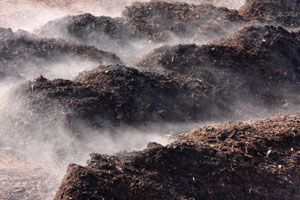 Animal-based compost should be handled carefully. Photo by iStock.
In 2013 the Rutgers On-Farm Food Safety Team conducted more than 40 farm food safety walk throughs of New Jersey farms. We found that many growers were instinctively including some food safety practices in their day to day activities. Instinct is a good place to start but it is not enough for farms to rely on, regardless of size or sales method.
Regional sampling to evaluate human pathogen risk on farms is key to developing appropriate risk reduction practices. Sampling during 2012 and 2013 yielded no pathogenic Escherichia coli (E. coli) samples, but did prove that irrigation water and animal based composts need to be carefully monitored.
Hows & whys of sampling
During the summer and fall of 2012 and 2013, 20 New Jersey farms were sampled for generic E. coli as a part of a USDA NIFA Specialty Crop Research Initiative grant through the Center for Food Safety and Security Systems at the University of Maryland. Additional sampling took place in Delaware and Maryland and future sampling in other regions is planned. Generic E. coli was chosen as the target organism since it is an overall indicator of sanitation and is of fecal origin.
While no pathogenic E. coli was found in any of the New Jersey samples, generic E. coli was found regularly. We expected to find E. coli as there are many types of E. coli found in most environments, yet we were unsure of the total number of colonies that would be found. Half of the farms sampled in New Jersey were certified organic and half used conventional farming practices. The sampled farms represent the diversity of farming in New Jersey ranging from small farms (less than five acres) to large farms selling into the wholesale market. The sampling results showed no difference in the amount or frequency of E. coli positive results between organic and conventional farms.
E. coli in irrigation water
Irrigation water was sampled from many types of source water: deep wells, shallow wells, streams, lakes, ponds and dug irrigation ponds. The sampling results showed that generic E. coli was consistently found in all of the surface water sources, while well water was typically free of E. coli. These results were not surprising since open water is subject to run-off, wildlife and human intrusions. Surface water sources have potential to contaminate irrigated crops, specifically ready-to-eat crops. During the sampling period, we found that most farms were using drip irrigation with their surface water sources, thereby reducing the risk of contamination. Generic E. coli levels were high enough to warrant drip irrigation use and other measures to keep the water off of edible crops. We also found that when surface water tested positive for E. coli, the end of the line sample (drip or overhead) also had a positive reading for E. coli. There was not a significant difference in E. coli levels between the source water and the end of the line. This showed that E. coli has the ability to travel the length of the piping and drip tape without a population reduction.
E. coli in composts
Animal-based composts can be an integral part of a farm’s nutrient cycling. Only one farm sampled was using animal-based composts during the sampling time period. The farm composting system followed National Organic Program (NOP) regulations which also coincides with standard Good Agricultural Practices (GAPs). Samples were pulled from the finished compost at three different time periods during the summer and just over half of the samples tested positive for generic E. coli at levels higher than generally accepted compost standards. The results of this sampling correspond with the recommendation to apply properly composted manures at least two weeks prior to planting and at least 120 days before harvest. Additionally, animal-based composts should be located away from production areas and in a spot that does not allow water runoff to travel from the compost area into production fields.
Attention should also focus on locations of animals and their manures on the farm. Crops should not be downhill from manure storage areas, pastures and animal housing. When space is limited this can be difficult to avoid and ditches or berms should be constructed to prevent water running into the crop from the animal and animal-based-compost areas. Crop rotations and existing structures can limit your options, but our sampling results showed the potential of E. coli movement from animal pastures into the crop area during a rain event.
Postharvest sanitation
During the summer of 2013 tomato samples were taken at five farms to evaluate the effectiveness of a postharvest sanitation step to reduce cross contamination. This involved sampling tomatoes prior to and after the washing. Not all farms wash tomatoes and we advise that water not be introduced to the packing process unless it is deemed necessary. Twenty pre-wash tomato samples yielded four E. coli positive results while twenty post-wash samples yielded zero E. coli positive results. All wash water included a sanitizer and the sampling results indicate that the sanitizer was used in a manner that allowed it to effectively reduce generic E. coli levels. Whichever sanitizer growers choose, follow the label instructions regarding concentration, pH, contact time and water temperature. These instructions will vary depending on the sanitizer.
Food Safety Act
We expect the implementation of the Food Safety Modernization Act to affect a sizable number of mid-sized farms due to high volumes of direct market sales. The produce rule is still pending, but as it is currently written farms with 51% or more of retail sales with a value of $500,000 or more will not be exempt from FSMA. Farms with 51% or more of wholesale sales with a value of $25,000 or more will not be exempt from FSMA. The dollar value of sales is the total amount of human and animal food sales from the farm. Hay, grain, fruits and vegetables, pies, canned goods, and chewing gum all qualify as food sales. Growers need to think about FSMA when developing and tweaking their business plans and incorporate food safety measures as appropriate to the operation. We strongly encourage growers to comment on the pending produce rule which will be re-released this summer.
Developing a plan
Preparing for FSMA, third-party audits or customer questions starts with evaluating food safety risks on your farm. Identifying the risks and the procedures that are already in place to reduce that risk is the first step. Second you will need to recognize the changes that need to be made to further reduce risk and establish a realistic time frame to implement those changes. Prioritize these changes by the level of risk and the estimated cost of each change. A food safety plan can then be written outlining the risks and the preventive measures already in place. The plan should be updated annually and reflect any production practice changes at the farm. There are several tools available online to assist you in writing your plan—you don’t need to start from scratch. For more information on small farm food safety and food safety plan development visit:
•Rutgers Plant and Pest Advisory Food Safety Resources and Blog
http://plant-pest-advisory.rutgers.edu//category/commercial-ag-updates/food-safety
•Center for Food Safety and Security Systems
http://cfs3umd.edu
•The Produce Safety Alliance
http://producesafetyalliance.cornell.edu/psa.html
•UC Davis Small Farm
http://sfp.ucdavis.edu/food_safety/
•On Farm Food Safety Project
http://onfarmfoodsafety.org
•Penn State Farm Food Safety
http://extension psu.edu/food/safety/farm
Meredith Melendez is Senior Program Coordinator, Rutgers NJAES Cooperative Extension of Mercer County. Wesley L. Kline is Agriculture Agent, Rutgers NJAES Cooperative Extension of Cumberland County.
Copyright Growing For Market Magazine.
All rights reserved. No portion of this article may be copied
in any manner for use other than by the subscriber without
permission from the publisher.