








Editor’s note: The number of farmers markets in the US has nearly quintupled over the last 20 years, though growth has been much slower over the last few years according to USDA statistics. Aggregators like food hubs and the co-ops described in this article have an important part to play in sustaining the momentum of the locally-grown movement.
With word that Amazon has purchased Whole Foods, farmers can be sure that the downward pressure on prices will continue. Farmers in many regions report declining CSA memberships and farmers market sales. Producers will have to think hard about the sustainability of their operations with regard to marketing and pricing amidst changing consumer expectations.
A model that deserves consideration within this changing landscape is the co-operative. Co-operatives have a long-standing presence in agriculture. Producer co-ops achieve economies of scale for marketing. Consumer co-ops sell groceries to many consumers and many farmers buy inputs through co-ops. Financial co-ops, or credit unions, provide financial services to many rural communities. There are even examples of land ownership and worker co-op models in agriculture.
Co-operatives are a unique business model because they serve the interests of their member owners. Co-ops give smaller scale producers with limited resources access to an infrastructure that contributes to their capacity to aggregate, value-add, market, distribute or meet any other need defined by the membership. Ultimately, the co-op is in service of the economic viability of its members.
Without external shareholders to pay, the profits generated by co-ops remain in the communities where they operate – reinvested back into the co-op, or returned to their members in the form of dividends.
Despite their utility in the agricultural sector, co-operatives get little attention from a policy or business perspective. This needs to change. Co-operatives are part of a solution to the challenges facing local agriculture.
There are some innovative models we can look to that demonstrate how co-operatives could be better utilized in the agricultural sector.
Over two weeks in June, I had the opportunity to join other farmers and a group of local credit union staff on a study tour in Bologna, Italy. The focus of the tour was the agricultural co-operative sector.
The Bologna region is unique because of its co-operative sector. It is located in the heart of the Emilia-Romagna region, which is an agricultural center of Italy. Agriculture in this region makes up 4% of the region’s employment, while the overall agrifood system (including agriculture, food science, distribution, retail, and restaurants) makes up 16.7% of the region’s employment.
Co-operatives are integral to the overall economy of the region. While only 1.3% of businesses in the region are co-operatives, they generate approximately 15% of the region’s employment and 20% of the region’s GDP. Co-ops play an even larger role in agriculture and agrifood systems. 95% of the region’s wine is produced by co-operatives. Co-operatives pack and distribute much of the fresh produce, meat, and dairy. Over 60% of the region’s groceries are purchased through consumer co-operatives.
In many ways, Italian farmers are facing the same challenges as farmers in other parts of the world. The production of agricultural land is decreasing, the age of farmers is increasing, and many rural areas are depopulating. Global trade has made it more difficult for individual operators to access markets.
By working together in co-operatives, the farmers of Emilia-Romagna have been able to respond to the global pressures on agriculture. Co-operatives have allowed farms to specialize, produce high-quality, value-added products, and sell into an international market.
The specialty products of Emilia-Romagna farmers are known around the world. At each step of the food system Italian co-operatives add value to the products being produced, increasing the economic return to their farmer members. For example, farmers don’t just produce milk; they make Parmesan cheese. Farmers don’t just grow grapes; they make high-end wines and balsamic vinegar.
Now, agricultural universities in the Emilia-Romagna region are at enrollment capacity and many see new opportunities to maintain the region’s agricultural strength into the future.
Some of the key lessons from the study tour are:
Supporting diversity of scale
The processing co-operatives we visited had many farmer members—up to 1,400 in some cases. These members were not uniform in size. Some farm a couple of hectares while others farm 25 to 30 hectares. (A hectare is approximately 2.5 acres.) The co-operatives are open to members of all sizes. This supports a diversity of farmers to continue producing when many would otherwise be unable to access markets on their own. In turn, most co-ops have rules that require members to sell exclusively to the co-op.
The primary lesson learned in this example is that co-operatives can scale up and take advantage of new opportunities while respecting and supporting a diversity of scales of farming.
Co-ops require intensive communication
Co-operatives are designed to be democratic organizations where each member gets one vote. This differs from corporations where vote share is determined by shareholder investments. In larger co-operatives, however, many members make for more complex democratic processes. A key element of any co-operative is keeping members engaged with the organization and ensuring the co-op itself responds to member concerns. This is also where co-operatives can get messy. Consultation and communication take time and requires facilitation skills. This can become even more difficult when co-operatives become larger.
In each example we saw in Italy, successful co-operatives placed a priority on maintaining intensive and transparent communication with their members. Co-ops over a larger geographic region often employ regional councils to ensure members are able to meet regularly to communicate their needs and concerns to the larger organization. Extension services also help provide a communication link between farmers and the co-operatives’ management.
Potential to scale up
The co-operative model is used in Italy for a variety of start-ups, in addition to the older, larger, established organizations. One of the North American critiques of the co-operative model is that it isn’t useful for start-ups or that it can’t scale up. The Italian example proves both of these assumptions false. The Fattoria Rio Selva co-operative is a start-up co-operative of young farmers who are taking over a permaculture radicchio farm from an older farmer. The co-operative structure provided a legal framework for them to transfer the land to, and also a democratic structure that was true to their values of member participation and self-governance.
Many of Italy’s older agricultural co-operatives are quite large, resulting from mergers over the past two decades. In some instances, this allowed co-operatives to better access global markets and achieve economies of scale. In other instances, healthy co-ops were able to merge with weaker co-ops during the financial crisis, diversifying their asset base and ensuring farmers of the weaker co-ops continued to have a market for their products.
Competition amidst co-operation
The use of the co-operative model doesn’t exclude competition. The co-operatives all operate in open markets, many on an international level. While the co-operatives provide benefits to their members and their local communities, they achieve market share through their focus on quality. In addition many co-operatives compete with other co-operatives, both for market share, but also for farmer members. Wine co-operatives strive to produce the highest quality of wine in order to provide the best support and financial return to their farmer members. This, in turn, may attract farmers to one co-operative over another.
Keeping processing jobs
A key benefit of the agricultural co-ops to the larger regional economy is that the organizations maintain local processing activity. This is especially true for worker-owned co-ops, where outsourcing jobs to other countries would undermine the very purpose of a worker co-op. Within the agricultural context, the processing happens locally, ensuring perishable product is processed at its peak ripeness, maintaining a base of local processing jobs.
Management expertise
Any new co-operative will require the involvement and dedication of members. Operating another business off the side of your desk is probably more than most of us could handle. The Italian examples, however, have worked to achieve scales where they are able to hire managers and staff that operate their co-operatives.
Market response
A key message we heard throughout our trip was that Italian consumers increasingly demand environmentally responsible production of their food products. Co-operatives have helped farmers adapt to these demands through extension services, restricting the use of GMOs, and marketing products in response to consumer demands. In some instances, co-ops have focused on Integrated Pest Management (IPM) practices to reduce chemical use. In others, they have helped coordinate transition to organic certification by ensuring market access for products. Overall, 8% of Emilia-Romagna’s agricultural land is farmed organically, but co-operatives are prevalent across the entire sector, not just with organic producers.
It’s all about quality
Italian co-operatives place a high importance on overall quality. Many producer co-operatives provide extension support to their growers to help them achieve the highest quality possible. By requiring members to sell exclusively to the co-op, the co-op is also assured it will receive the highest quality product and that growers will not undercut the co-op in the marketplace.
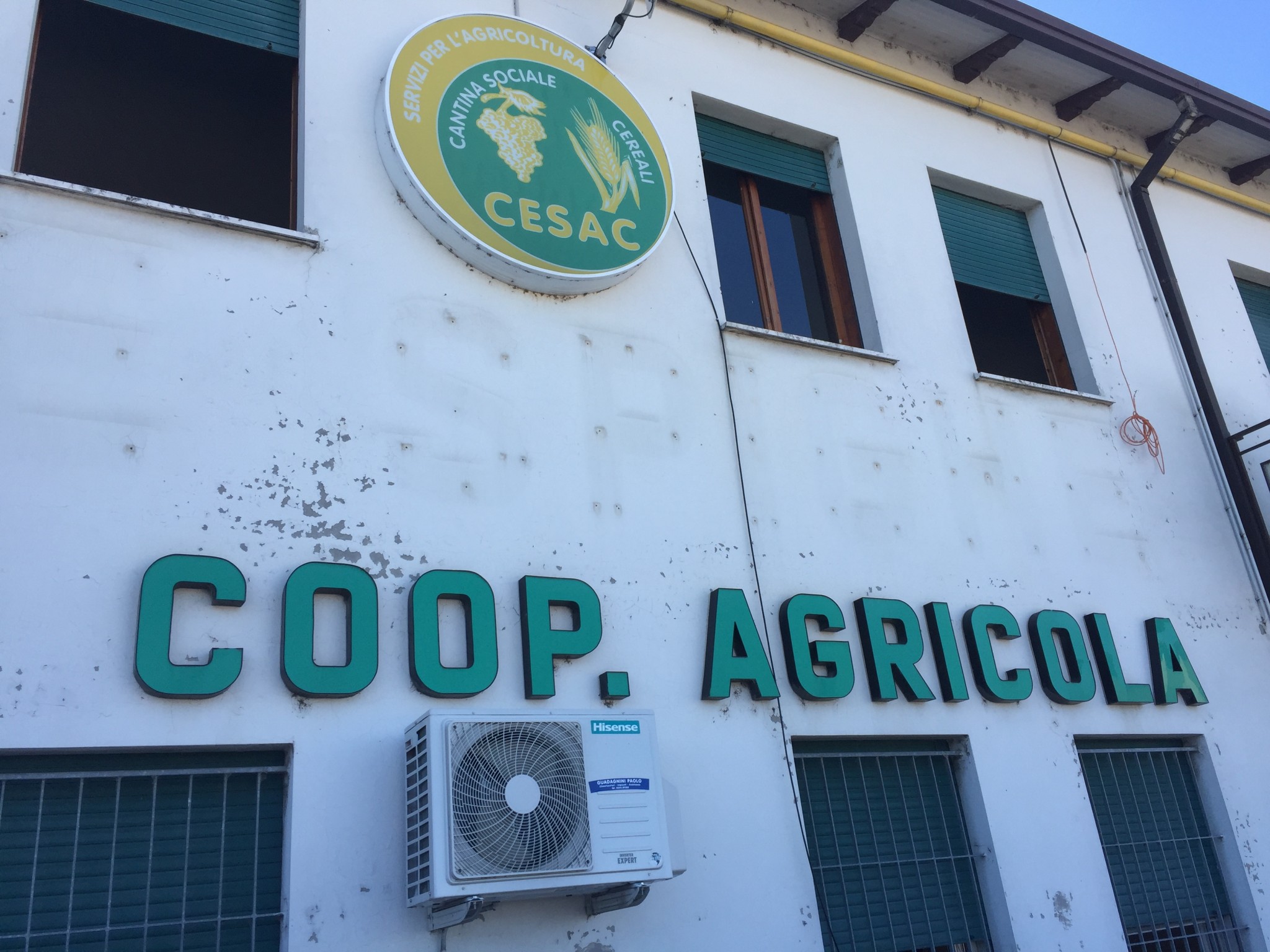
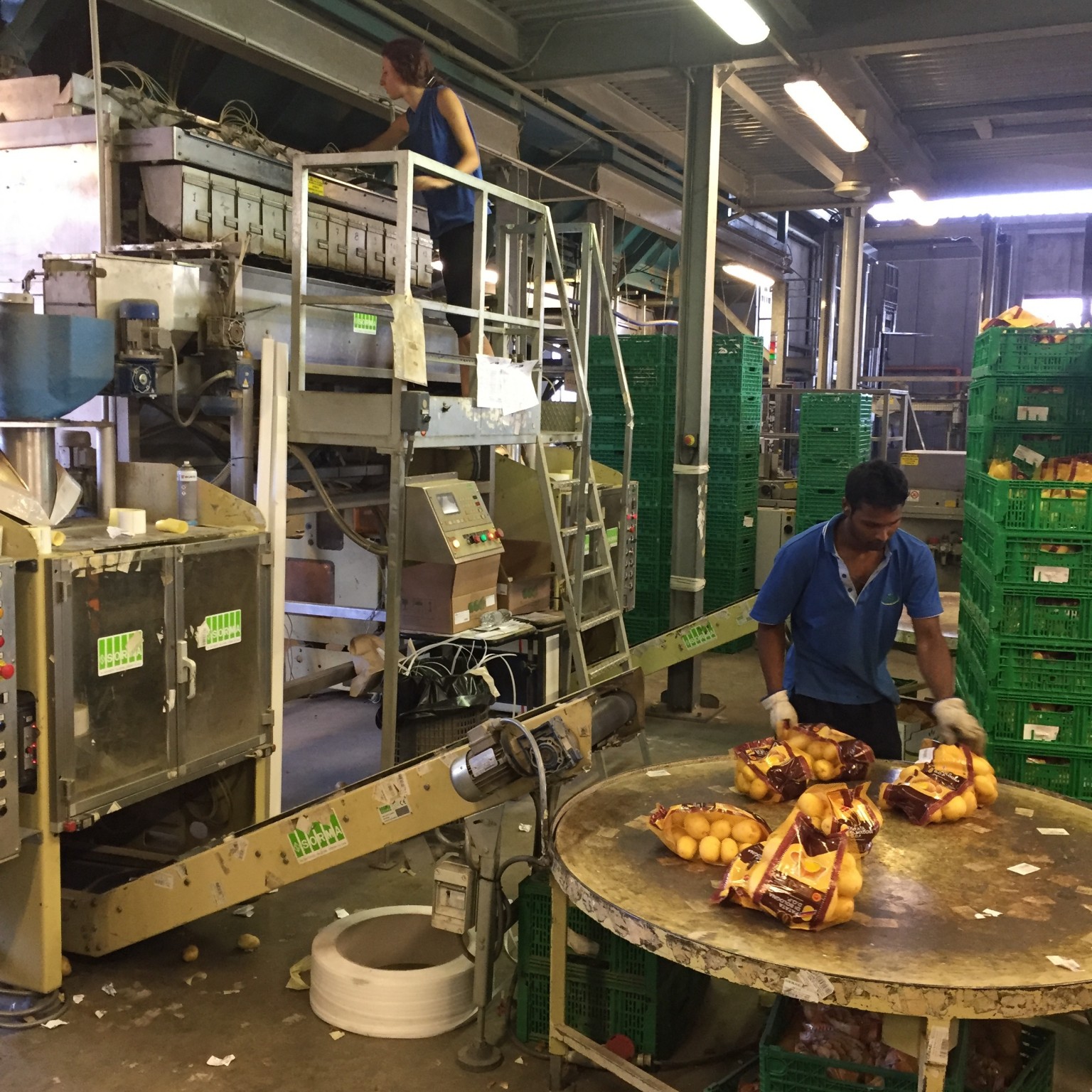
One branch of the CESAC co-operative near Bologna specializes in onion, carrot and potato processing. The highest quality products are cleaned and packed for fresh distribution across Europe. Lower-grade products are sorted out during packing and sent to a secondary processing facility where they are cleaned, peeled, chopped and bagged for distribution to institutional caterers. This achieves a higher price by adding value to product that might otherwise be discarded. Peelings and other food waste is then sent to farmer-owned biodigesters where gas is produced for energy and organic matter residue can be incorporated back into the soil.
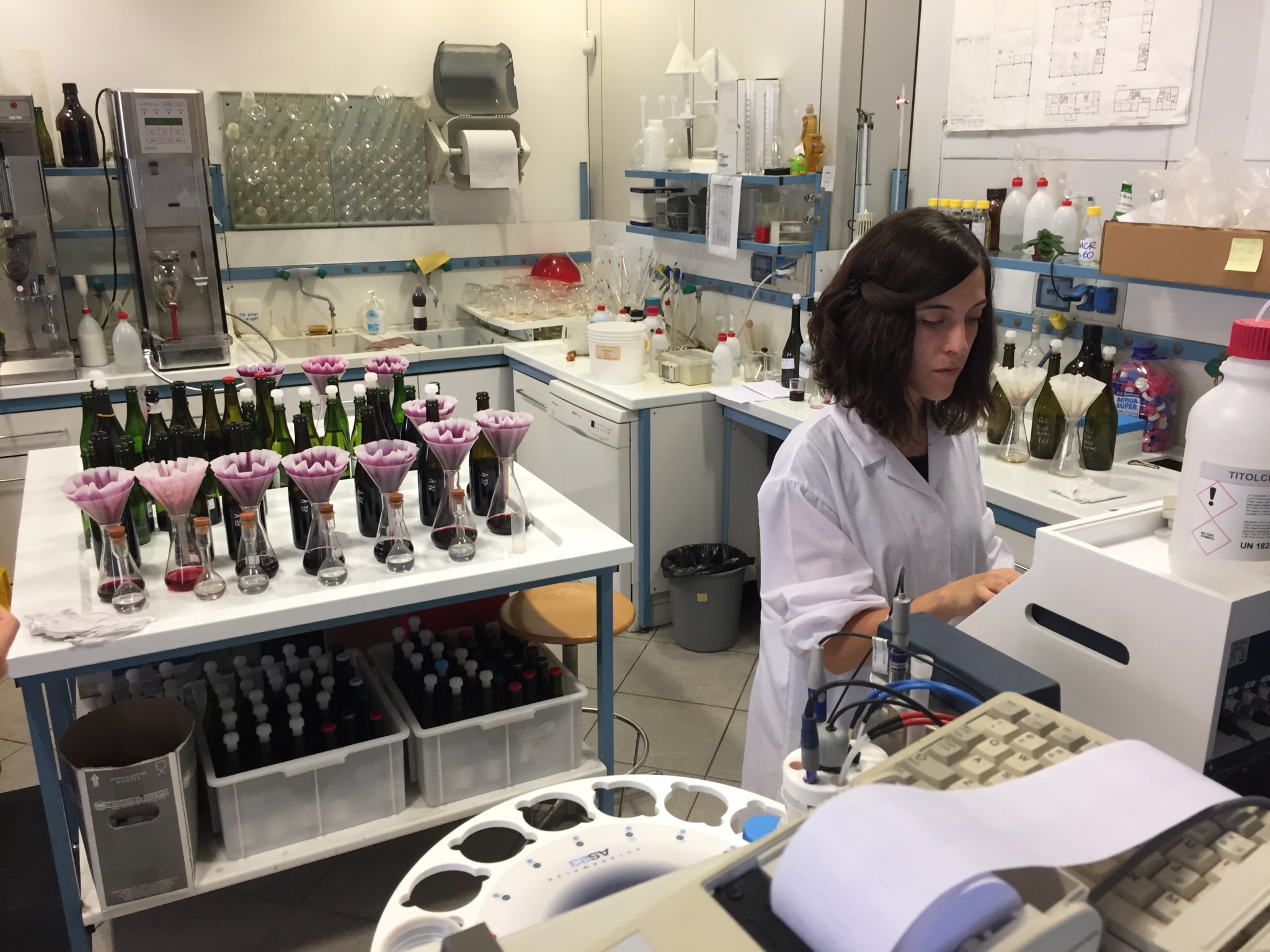
In another example, the Cantina di Sorbara wine co-operative has a full-time lab that tests grape samples and wine batches daily, a task individual producers could not achieve on their own. By investing in these processes, the winery is attaining regional certification attesting to the quality and terroir of their product. This, again, helps achieve a higher price in the marketplace.
It’s also about logistics
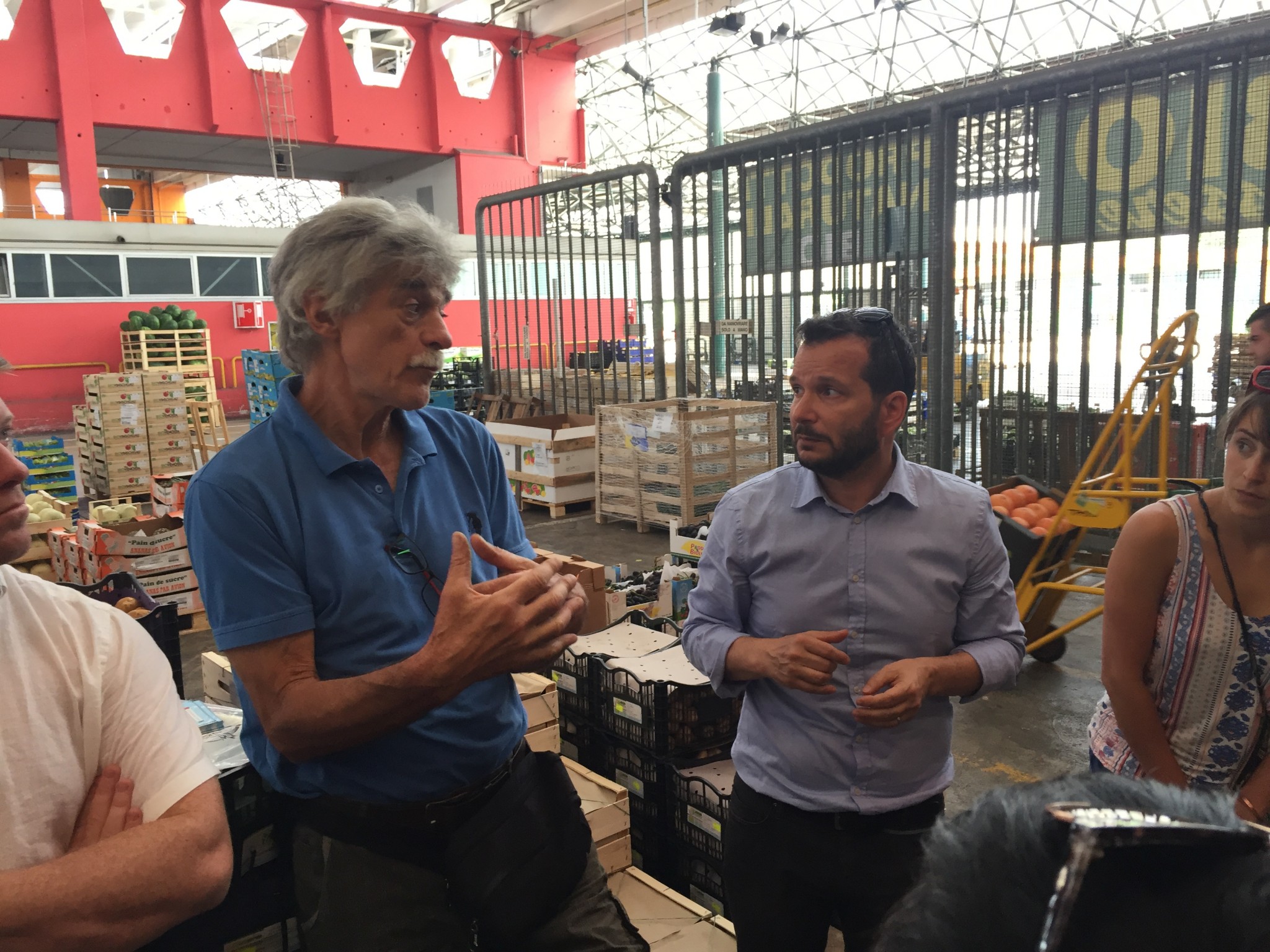
An efficient food system ultimately comes down to being able to move the food products to market in a fast and efficient manner. We visited two distribution centers where many distributors are housed in one facility. In many ways, these food centers are similar to food hubs being developed in North America. By co-locating, distributors have been able to achieve logistical systems that support getting their product to market. Buyers are able to visit one facility and purchase from over 35 distributors, representing hundreds of farms.
The Bologna distribution facility can load 30 trucks an hour, sending produce across Europe each day. The distribution centers are not necessarily co-operatively owned, but they operate using co-operative principles, including the sharing of resources. But some grower co-operatives have also benefited greatly from their involvement in these distribution centers. One organic co-operative of 35 farms, el Tamiso, has been able to grow sales at a rate of over 10% annually by being able to access improved logistical services through similar shared facilities in Padua.
Building resilience
A key lesson from the Italian co-operative model is that co-operatives are incentivized to save during good times in order to be better prepared for the bad times. Profits are not taxed if they are kept within the co-operative as “indivisible reserves.” These reserves cannot be paid out to members, but can be used to stabilize the co-op during poor economic conditions. This helps to achieve balance in the co-ops’ annual finances; they attempt to achieve the best possible return to the farmers for their products while building reserves to support the long-term well being of the co-op.
This tax situation is unique to Italy. Yet the lesson for us is that co-operatives must take a balanced approach to paying producers the highest price possible for their products while also building reserves for weaker economic times. With this balance, co-operatives are better able to weather economic downturns without compromising their support and services to members. It also allows them the ability to take advantage of opportunities that require capital investment.
The results of this planning are clear: during the economic crisis of the past decade, the number of businesses in the region decreased by 1.9%, while the number of co-operatives actually increased by 5%. During the same period, employment decreased by 3.8% while employment in co-operatives went up by 3%.
Putting the lessons to work
The co-operative model isn’t foreign to North American agriculture. Dairy co-operatives in the United States represent producers in negotiating prices with wholesale buyers. Other dairy co-ops are vertically integrated, processing and marketing their members’ products.
In the Pacific Northwest there are examples of farmer-owned co-ops that are helping growers aggregate their products and achieve broader market access to sell in higher volume. The Puget Sound Food Hub markets the products of about 50 farms in the Mount Vernon area, including both produce and livestock products. The food hub better serves customers such as restaurants and retailers who are able to purchase a wider variety of local product through a single online ordering platform. Farmers benefit by accessing new markets, but also by allowing them to focus on where they create the greatest value – in the field, growing their product.
The Snoqualmie Valley Farmers Cooperative is another Washington-based growers’ co-operative that aggregates the produce from 20 farms. The produce is sold through a subscription box program and in bulk to restaurants, cafeterias and for special events. LINC Foods markets the products of 45 farms around Spokane.
In the Comox Valley of British Columbia, Merville Organics operates at a smaller lever, allowing three farms to work together to market their product through a CSA, to local restaurants and at farmers markets. Across British Columbia, seed growers have come together to form the BC Eco Seed Co-op in order to market their seeds in bulk quantities to other farmers and in packets to gardeners.
Communities have even come together in some instances to co-operatively own land in order to make it available at affordable prices to local farmers. This is the case for me as my family operates our business at Glen Valley Organic Farm Co-operative in Abbotsford.
As farmers attempt to stabilize markets and achieve security in their operations, co-operatives may provide a solution for many growers. The ability to work together and achieve scale for market access, providing a better return to growers, may prove to be an essential next step for the local food movement in North America.
Chris Bodnar co-owns and operates Close to Home Organics with his wife, Paige, at Glen Valley Organic Farm in Abbotsford. They operate a 145-member Community Shared Agriculture program and sell at two weekly farmers markets during the farming season. Chris teaches the Business of Agriculture course in Kwantlen Polytechnic University’s Sustainable Agriculture program.
Copyright Growing For Market Magazine.
All rights reserved. No portion of this article may be copied
in any manner for use other than by the subscriber without
permission from the publisher.