











By Richard Crout
After spending years working in a corporate environment and managing key performance indicators, I was excited about the prospect of farming without the overhead of data analysis. Gone would be the management by objectives, the need to determine return on investment and other such details on which the corporate world revolves.
Our family has farmed for four generations. The appreciation of an early spring, or the challenge of a dry August were all part of our DNA — something that I had grown up watching. We planted by the moon cycles, watched the spring to determine when the weather looked promising to turn the soil for the first time.
I set out early in life to make money, content to trade days away for better pay. Several years ago, I stepped away from that corporate world to farm full time. We had purchased a small run-down farm outside of Knoxville, Tennessee, and had been actively rehabbing it. A small greenhouse, valley, and barn seemed to be the perfect place to turn into a flower farm.
Over the years our enterprise, Crout Farm, grew and we added high tunnels, a tractor and opened up more fields. Farming was a nice change from office life. Despite the physical pains, farming and being with the land were the joys of our life. Our business was growing and we continued to find markets for our flowers.
Imagine my surprise when after several years of growing by instinct, I was seeing gaps in plantings, poor performance of crops, and inconsistencies in flowers. It was a conversation with an old farmer that started the process of changing my mind.
The old farmer reminded me what crop failure meant just a few decades earlier. When the subsistence crops failed, there were lean winters. If the cash crops failed, it meant making due with the old shoes and jeans for another year. The difference in failure and success was more than just numbers on paper; it was something you thought about every day until the first crops started to come in during spring.
“Don’t forget to use every tool in the shed,” she had said. I pondered it and soon realized that in some areas, I was not using all the tools in the shed.
The old farmers learned from watching nature and keeping up with trends. The results became codes available in publications such as the Farmers’ Almanac. Knee high by the Fourth of July was more than a witty saying, it was a way of life.
As flower farmers, we have a tremendous amount of data available. Beginning farmers can turn to a wonderful network of seasoned farmers who are very generous with their knowledge. Planting schedules, how to approach clients, post-harvest care are just a few examples of information a click away. This information provided a wonderful start to our farm. Building on that base with our own observations and farm experience is critical though. It becomes the foundation that helps turn flowers from good to great.
Each farm is different. Microclimates, soil conditions and growing seasons all play out in a complex symphony for which we are blessed to participate. To be fully engaged in that symphony means being on the same sheet of music, in rhythm with the seasons, and in harmony with the nature of our farm.
There is not a farmer who has turned a clod of dirt who at heart is not an optimist, and who with the benefit of faith sees a multicolored carpet of reds, blues, yellows and greens in a muddy March field. Adding science to our faith enables those visions to become reality.
I recently attended a presentation at the Association of Specialty Cut Flower Growers Conference given by Bailey Hale. His presentation showed the difference in quality of various flowers and what could be grown. There was a clear difference between a $2 stem of lisianthus and a $12 stem of lisianthus. The challenge was to use all the tools in our shed to improve the quality of the flowers, and hence the profitability of our farm. Changes such as better genetics, more attention to flowers that grow well in our specific area, and attention to climate data were all mentioned as ways to improve flowers and increase profit.
That presentation stirred my imagination toward how could we transform our flowers from good to great, by going beyond the cookie-cutter schedules to develop an approach to growing that was tailored to our farm.
Flower quality can be expressed in several characteristics. Stem length and diameter, flower and color uniformity, and vase life are just a few ways to measure the quality of a crop. On our farm in 2020, our snapdragons were of a very good length and diameter. Also, the colors were very bright, which resulted in good sales. These tremendous snapdragons were the result of a good plan and foresight, and good luck. What initially looked like a lousy season opener, turned out to be one of our greatest crops this year. I’ll use our snapdragons as an illustration for this discussion.
Looking at the characteristics, a number of factors can play into the growth and maturity of the flowers. While these are elementary to a farmer, it is helpful to look at them with a new perspective — not only producing a good crop, but tweaking the growth to try to grow remarkable flowers that will result in customer delight and improved profitability.
Sun: Sunlight is critical for growth. Managing not only for sunlight, but also for lack of sunlight can be important in producing great flowers. In the case of our snapdragons, our spring was more cloudy than normal, and we had a particularly cloudy early season. I remember looking at our sunflowers during this time and thinking, if only the sun would come out. While I lamented the lack of sun for the sunflowers, the snapdragons were soaking in the warmth, content to grow thicker and taller without flowering. In planning for 2021, I’ll remember the shady days of April 2020, and will add that note to my records: reduced sunlight impacted the growth and thickness of the stems.
Heat: Spring 2020 for us was a mild affair. We had our cool snaps, but we also had two to three week periods where temperatures exceeded 40 degrees F and frost blankets were lifted. In fact, on two occasions we started to pack up the frost blankets, only to have to return them for a cold period. Our last frost this year was about three weeks past our normal last frost. Like a casino where the house always wins, it’s always important to remember that Mother Nature always wins, we just get to play. Understanding the temperatures this spring, helps me to keep in mind that we will want to moderate our early snapdragons to try to keep them as cool as possible.
Water: We grew most of our snapdragons in a high tunnel. While we maintained a steady source of water for the plants, we had a couple of occasions where large rainfall events flooded into our high tunnel. The snapdragons didn’t seem to mind the excess water, continuing to grow taller. I’ll note in my records that rain seems to have a minimal effect. Likewise, our field-grown snapdragons did not suffer from being waterlogged.
Netting or support: Since we grew most of our snaps inside, I noted that we did not have wind pressure. For the snapdragons that we grew outside, we found that the stems were longer, but not as thick. Additionally, the outdoor snapdragons color was more muted compared to the high tunnel snapdragons. My observation here is to improve the quality of the low tunnels that we use for outdoor planting and leverage parts of our farm where the leeward wind is not as prevalent in the early season. We will also look to net our snapdragons in a couple of stages, so that we have a more stable platform for the flowers to grow.
Fertilization: Our fertilization routine this spring was to concentrate on leaving the ground better than we found it the previous year. Going into late summer, we planted the high tunnel in cow peas. We happen to love to eat purple hull peas, but we also wanted to fix nitrogen. The result was a great crop that provided nutrition through the winter, but also a rich soil to start the 2020 season.
Soil conditions: Soil conditions are one of the areas where we got lucky. This was year three in this particular high tunnel, and we were beginning to see a real loss of nutrition in the soil. My observation was that the early season floods, which were certainly not a part of our plan, brought in rich nutrients from the hills above. Our beloved farm is blessed with not one inch of flat ground, and the upper sections are fixed with old forest with lots of leaf debris. Time has brought many of those nutrients into the valley that we farm. By contrast, the soil in our outdoor snapdragon field was recently replenished with compost, and as the season started, the outdoor snapdragon fields grew at a much faster clip. The observation for our notebook is to look at proven techniques to improve the soil in the high tunnel.
Putting it all together: Just as each farm will be different, each year will also be different, and we make different observations. What was important one year will not be as important the next year. As I write this, we are experiencing another thunderstorm. This growing season has been marked by plentiful rain. Had you asked me what my number one goal going into the 2020 season was, I would have told you water dependability. In the past, we have suffered with late season droughts that have caught us without a dependable solution. Working off a well, we sometimes make the decision between a shower, or a sunflower — not really a hard choice on a hot day.
It goes without saying that 2020 will be one for the books, what with the COVID-19 pandemic, wild fires and hurricanes. As we stand on the edge of autumn, and reflect on the season that was, we can be thankful that we are here, and for many of us, that our customers have shown an increased appreciation for our locally grown flowers.
For our farm specifically, our florist business went practically to nothing, while our retail business flourished as more and more customers sought an escape from the dreariness of social distancing and bad news. Like most flower farms we also lost wedding business during this time. We are thankful to have our flowers and a place to be able to escape during periods of quarantine. So many of our friends were going stir crazy by late March.
As we take stock of our 2020 season, we look back and consider the year in light of the scientific method: Observation, Hypothesis, Prediction, Testing and Analysis. Our observations and hypotheses then become predictions that we can take and begin to apply for coming years. My observations come from several directions: from the plants, from the beds, and from the plantings.
From the plants side we can see the complete body of work. Did we have flowers that were simply remarkable and we can increase production, or even improve on the quality? In our example, our snapdragons did very well. Our production plan for 2021 will include new varieties, better succession plantings, and an increase in field plantings. Having seen the thickness of the stems, and brightness of the colors, we will set the new bar based on these flowers.
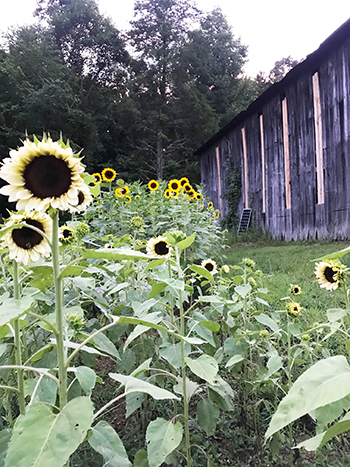
From a planting perspective, we can see the impact of weather on our season. For example, we struggled with our early season sunflowers. While physically impressive at 12 feet tall, customers were not really willing to pay more for these flowers. For our early season sunflowers, we will hold off planting until early April. Whether planted in March or April, these plants arrive around the same time. Holding off for a month allows us to commit growing resources to earlier greenery that can be part of our early bouquets.
The third part of our plan for 2021 involves the growing beds. By observing the areas during the growing season, we concluded that we will concentrate our early season growing in the back fields that are higher and not as susceptible to flooding, moving these fields into cover crops late in the summer in preparation for the following spring.
Taking these observations and back filling with specific data is the next stage in the process. For us that process has been to take a chart of climate data arranged on a calendar and overlaying harvests. With this data we can start to look at median temperatures and reflect on the climate impact.
Looking over our harvest data with the weather data, a temperature spike of 88 degrees F almost perfectly coincided with the first harvests of snapdragons on May 16th. Watching the trend line, the harvests continued into June as our high temperatures tended to stay in the high 70s to mid-80s. This is a good target temperature to know when snapdragons will be finishing.
While we can’t adjust the temperatures, we can build models: early spring, normal spring and a late spring. This year for us was a late spring. Going forward, we can build plans for all three scenarios and then adjust as the spring unfolds.
As I reflect on this season, I am reminded of that old farmer’s advice: “Use every tool in the shed.” Yes, I certainly tried and with each season I will learn more and apply those lessons, aspiring to grow remarkable flowers.
That old farmer, the one whose advice spurred me to observe and document the growth, was my mother. Those snapdragons, the ones which were the best we have ever grown, bloomed just two weeks before what would be her funeral. I’ve no doubt that she enjoyed the sight of those flowers, and that she would enjoy the part she had played in their development.
Richard Crout runs Crout Farm in Tennessee. He developed Flower Plan Pro as a tool to help growers manage their flower crops. Learn more at flowerplanpro.com.
Copyright Growing For Market Magazine.
All rights reserved. No portion of this article may be copied
in any manner for use other than by the subscriber without
permission from the publisher.