


Why we are obsessed and a strategy for productively managing our crushes
Whether you’ve been on the flower farming scene for a while or are brand new, you have likely been in this scenario. You’re sitting at your computer or holding your tablet or smartphone refreshing a webpage a thousand times as the clock ticks closer to the start of a sale. The anticipation has been building for days or weeks. Countless social media posts have prepared you for this moment. The countdown ends and you frantically start adding bare root roses to your cart.
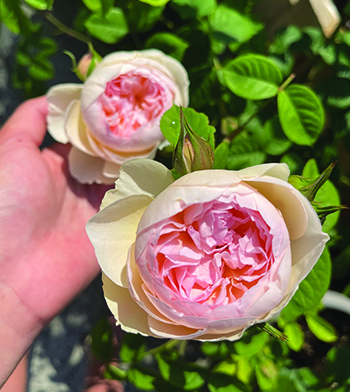 Lichfield Angel English rose hybridized by David Austin, purchased from Menagerie Farm and Flower. Photo by Viktoria of Moody Flowers.
By the time you checkout, you either got none of what you came for or you got so many new roses you aren’t sure what happened. What a rush. It’s an amazing feeling when you’ve scored the latest trendy rose that everyone is looking for. Or, perhaps, you’ve been left disappointed a second year in a row.
All you want is this one rose to add to your collection but you are never quick enough. The same thing seems to happen with dahlia tubers and even heirloom chrysanthemums.
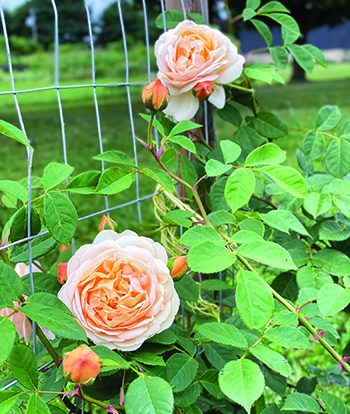 Teasing Georgia climbing English rose from hybridizer David Austin, purchased from Menagerie Farm and Flower. Photo by Marlee Rose Imbarrato of Fleur Flower Farm.
As I write, I am just in time for a dahlia tuber sale. The website crashed within one minute of the sale start time. Persistence mixed with a little patience paid off. Eventually, I got my order through. Unfortunately, the whole experience has left me feeling really frustrated.
Did I get everything I wanted? No. My ‘Askwith Minnie’ tuber was plucked from my shopping cart before I had a chance to type in my credit card information. There is no doubt that the seller on the other end is frustrated as well. Is it worth the pressure for both buyer and seller to have a sale at a specific date and time? My guess is, no.
The funny thing was I didn’t need more dahlia tubers. A lot of you might be in the same boat. I was pulled into the sale through social media. Hook, line and sinker. The “limit 1 per order” tag and higher price point seduced me. I needed these dahlias despite what the space on my farm was telling me. What exactly is driving this new obsession and enthusiasm for flowers? Much like the dahlia craze, roses are hot, and there are hordes of new flower farmers and backyard flower hobbyists popping up every place you try to score these plants.
Throughout history, flower trends have come and gone but these days the new trends happen often and fast. Thanks to social media, the flower farmers we follow and aspire to be tell us what we should be growing and what varieties we should be obsessed with. They also make it look so dang easy sending us all into a flower farming daydream of unrealistic proportions.
I’m currently swooning over my thoughts of frolicking in fields of homegrown tulips. Unless one day I trip over a bunch of free fields, this likely will never happen. Although, right now since I’m actually in the throes of tulip harvesting, the idea of entire fields full of them makes me shudder a little bit. There is just some sort of magic that happens when the pioneers of the modern day flower farms whisper sweet flower nothings in my ear. I can’t help myself.
It only took Erin Benzakein of Floret to say “roses” once and we all went into a rose buying frenzy. The desirability of certain roses have risen to new heights with even the most amateur gardeners or farmer-florists scooping them up when offered the chance. ‘Honey Dijon’ anyone? I would be lying if I said I haven’t fallen victim once or twice to the charm of David Austin roses and a good sale. I want all of them. I know I’m not alone.
Viktoria from Moody Flowers in South Brooklyn, New York, seems to agree. When asked what it is about roses that inspires her to collect them, she said: “My plant collection started from a desire to have a cutting garden for my floral design work. The reason I collect the varieties that I do is simply because of their demand, and if I’m honest, I want all the ones that are harder to get.”
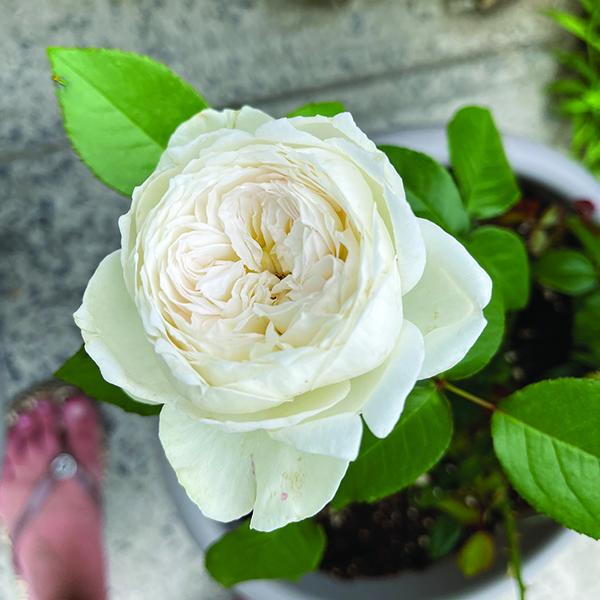 Bolero floribunda rose hybridized by Meilland. Purchased from Menagerie Farm and Flower. Photo by Viktoria of Moody Flowers.
Viktoria currently has 15 varieties of roses and enjoys getting to know how different types behave both for her work and out of natural curiosity. Florists doing wedding work have a hard time sourcing particular varieties that are popular among brides. If they do find them, they are often paying double the price and need to order way in advance. Many are turning to small-scale flower farming on the side to supplement the hard-to-get flowers, or roses in this case. This just adds to the frenzy of buying bare roots roses. Not only are home gardeners and farmers trying to buy these desirable roses, so are florists.
I recently asked Felicia Alvarez from Menagerie Farm & Flower in California’s Sacramento Valley her perspective on this rose obsession of ours. If you are unfamiliar with Menagerie, then you really need to get familiar with Menagerie. It is a glorious farm specializing in field grown garden roses, specialty flowers, French prunes, assorted stone fruits, nuts and rice. I dream of being able to visit one day.
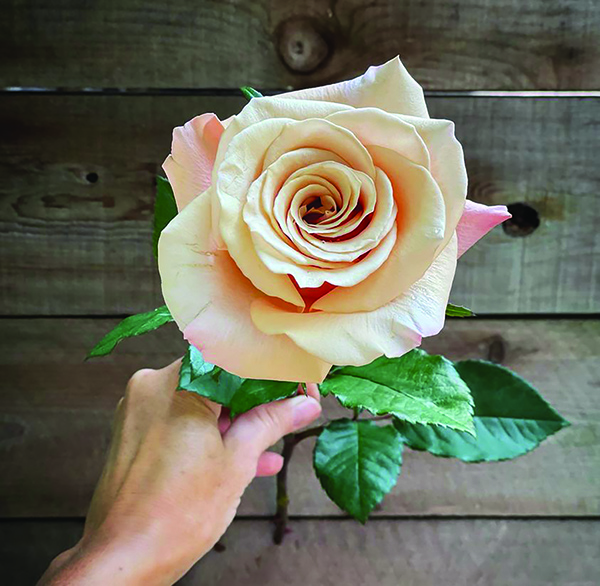 Mother of Pearl grandiflora rose hybridized by Meilland. Photo by Kristen Nagel of Black Rooster Farm in Louisville Kentucky.
You can purchase some of the finest quality bare root roses on the market today from Menagerie. When she has a sale, you better have your computer fingers warmed up because they sell out in an instant. As one of the favorite bare root rose vendors of flower farmers and gardeners alike, I asked Felicia whether she has felt any impact of our latest rose obsession. Sure enough she has seen a significant increase in cut flower and nursery stock sales over this past year.
Despite the growing trend, Felicia’s love for roses and opinion about why they are so popular has not changed, however. “Roses have always been in favor in popular culture as they incite a sense of nostalgia that reminds people of special moments from their past, like growing roses with family members,” she said. “They are the national flower of the United States and are a classic symbol of love, devotion and beauty so they have forever been held in high esteem.”
Perhaps that is why we have such a love for roses, whether you are growing them or buying a bouquet to celebrate a loved one. “Roses bring not only beauty, but a feeling of pride in growing something fragrant and elegant to share with others,” Felicia added. Although the hype created by social media regarding roses has made it difficult for buyers, it has made a positive impact on American growers. The more social media fuels a desire to buy up these roses, the more our growers will expand and ultimately provide us, the rose obsessors, with what we’re after.
Let us pause and remember that roses are trickier than growing dahlias because of how particular they really are. Unlike the seemingly endless variety of dahlias and their willingness to grow using basic gardening skills, roses require more thought and skill. Let us also not forget that buying roses is a much bigger investment. So, before you go sourcing the highly desirable and hard to find bare root roses that you see on your social media feed, there are some things you need to research and consider.
Every rose has a climate they thrive in, particular sun or shade needs, spacing differences, soil requirements, feeding schedules, pruning, and so on. Once you take all of these things into consideration, you may find that only certain varieties will grow for you. Narrow down your choices and focus on what works — not what is popular. Unless you are a florist needing to grow for specific events or clients’ needs, a final consideration would be what appeals to you and not the masses. Grow what you love and love what you grow.
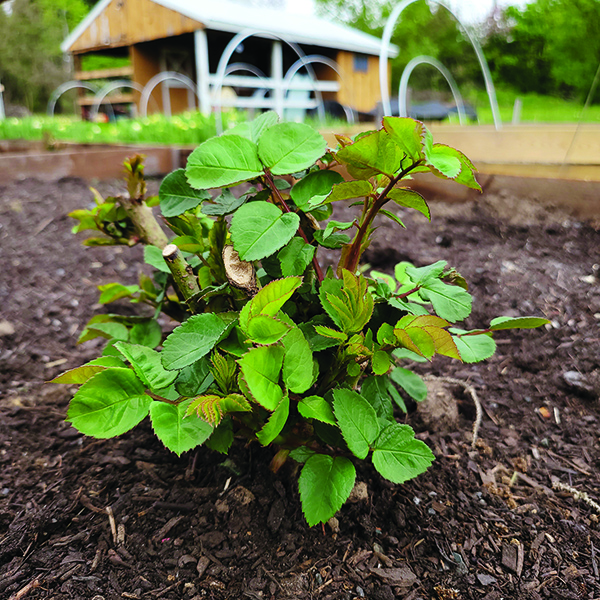
With over 150 species of roses, thousands of hybrids and new roses arriving every year, you can take a deep breath and know that buying roses does not have to be a frantic online shopping event that ends in disappointment. Do your research and plan a thoughtful and curated approach to your cut flower farm or garden. Make your list of wants based on your growing zone, your space and your hearts’ desire.
Don’t forget to check your local garden centers. Many bring in bare root roses and potted roses that are specific to your area and will have knowledgeable staff to help you select the right roses. If you missed out on that ‘Honey Dijon’ rose during your online shopping, there is a chance your garden center may have one. It is worth a shot and you’ll be supporting local businesses and reducing your carbon footprint (and your budget) by cutting out the shipping.
Should you find some roses that pluck at your heart strings, grab a book from the library and learn how to take rose cuttings from the current year’s growth in the spring. Creating more plants from plants you already have is one of the coolest things in gardening next to breeding new varieties.
If you want to really geek out, there is a whole other world to explore in the art of “lost roses.” These are the roses beloved by our great-grandparents. They almost disappeared entirely before the first hybrid tea rose was cultivated in 1867. Over the years people have scoured old towns and cemeteries looking for these elusive roses, taking cuttings and bringing them back.
Viktoria of Moody Flowers is with me on this one saying, “[There is] something so romantic about a rambling, liberated beauty in her own domain. Unspoiled in some way.” I just finished reading In Search of Lost Roses by Thomas Christopher, and I highly recommend picking up the book to learn about his journey discovering these lost roses.
Social media has certainly breathed a new life into growing and farming flowers, roses in particular. Images and influencers can entice us to do more and want more which is amazing because the world can never have too many flowers. But let us not fall down the rabbit hole of the dahlia craze when it comes to roses as obsessed as we might be.
Roses are elegant and beautiful, a little mysterious and should be held in high regard. Sometimes I swear I can hear them playing a classical piano tune when the breeze blows and their unmistakable scent drifts through the air. The right rose in the right place at the right time will delight your senses and bring a smile to those who may receive them. Be deliberate in your choices and you will most certainly be rewarded.
Melissa Gardner is the Owner & Farmer-Florist at Sweety Pea’s Flower Farm in Ballston Lake, New York. Sweety Pea’s is a small cut flower farm offering fresh, hand-wrapped bouquets and arrangements direct to the local community. You can find Melissa at sweetypeasflowers.com or on Instagram and Facebook @sweetypeasflowers.
Copyright Growing For Market Magazine.
All rights reserved. No portion of this article may be copied
in any manner for use other than by the subscriber without
permission from the publisher.