


Slow Flowers partnered with BLOOM Imprint, its publishing arm, to release the 2022 “Slow Flowers Floral Insights and Industry Forecast.” For the eighth year, Slow Flowers Society heralds the New Year with predictions of emerging themes, topics and categories for the floral marketplace.
Our report has become an important gauge for our members, the greater floral marketplace and business media as we evaluate prevailing cultural shifts, notable changes, and breakout ideas influencing flower farming, floral design and consumer attitudes. The report debuted in December 2014 with Debra’s top predictions for 2015. We gather intelligence throughout each year, conducting hundreds of magazine and podcast interviews, along with feedback through an annual Slow Flowers member survey.
Bloom Imprint’s creative director Robin Avni contributes her unique point of view and expertise to this year’s forecast. Robin successfully managed innovative, award-winning teams and high-profile projects garnering numerous national design awards. She has worked with Fortune 500 companies, national advertising agencies and award-winning media properties, applying timely lifestyle insights to their businesses.
A floral reawakening
Floral reawakening is the prevailing 2022 theme. We are weary of the term “pivot,” as we suspect you are, too. During the past two years we have experienced unprecedented and accelerated change due to COVID, social and cultural shifts, and environmental pressures. At the very least, each has stimulated introspection, if not radical transformation in our personal lives and businesses.
We believe that from crisis comes creativity and new ways of thinking. The positive story is that periods like 2020 through 2021 often result in major innovation and radical new attitudes emerging from the constraints a pandemic imposes.
Our Forecast has a through-line of personal activism and a collective desire to make the world a better place. We expect those themes resonate with you, wherever you and your floral enterprise may be.
A number of key topics caught our attention. Floral Reawakening relies on one of Robin’s favorite reporting frameworks as we illustrate each insight with examples from the broader culture and the Slow Flowers Community; plus, we’ll share what this insight means for your floral enterprise.
1. Now or never
“What am I doing with my life?” is a frequent refrain, especially in the face of the pandemic, economic challenges, and social justice issues. As each of us evaluates our mission and purpose, it’s important to recognize that COVID taught us that nothing’s guaranteed. Enforced “pause time” provided moments (weeks? months? seasons?) of reflection and introspection. Unfulfilled dreams surfaced and called many to take the leap to a new life, profession, creative pursuit or purpose.
The larger culture
This insight speaks to larger economic themes dubbed the “Great Resignation” or “The Big Quit” in which record numbers of people left jobs in response to the pandemic. The term “Great Resignation” is attributed to Anthony Klotz, a professor of management at Mays Business School (Texas A&M University). According to the U.S. Bureau of Labor Statistics, four million Americans quit their jobs in July 2021 alone.
Slow Flowers community
Our 2022 Slow Flowers Member survey reflects the Now or Never theme:
The majority of members (51%) made some kind of change over the past two years, including:
• 51% launched a new product or service in the past two years of their floral career or enterprise
• 36% phased out a product/service they no longer enjoy
• 14% relocated in the last two years
• 11% left their full-time, non-floral job for flower farming or floral design
You and your business
We’re inspired by floral entrepreneurs who are flipping the script, changing their established or safe models to fit a re-imagined lifestyle, such as Seattle florist Anne Bradfield who rebranded as Analog Floral, shifting away from an 18-year career in wedding and event design to create a business based on a four-day work week to design and deliver everyday flowers.
According to Anne, the pandemic gave her the space (postponed or cancelled weddings) to evaluate her lifestyle. She wanted to reclaim family time and especially weekends, as well as reconnect with her original love of flowers and art.
Jennifer Kouvant of Six Dutchess Farm, a fiber and flower farm based in Hudson Valley, recently shared a similar sentiment about leaving behind a former lifestyle. “We made the decision to let go of our apartment…and pack up many decades of belongings and move them to the farm, all part of the process of letting go of our NYC home of many years. Life evolves, and we know it’s time, and that is a shift we hope to finalize in 2022.”
More people are getting seeds into the soil and growing their own flowers, including florists who welcome the physical and mental benefits, not to mention the economic opportunities, while also fulfilling a now-or-never passion. And this final point dovetails beautifully with our next insight.
2. Plant your bouquet
Increasingly, flower farmers and cut flower growers see the potential in sharing their expertise with customers who want to plant flowers for their own use. The new twist: Gardeners and floral enthusiasts want the same unique cultivars that the pros grow, opening up opportunities for flower farmers to introduce collections of starter plants. And while demand for flower seeds is also on the rise, aspiring flower gardeners want to jump-start their flower patches with 4-inch pots of perennials or pre-started seedlings — satisfying the instant gratification urge.
The larger culture
With 20 million new participants picking up the trowel in 2020, the garden bug has bit across all demographics, especially with male gardeners. After experimenting with edible crops, veggie gardeners are discovering that flowers do double-duty, providing both beauty and pollinator and nectar sources for their pea patches. We believe that vegetable growing is the gateway hobby for flower growing and anecdotal evidence underscores this trend. The spike in flower seed, bulb and plant sales in the past 24 months has left retailers and online suppliers scrambling. It’s a good problem to have and savvy floral entrepreneurs are ready to provide a solution to satisfy demand.
Slow Flowers community
The divide between gardening and floristry is disappearing. More of our Slow Flowers members — growers and farmer-florists alike — are finding new revenue opportunities by helping their customers access cutting garden plants. One respondent to the 2022 Slow Flowers Member Survey described her diversification efforts this way: “We’re offering education, tips and tricks for customers interested in growing their own cut flower gardens.”
Here are a few successful examples of grow-your-own-flowers initiatives:
Sarah Buerkley of Sarah’s Cottage Creations Flower Farm in Stillwater, Minnesota, offers full-service cutting garden design services to her landscape design clients. Jen Healy of J&B Garden Center in Albany, Oregon, markets cut garden plant collections to home gardeners, curating the best annuals for her region’s cultural conditions.
The team at Stone Barns Center for Food and Agriculture, in Pocantico Hills, New York, has introduced a “Cut Flower Gardening Kit” for members and CSA subscribers. Last year, the kits included plants and compost for two 3-by-7 foot beds. With a collection of cutting garden plants curated by Blue Hill Restaurant at Stone Barns’ resident florist, Philippe Gouze, along with a sample planting plan. The kits appealed to home-bound foodies, many of whom never before considered growing flowers in their vegetable garden.
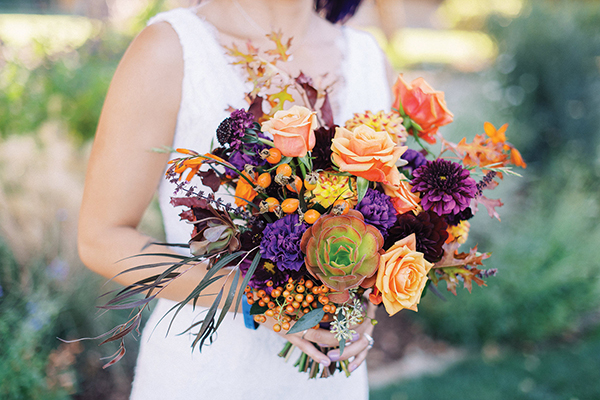 Beyond the pale- featuring garden roses, rose hips, echeveria, oak foliage, scabiosa and dahlias, this vivid wedding bouquet was designed by Margaret Lloyd of Santa Barbara-based Margaret Joan Florals. Photo by Grace Katherine Photography.
You and your business
Package your expertise in crop planning, seed selection and design. It’s just smart business to empower your customers to grow anything — it will make them appreciate your farming talents even more. Integrate this insight into your existing business model, whether you develop a scalable planting plan for customers (by theme, season or palette) or sell the plants and seeds as a new product offering.
There is no downside to teaching someone to appreciate growing their own flowers. In doing so, you’ll unlock a new passion and expand the awareness of local and seasonal flowers in your marketplace.
3. Supply chains boost local
At the consumer level, we’re seeing a resurgence in hyper-local pride as people want their purchases to benefit businesses in their communities. As one writer put it: “I didn’t really need to source from China; I had everything right here.” COVID threatened and disrupted the global supply chain for all businesses; the answer for many flower farmers and florists is in their own backyard. More of us are motivated to seek out and forge new relationships and in the process, we’re all becoming more vocal Slow Flowers and local farming advocates.
The larger culture
Frustrated by delays, empty shelves, and online backorders, there’s a return to local, small businesses, female- and BIPOC-owned enterprises. With this new orientation comes a parallel shift to support local businesses so they continue thriving to enhance and enrich community. As container ships drift offshore and the global supply chain witnesses unprecedented delays, continuity and consistency (and cheaper prices) are no longer available through imported goods, including flowers. Consumers are noticing this, too.
In 2021, Slow Flowers partnered with the National Gardening Association and GardenResearch.com to include cut flower questions in the 2021 National Gardening Survey. The findings were published in April, revealing encouraging national attitudes about local and domestic cut flowers. Fifty-seven percent of survey respondents say it is very or somewhat important to them that the flowers they purchase are grown in the U.S., while 58 percent say it is very or somewhat important that the flowers they purchase are locally grown.
In 2022, Slow Flowers will again partner with NGA to dig deeper into attitudes and consumer behavior. This time around, we’ll be asking where people buy their local and domestic flowers. We can’t wait to share those findings in April 2022.
Slow Flowers community
Our survey found that 48 percent of Slow Flowers members diversified their sourcing practices in 2021, with 54 percent saying they grow between 76 to 100 percent of the flowers used in their own design work. “I have expanded the volume of flowers I’m growing and started buying more from other farms,” one grower noted. And this comment reveals creativity from constraints: “We really pushed through the flower shortage and just tried different flowers and combinations of flowers, and our clients loved the results. At the end of the day, we embraced the challenge and our creativity flourished.”
You and your business
Drive home the LOCAL message to your current customer base and to new markets. Market the harvest beyond cut flowers. Can you diversify into non-floral agriculture, or offer services that connect with (often repeat) customers? New channels and new ways to engage customers throughout the year add up to new cash flow.
4. Beyond the pale: palette and styling
Remember the recent shortages of white and blush roses? Given shipping issues and delivery problems, this limitation will continue. It’s time to embrace other hues on the floral spectrum.
We’re seeing new color shifts reflected in fashion, home interiors, film and television, advertising and consumer goods. Back in 2017, our Forecast noted “Beyond Blush,” so the move from pale has been happening over a five-year period. We’ve noted palette changes in recent reports: Polychromatic (or rainbow palettes, 2020) and Color Wheel Opposites (contrasting floral combinations, 2021). What does 2022 portend?
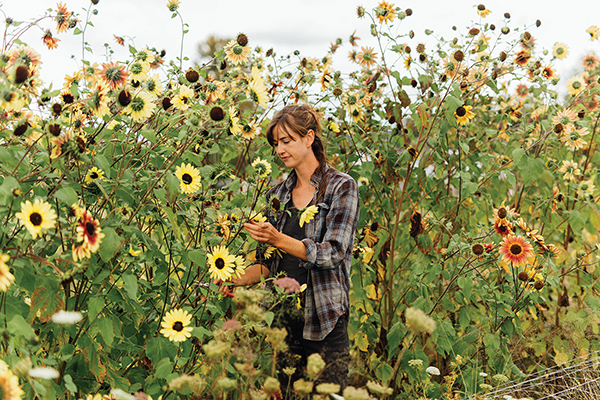 Flower farmer Alyssa O’Sullivan of Sweet Alyssum Farm on Vashon Island, Washington, focuses on sustainable growing practices and creating ways for the community to engage with her farm including a U-Pick program and farm stays offered through a website called Hipcamp. Photo by Rylea Foehl.
The larger culture
It’s no surprise that influences from past periods of cultural and artistic disruption are emerging, with references ranging from the Pre-Raphaelites, the 1960s, the bling of the 1990s, and a new lifestyle trend identified “Granny Chic,” a mash up coined by House Beautiful, which celebrates home decor often associated with the grandparents of Millennials. The Pantone Color of the Year is “Very Peri,” a periwinkle hue that, fortunately, is found in many cut flower cultivars. Did you struggle with “Illuminating,” a pale yellow and “Ultimate Gray,” in 2021 like we did?
Slow Flowers community
We took a slightly different approach to surveying palette preferences, asking about categories of color and spectrums. “Organic neutrals” tops the list with 25 percent preference, while “warm and saturated” palettes follow at 20 percent. We love the term “joyful, post-pandemic” as a way to describe 2022’s brighter, more vivid palette shift.
You and your business
Palettes are taking on a greater reflection of what’s in season, rather than having on-demand, 24/7 availability of a specific bloom options like white and blush for weddings. Rather than a limitation, this reality gives Slow Flowers growers, designers and florists a distinction: Local flowers offer a broader palette than the limitations of pale and blush.
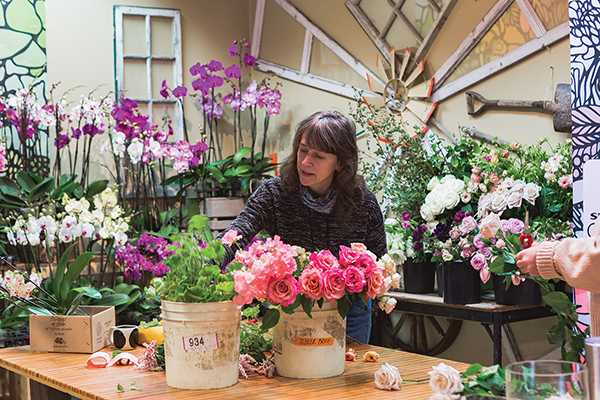 After 18 years designing for weddings and events, Seattle florist Anne Bradfield reinvented and rebranded. She’s shown here giving a design demonstration using all domestic flowers at the Seattle Wholesale Growers Market. Photo credit Missy Palacol Photography.
How does this all influence floral style? There is no single expression, but a distinct way to personalize floral palettes depending on the client’s generation, region, point of view. In wedding decor and floral design, the shifts are all over the place, from more traditional design requests to bits of sparkle here and there. We love the emphasis on hopeful, optimistic and joyful palettes. It is contagious.
5. Grounding rituals
Floral Wellness was a top theme of our 2021 Forecast, along with the continued urge to steep ourselves in nature — soul, body, and spirit.
Whether we’re seeking practices to stay sane or to create new (better) habits, acknowledging a gratitude and thankfulness with intention is visceral. Walking the farm (or the garden) at dawn and dusk to anchor ourselves, taking stock of our beloved crops, and observing the seasons — all are literally grounding practices that ensure a sense of peace and calm. Finding those moments are highly sought after. Is it any wonder that so many rituals are nature-based?
The larger culture
When the average American spends 93 percent of his or her time indoors, any activity that lures people outdoors is important. We’re fascinated with the practice of Shinrin Yoku, “Forest Bathing.” We’d love to see “Flower Bathing” adopted as a botanical extension of it. In Japanese, Shinrin means “forest,” and Yoku means “bath.” This practice takes place outdoors (near trees; an actual forest is not required).
It isn’t about literal bathing, but it is about taking in the forest through all of your senses, and since the 1980s it forms an integral part of preventive healthcare in Japan. Researchers have established a robust body of scientific evidence connecting peaceful time outdoors with boosted immune system functioning, reduced blood pressure, increased ability to focus, improved sleep patterns, and more.
Slow Flowers community
Especially during 2020 and 2021, we have witnessed (virtually) a renewal of what a life in flowers represents. Rituals are being shared and in turn, our members are inspiring their communities, clients, and followers to do the same. More than anything, the immediacy of revealing any farm or flower shop activity allows deeper connections to be made.
Jenni Hulburt of Portersville, Pennsylvania, operates Forest & Flowers Retreat House, a cabin getaway with amenities for self-guided wellness retreats, as well as a specialty cut flower farm that offers botanical workshops for customers to experience the beauty of flowers and healing essences of nature.
Felicia Alvarez of Menagerie Farm + Flowers shows the rugged beauty of a Sacramento Valley rose farm on her regular Instagram tours. Bethany Little of Charles Little & Co devoted a full year to her #sundaywreaths2021 project, sharing a full array of dried and fresh botanical wreaths on her feed. People are creating Spotify playlists to share the music they are listening to in their studios and offering other ways for their community to practice mindfulness.
You and your business
How can you infuse grounding rituals into your floral enterprise? Your clients and customers are seeking mindfulness and wellness. Help them tap into ritual and find a sense of calm through bouquet-making, art projects, journaling or other meditative activities. Share your personal experience with your customers.
Beyond commerce, what advice can you share and how can you nurture those relationships through flowers? Provide opportunities for people to visit your farm for unstructured time or to experience a mindfulness or floral immersion workshop. Turn off phones, be in the moment, and resist the urge to take selfies.
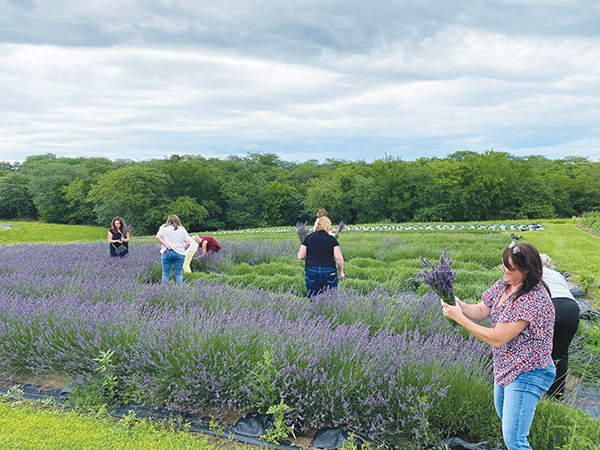 Based in Winterset, Iowa, PepperHarrow Farm’s upcoming perfume-making workshop teaches the art of fragrance creation. Each participant leaves with three of their own custom perfume creations as well as a bouquet of flowers, cut fresh from the farm. Photo by PepperHarrow Farm.
6. Forever flowers
Non-edible agriculture gains relevance as a legitimate facet of farming, translating into countless and inventive uses for botanical crops. Plants grown for fiber, pigment, surface design, as well as for drying, pressing, and edible uses (cooking, baking and mixology) and other art media, mean your flowers have a beautiful and beneficial afterlife. The message: Find a use for your flowers and extend the season through a new medium or application. What’s more organic than plant-based artwork?
The larger culture
Interest in repurposing, re-use, recycling and preserving all add up to this theme. It taps into the culinary world’s nose-to-tail approach of using every portion and reducing waste as a sustainable approach to agriculture. Artists who draw inspiration from flowers are gaining attention from new collectors, galleries and the media, as well as our upcoming Slow Flowers Summit, the theme of which is “Flowers as Artist’s Muse.”
We’ve invited two artists who exemplify this approach to share their craft, including potter Frances Palmer, who makes vases and vessels to contain dahlias from her cutting garden, and Ronni Nicole Robinson, whose botanical surface design for paper and plaster is made with flowers she grows and collects from neighbors’ gardens.
Slow Flowers community
One of our most popular 2021 member sessions focused on Forever Flowers and dye plants used for pigment and fiber art, with presentations on growing dye plants both for farm-based value-added products (table linens, ribbon, clothing, for example).
Presenters included Elaine Vandiver of Old Homestead Alpacas & Gholson Gardens of Walla Walla, Washington, who grows dye plants to create natural pigments for alpaca wool and yarn; Lourdes Casañares-Still of Masagana Flower Farm and Tinta Studio in La Broquerie, Manitoba, Canada, who is teaching dyeing workshops at her flower farm; and Julie Beeler, a flower farmer and artist at Bloom & Dye in Trout Lake, Washington, who has tapped into the hidden world of mushroom pigments, having just released an amazing online tool, the Mushroom Color Atlas.
You and your business
Choose one crop for creative experimentation and if you don’t know where to begin, invite a local artists or makers’ collective to visit your farm and tour the fields. You may be surprised to learn what attracts their attention and interest for possible artistic collaborations.
7. Black flora
This year will witness further emphasis on BIPOC representation across the green profession, as the voices of flower farmers and floral designers of color are amplified. Nurturing the inclusion of more diverse points of view infuses the marketplace with energy, meaning and a recognition that gardening, flower growing and floral design have long been too one-dimensional. In terms of human sustainability, this embrace of equity and inclusion is essential to the future of agriculture, land access, food access, and access to the marketplace for all.
The larger culture
Long overdue, we’re witnessing a collective shift in the faces and stories presented by media and highlighted elsewhere in floristry, farming and the wedding/event industry. Seeing Black and Brown floral entrepreneurs move to the forefront as experts, sources, and subjects is long overdue. We’re seeing major news media like the New York Times publish features and profiles, notably in the recent series: “Black Gardeners Find Refuge in the Soil,” published October 2021.
It begins: “Something feels different. You might have noticed it on your social media timelines, in your local community or even in your own backyard. With the proliferation of Instagram accounts like Black Men With Gardens and Black Girls With Gardens, initiatives like Black Sanctuary Gardens, garden-centered podcasts like Black in the Garden and even a boom in Black-owned seed companies, this is a moment in which Black gardeners are turning — or returning — to traditions of sustenance, solidarity and sanctuary. They are finding a new sense of refuge in a traditional act of horticulture.”
Slow Flowers community
The Slow Flowers community reflects this insight’s diversity among its membership. In 2021, attendees of the Slow Flowers Summit heard from Abra Lee on the “History of the Black American Florist,” a beautiful and moving presentation that opened up dialogue about access to markets and how the floral industry benefits from supporting diversity and encouraging professional development. In 2022, our publishing branch, BLOOM Imprint, will publish Black Flora, Profiles of Inspiring Black Flower Farmers and Florists, by Teresa J. Speight.
We’re partnering with Black Girl Florists, an association for Black women in the profession, and we’re supporting the work of our members through their social media accounts including @floristsofcolor and @blackflowerfarmers. The energy and creativity that comes through these connections elevates the floral profession in an important new way that all should model.
You and your business
How can your actions support the success of farmers and florists who have not benefited from privileges that you may have received? In small and significant ways, make a step to support businesses of color, vendors, suppliers, in collaborations and connections. Offer mentorship and apprentice opportunities to students. Hire Black photographers, models and other creatives to showcase their talents.
8. Sustainability and climate
This is the third consecutive year we have included climate concerns in the Slow Flowers Floral Insights and Industry Forecast. We suspect the topic will never leave our annual roundup. Climate change touches every aspect of our lives and people in agriculture are more aware of its impact. In 2021, we highlighted the numerous ways growers are addressing climate concerns in an extensive report called “Heat & Drought,” which examined how five flower farmers across the U.S. are adapting to changing and challenging climactic conditions.
As flower farmer Marybeth Wehrung of Stars of the Meadow in Accord, New York, noted, small and large daily actions are needed. “Climate change is not a concept; it is real and it is here. It is altering our ability to continue to farm in the same old way and still make a living, as well as the way we care for our health and our work. We have to normalize the conversation toward the reality rather than push it away.”
The larger culture
Headlines and breaking news are on a continual-loop as extreme weather disasters occur around the globe in all seasons. With ominous headlines like a recent CNN report titled: “The Last 7 Years Have Been the Warmest on Record as Planet Approaches Critical Threshold,” the larger culture is ahead of policymakers, shifting from the abstract to the everyday awareness that climate change is an existential crisis. When media, sports and popular culture personalities join the conversation, the urgency and awareness goes mainstream.
Slow Flowers community
One of the top sustainability issues for Slow Flowers members is a critical mass-rejection of floral foam and plastics, which we forecast in our first report in 2015. Members are teaching sustainable design practices and communicating no-plastic messaging in their branding and services.
Members cited the following foam-free alternative mechanics, all of which are easily employed; floral tubes and other water receptacles; recycled containers; EcoFresh wraps for installation work; rebar armatures; Agra Wool; lacing stems and attaching vases to ceremony structures. (See GFM May 2021 “Strategies for reducing plastic use on farms”)
You and your business
There is greater awareness than ever among consumers, as up-cycling and recycling/repurposing waste-reduction programs proliferate. Retailers and e-commerce companies are responding to consumer demands for no or reduced packaging; municipalities across North America are enacting no-plastic-bag policies; and enterprising zero-waste services like TerraCycle and Ridwell are filling in the recycling gaps for specialty items that the local utilities aren’t able to handle. What can you to do telegraph your climate-friendly practices?
9. Flowers in the Metaverse?
We’re not quite ready for a digitally simulated floral environment, but it’s important to close this forecast with an acknowledgement of our technology dependence and the future of technology in the floral world. The metaverse is a virtual reality (digital) space in which users can interact with a computer-generated environment and with other users. It’s all about immersive experiences, but virtual rather than physical.
We know a lot about immersive floral experiences because that’s how our customers and communities connect with what we grow and design with. The magnificent sensory response to real flowers is undeniable and truly human. So, is it even worth discussing a new, digital reality and whether you and your flowers might occupy that space?
The larger culture
Future implications are closer than we realize. The global marketing agency Wunderman Thompson launched a “bespoke metaverse” in partnership with the Odyssey metaverse platform, featuring avatar-based networking, with different “rooms” illustrating potential applications, from retail to “game-vertising.”
Predicting that the metaverse trend will evolve over the next 20 years, Steven Koenig, vice president of research at the Consumer Technology Association, recently said: “We’re starting to talk about the metaverse now the same way we started to talk about the Internet in the early 1990s.”
Slow Flowers community
We know that Floral Reawakening means turning to the land as the antidote to modern life. The pandemic, quarantines and shutdowns continue and don’t appear to be declining in 2022. Feeling powerless against the tsunami of change, people are seeking refuge in nature and the sense of comfort that comes from being outdoors.
National park tourism has surged over the past several years, with some parks reporting a 15 percent increase in visitors. Remote work is part of this shift, as many people are leaving cities and suburbs for space. Work from Home moves outdoors, with new iterations including Work from the Garden; Work from Nature; or Work from a Remote Destination. Perhaps what flower people have to offer in the 21st century is floral reality rather than alternate reality.
You and your business
Digital tools are in use in flower farming and floral design (think planning, monitoring, journaling, sketching or tracking applications). What’s next? Virtual environments can enhance planning and design for everything from landscape layouts to large-event installations. If you’re in the direct-to-consumer retail space, there are new frontiers to explore as shopping becomes more immersive, intuitive and engaging (digital stores and augmented shopping experiences are on the horizon).
To bring it full circle, we must paraphrase an oft-quoted line: Control technology; don’t let it control you. The future’s virtual floral, garden and outdoor environments, which we can only just imagine, may offer a different kind of peaceful escape from stressful environments. But for now, the Floral Reawakening is as much about nurturing the analog lifestyle of unplugging and escaping to nature as it is about embracing the modern conveniences on which we depend.
We hope you draw one or two radical ideas from this 2022 Slow Flowers Floral Insights and Industry Forecast. We’d love to learn about how you adapt them to your own floral enterprise or farm. Reach out at debra@slowflowers.com to let us know.
Debra Prinzing is a Seattle-based author and founder of Slow Flowers Society. Robin Avni is the creative director of BLOOM Imprint, which she co-founded with Prinzing in 2021.
Copyright Growing For Market Magazine.
All rights reserved. No portion of this article may be copied
in any manner for use other than by the subscriber without
permission from the publisher.