











By Carolina Lees
Whether you’ve managed a crew for years or it’s your first time hiring an employee, training is a challenge. Training a new employee is a big investment of time and energy, which may or may not pay off. But proper training can be the difference between a successful, happy employee and a frustrating one. Effective training up front saves you time and energy all season long.
My crew tell me that I’m a good teacher, but I’m always learning how to be better. I’ve had my share of epic fails, including talking down an employee who was quitting via text message from her truck in my driveway. I’ve picked up a lot of tricks and techniques to make my trainings more effective, though some of those have been learned the hard way.
I’m going to share how I approach training and some of the things that have been most effective for me. If you’re new to management, hopefully this will give you some food for thought. If you’re an experienced manager, maybe you’ll pick up a new trick or two.
My farm is small and I do most of the training and crew leading, so throughout this article I use the first person. I know many farms have managers or crew leaders who do the training instead; hopefully the advice will be helpful for whomever does the training on your farm.
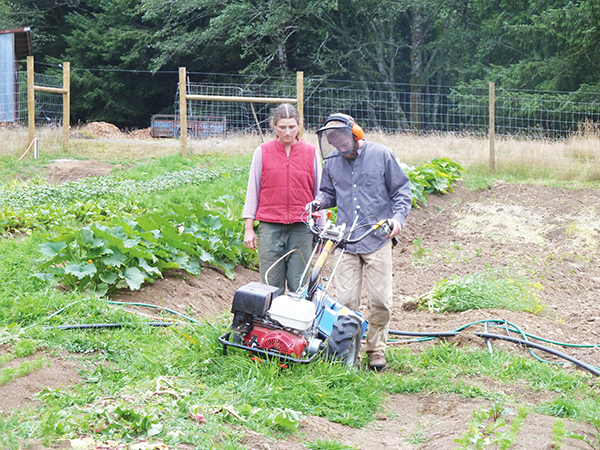
Here’s a picture of the author doing some training on her farm. All images courtesy of the author.
Everyone is different
One of the conclusions I’ve come to is that everyone is different, and training works best when it’s tailored to the person you’re working with. People have different levels of experience, different learning styles, and different motivations. When I try to give blanket feedback to my crew, it almost never works. I usually have to go back and give individual feedback anyway. I often will demonstrate a task to multiple people at once, but then follow up with each individual as they try to master it. Learning what works for each person just takes observation, trial, and error.
Also, every trainer is different. You may or may not want to spend a lot of time teaching, and you may be more or less particular about how each job is done. Ideally, you’ll find employees who are a good fit for your management style, although I have no tips on how to pull off that piece of magic.
I have a friend who hates training and doesn’t want to spend a lot of time giving directions. He’s extremely blunt, doesn’t spare feelings, and has burned through several new employees over the years. Nonetheless, he’s found a few that thrive with his hands-off management, and they’ve been working together happily for years. One even bought him a horn for his tractor so he could yell at them more effectively. That’s not my style, but it just goes to show that there’s an employee out there for every manager.
One of the first aspects to get clear on is how your training style will serve your ultimate expectations. If you want a high quality, precise job done but only want to spend a minimum of time on training, you might prefer to hire a manager or more experienced help, and maybe consider paying more. (Less time spent training and higher quality work may cover the cost.) If you don’t want to spend time training and are mostly working with unskilled people, you may want to target your trainings to a few easy-to-teach jobs, or train one person and have them train the rest of the crew.
I usually work with unskilled, but enthusiastic people eager to learn about farming. I spend a lot of time training at the outset. I have pretty high expectations for speed and quality; I’m willing to put in some time to get people performing at the level I want. There’s no one right way to do it, but making sure there’s synchronicity between your expectations and your time investment will make your training program more successful.
Setting up streamlined, consistent systems saves a lot of explanation. Every year that we have employees I improve my signage and consistency on the farm so I don’t have to explain things over and over. Read more about streamlining in my June 2018 GFM article.
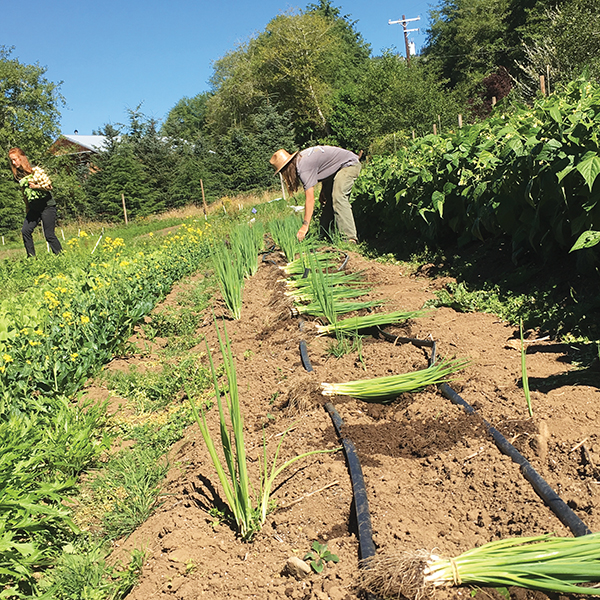
Methods
Setting clear expectations is a key part of training. This includes broad expectations about attitude and job performance, as well as specific expectations about a particular task.
On my farm, we start setting expectations at the orientation. On an employee’s first day of work, I have them read through our employee manual, which describes our overall farm goals, the role of the crew, safety procedures, and performance expectations. After reading it, one employee told me it gave him the sense that we really care about the whole operation and his contributions to it. That’s the attitude I want from my crew from the outset: I want them to be invested in the farm’s success and to feel like a valued part of making it happen.
Making sure that expectations are reasonable and clearly communicated goes a long way to getting them met. Whenever possible, I give a measurable, clear goal: e.g., one bunch per minute or “two strikes it’s out.” I time myself or a capable crew member on tasks to make sure that what I’m asking for isn’t unreasonable.
My typical training formula for a task is to first explain what we’re doing and why, including what tools we’ll need. Then, I demonstrate the task, slowly at first and then at my usual speed so they can see the rhythm of it. Then, I have them start doing the task while I watch. I coach each person to get her or him on the right track, maybe adjusting how the tool is held or correcting a technique.
At this point, I walk away or move to another part of the bed and give them five to ten minutes to practice on their own. People get self conscious when the boss is hovering over their shoulders, and most tasks just take a bit of practice. I come back after a short interval and observe everyone’s performance, offering coaching or correction as needed. Sometimes I do another demonstration, maybe breaking down a particular motion, or showing them the rhythm of the task again. I’ll leave and check in as many times as needed until I’m satisfied that everyone is doing what I want.
One of the first things I had to learn was not to give too much information at once. Farming is complicated and nuanced; I tend to want to explain everything. But for someone hoeing broccoli or picking beans for the first time, just holding the hoe or finding the beans takes thought and attention. I give a bit of context, but I try to keep it brief. I also refrain from chatting with them while they are first learning a task so they can concentrate.
When possible, I space out my instruction. For example, if they are harvesting radishes and there are two varieties in the bed, I show them how to harvest one. I work nearby, and when they finishing the first variety, I come over and show them the second one. It takes more vigilance up front, but it pays off in lower frustration, quicker mastery, and less total time spent on training.
I’ve had success in the last few years with breaking tasks down into the smallest units I can. This is especially true with new, inexperienced employees, but even experienced farm workers need to learn where things are and how they’re done on your farm. With experienced workers, I still follow the same formula, it just goes a lot faster.
Transplanting is one example. Eventually, I just send the crew out to plant without me, but first they have to learn what I mean when I say: “Plant these at six-inch spacing in the freshly tilled bed next to the broccoli we planted last week.” They have to know what a freshly tilled bed looks like; what broccoli looks like; where the last broccoli was planted; what six-inch spacing means; and how to pop, drop, and plant a crop, sometimes with multiple varieties. That’s a lot of steps, and you can’t expect someone to get them all at once.
I often go a step further and break each task down into motions. When transplanting, I show them how I hold the plant, how I make the hole, how I move my hands to plant into the hole and refill it, and how I move from plant to plant. I have to remember to slow myself down so they can see each step and process it.
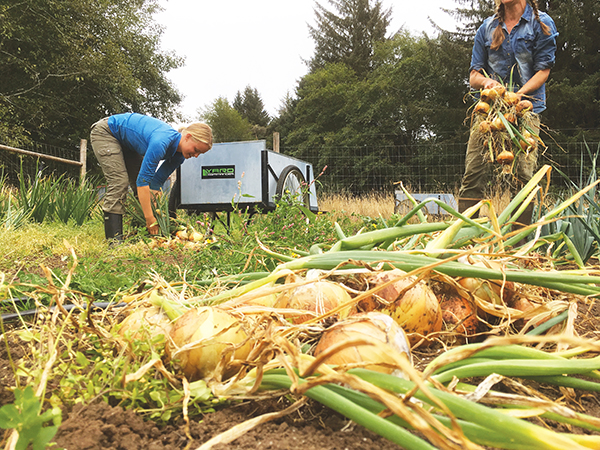
Coaching
Giving correction and feedback is one of the hardest parts of training. Some people can be sensitive and tend to be hard on themselves if they think they aren’t doing a good job. Others just don’t care or think you’re unreasonable and demanding. So, how to coach and correct effectively? “We’re all sensitive flowers,” one of my co-workers used to say. Thus, I’ve softened my approach dramatically over the years.
Beginning with interviews and orientation, I make it clear that people need to be open to instruction. I tell people that the farm is alive and always changing. The correct way of doing things may change as the season goes on. I look for employees who are interested in farming and want to be here in the hopes they will be more motivated.
Correction is easier when first training on a task. I try to stay present with people while they’re first learning so they don’t get stuck in bad habits. It’s harder to correct an ingrained behavior than to get someone started on the right foot. As I mentioned before, I check in every five or ten minutes until they are doing what I want. I give multiple demonstrations and tell them how to stand or move.
Most people start either slowly and carefully, or fast and furiously. I tend to prefer slowly and carefully, because I find it easier to pick up the pace on a job well done than to slow down and do it better. For slow and careful people, I start by making sure they are doing a task correctly, then give them time to get comfortable with it. Once they have the basics, working alongside them to set the pace encourages them to speed up and gives them a model.
If that’s not working, I may coach them on individual movements. If they are spending too much time on every plant, I tell them they’re working too hard and I want it to be easier for them. I work across from them and talk them through it. “Okay, hoe around it, good! Move onto the next one. Hoe…good! Move on. That’s all you need to do.”
Sometimes I give a more general talk about how things are picking up on the farm. I tell them they’ve done a great job learning the basics, and now we have to pick up the pace to keep up with the increasing harvests. I find that most people don’t respond well to negative reinforcement, though maybe I’m the one who’s conflict averse.
For the fast and furious employees, I focus on quality benchmarks and clear examples of where their work isn’t complete. Maybe I show them patches of weeds in a bed they hoed, or pick behind them so they can see how many beans they missed. I use positive reinforcement about their energy and how much they get done, but ask them to be more careful and take more time. I also try to play to people’s strengths, assigning them to jobs they will naturally be successful with.
With any employee, patience is key. Think back to when you first started farming, like really first started. I remember how I was in the early years, but do I really remember how I worked in the first two weeks? Or if you have worked on multiple crews, what was it liked when you moved from one farm to another?
You’ve likely developed all of your systems from scratch and know the farm inside and out. Your new employee is just learning which crop is which and where the tools are kept. I mostly don’t give feedback about speed for the first two or three weeks that someone is working, I just set a broad expectation and model the rhythm of work. Most people catch on and pick up their pace within a few weeks; Meanwhile, I haven’t built up resentment and negative feelings in the process.
I try to start people working before I’m in desperate need so that I have time to get them trained. Then, once the big harvests hit or we’re scrambling to get everything planted, people already know the systems and we can hit the ground running every day. It also gives me a cushion in case someone doesn’t work out and I need to find a replacement.
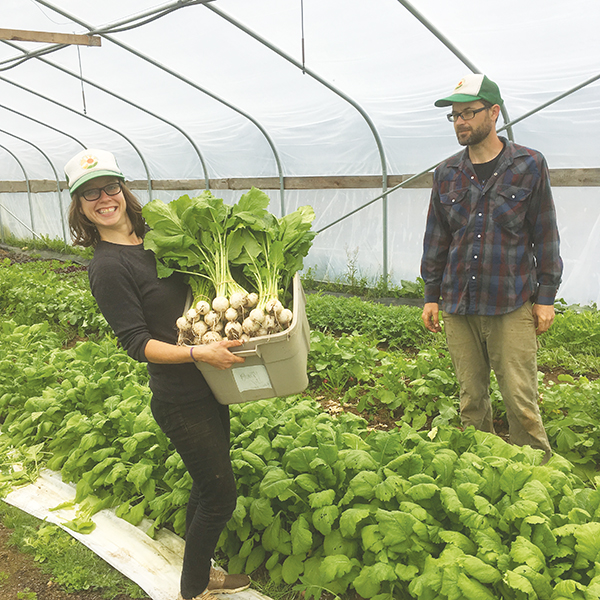
Good training can set an employee up for success by letting them know both the expectations and how to do a job correctly, so they can take pride in a job well done.
Beyond the first few weeks
As an employee gains skills and confidence, my training shifts. I give less instruction and let them figure more out for themselves. This takes extra time at first, but once they’ve puzzled through a few jobs, things start to pick up. Most employees are motivated by the extra trust and responsibility. It takes a load off my shoulders. With experienced employees, this process can happen a lot faster.
I’ve had to learn how to trust people more and be more accepting of different ways of doing things. If there is a job I feel strongly about, I make sure to monitor it closely or be personally involved. But with jobs that are more flexible, I try to step back and let people do it their own way.
Sometimes they surprise me by coming up with something better than I would have. My current employee just came up with a new farm mantra to help her make decisions: “What would a lazy farmer do?” I love this as a simple way to think about the most efficient method.
To get people to advance their technique in a job they already do, one of my favorite tricks is to treat the work like a game. I tell people they’ve unlocked the next level of basil harvest, or that to achieve expert status they should try planting this way. It usually gets a laugh and keeps people from feeling like they have been doing something wrong all along.
I also make sure to give positive feedback regularly so that people don’t feel that I only talk to them to criticize. If they’ve been making really nice, consistent bunches, tell them. If they banged out a planting really fast, let them know how impressed you are. Share positive feedback you get from your customers. Whenever I can put a positive spin on something I want done or changed, I do. Sometimes you just have to be clear that something isn’t up to scratch, but I try to frame it in a motivational rather than critical light.
Language barriers and communication
Many farm workers are immigrants, and communication and language can be a barrier to effective training. Ideally, someone on the crew or in management will be bilingual and can help with communication. If not, try learning a few key phrases in your crew’s language, including some positive phrases and some of the key words around the tasks they are doing. There are some resources out there to help, including printed resources, videos, and agricultural Spanish classes. Unfortunately, the primary resource translated into Spanish seems to be for pesticide applicators.
Fortunately, farm work is hands-on, and you can do a lot of training through demonstration and example. Whether someone speaks English or not, give them clear examples to work with. When thinning, I tell people how many fingers apart plants need to be (carrots are two fingers, beets are four). When bunching, I make a sample bunch and encourage employees to carry it with them and compare theirs as they go for size and shape. When picking, I pick a range of fruits and lay them out as an example, showing people the correct size or color range. One farmer I know recommends taping a bean of the correct size to the edge of a worker’s picking bin for reference.
I’m always learning how to train better. Every year I pick up new tricks and patience. I’ve also gotten better at picking and choosing what I train on and when, starting with the simplest jobs and building on those skills as the season goes on. But it’s always a challenge, and it’s different with every worker. I’d love to know what your best training tricks are so I can add them to my toolbox!
Carolina Lees started Corvus Landing Farm in 2010 at the Oregon coast. She and her crew farm two acres of vegetables, providing for the small communities surrounding the farm through farmers markets and a 60-member CSA.
Copyright Growing For Market Magazine.
All rights reserved. No portion of this article may be copied
in any manner for use other than by the subscriber without
permission from the publisher.